


Wydawcy
Katalog tematyczny
- Archeologia (109)
- Ekonomia, finanse, business (13704)
- Filozofia (1445)
- Historia (3040)
- Języki i językoznawstwo (2356)
- Lifestyle, hobby i rozrywka (475)
- Medycyna (9704)
- Nauki humanistyczne (4)
- Nauki o Ziemi i środowisku (2638)
- Nauki ścisłe (20412)
- Nauki społeczne (8486)
- Nauki techniczne (13450)
- Prawo (1696)
- Publikacje informacyjne i interdyscyplinarne (1288)
- Religia i wierzenia (917)
- Technika komputerowa (4067)
- Bazy danych (75)
- Bezpieczeństwo komputerowe (454)
- Certyfikacja komputerowa (1)
- Grafika i media cyfrowe (32)
- Informatyka (779)
- Komputery, ogólnie (74)
- Programowanie (351)
- Programy komercyjne (49)
- Sieci komputerowe (350)
- Sprzęt komputerowy (4)
- Systemy operacyjne (32)
- Technika cyfrowa na co dzień (7)
- Zdrowie, relacje międzyludzkie i rozwój osobisty (657)





Informacje szczegółowe o książce
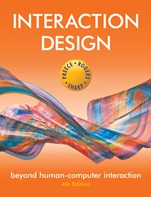
Interaction Design: Beyond Human–Computer Interaction
ISBN 9781119020752
Autor: Jennifer Preece, Helen Sharp, Yvonne Rogers
Wydawca: Wiley
Dostępność: 3-6 tygodni
Cena: 340,20 zł
Przed złożeniem zamówienia prosimy o kontakt mailowy celem potwierdzenia ceny.
ISBN13: |
9781119020752 |
ISBN10: |
1119020751 |
Autor: |
Jennifer Preece, Helen Sharp, Yvonne Rogers |
Oprawa: |
Paperback |
Rok Wydania: |
2015-02-06 |
Numer Wydania: |
4th Edition |
Ilość stron: |
584 |
Wymiary: |
244x190 |
Tematy: |
UA |
Interaction design can be defined as designing interactive products to support the way people communicate and interact in their everyday and working lives. To be successful, interaction designers will need a mixed set of skills drawn from psychology, human computer interaction, web design, computer science, information systems, and entertainment as well as an understanding of the desires and needs of people and the kinds of technology available.
Interaction Design: beyond human computer interaction offers a cross–disciplinary, practical and process–oriented introduction to the field, showing not just what principles ought to apply to interaction design, but crucially how they can be applied.
The fourth edition of this best–selling textbook has been substantially updated to reflect this dynamic and fast–moving field and includes:
Wiley e–text featuring videos and Q&A New chapter Interaction Design in Practice Coverage of many new and traditional interfaces 25 new talking–head videos with HCI experts answering questions like has HCI gone too far? New section on emotional tech and automated emotion Coverage of AgileUX and the maker movement New sections on social interaction and social mediaInteraction Design is hugely popular with students and professionals alike. It is an ideal resource for learning the interdisciplinary skills needed for interaction design, human computer interaction, information design, web design, and ubiquitous computing. Accompanying the text is an extensive website athttp://www.id–book.comwhich contains additional teaching and learning material including slides for each chapter, comments on chapter activities, and a number of in–depth case studies written by researchers and designers.
What s Inside ix
1 WHAT IS INTERACTION DESIGN? 1
1.1 Introduction 1
1.2 Good and Poor Design 2
1.3 What Is Interaction Design? 8
1.4 The User Experience 12
1.5 The Process of Interaction Design 15
1.6 Interaction Design and the User Experience 19
Interview with Harry Brignull 34
2 UNDERSTANDING AND CONCEPTUALIZING INTERACTION 36
2.1 Introduction 36
2.2 Understanding the Problem Space and Conceptualizing Interaction 37
2.3 Conceptual Models 41
2.4 Interface Metaphors 45
2.5 Interaction Types 47
2.6 Paradigms, Visions, Theories, Models, and Frameworks 54
Interview with Kees Dorst 62
3 COGNITIVE ASPECTS 65
3.1 Introduction 65
3.2 What Is Cognition? 66
3.3 Cognitive Frameworks 85
4 SOCIAL INTERACTION 100
4.1 Introduction 100
4.2 Being Social 101
4.3 Face–to–Face Conversations 102
4.4 Remote Conversations 106
4.5 Telepresence 111
4.6 Co–presence 118
5 EMOTIONAL INTERACTION 131
5.1 Introduction 131
5.2 Emotions and the User Experience 132
5.3 Expressive Interfaces 138
5.4 Annoying Interfaces 140
5.5 Detecting Emotions and Emotional Technology 143
5.6 Persuasive Technologies and Behavioral Change 146
5.7 Anthropomorphism and Zoomorphism 152
6 INTERFACES 158
6.1 Introduction 158
6.2 Interface Types 159
6.3 Natural User Interfaces and Beyond 219
6.4 Which Interface? 221
Interview with Leah Beuchley 224
7 DATA GATHERING 226
7.1 Introduction 226
7.2 Five Key Issues 227
7.3 Data Recording 231
7.4 Interviews 233
7.5 Questionnaires 244
7.6 Observation 252
7.7 Choosing and Combining Techniques 269
8 DATA ANALYSIS, INTERPRETATION, AND PRESENTATION 275
8.1 Introduction 275
8.2 Qualitative and Quantitative 276
8.3 Simple Quantitative Analysis 279
8.4 Simple Qualitative Analysis 291
8.5 Tools to Support Data Analysis 300
8.6 Using Theoretical Frameworks 303
8.7 Presenting the Findings 314
9 THE PROCESS OF INTERACTION DESIGN 319
9.1 Introduction 319
9.2 What Is Involved in Interaction Design? 320
9.3 Some Practical Issues 333
Interview with Ellen Gottesdiener 346
10 ESTABLISHING REQUIREMENTS 350
10.1 Introduction 350
10.2 What, How, and Why? 351
10.3 What Are Requirements? 353
10.4 Data Gathering for Requirements 361
10.5 Data Analysis, Interpretation, and Presentation 368
10.6 Task Description 370
10.7 Task Analysis 380
11 DESIGN, PROTOTYPING, AND CONSTRUCTION 385
11.1 Introduction 385
11.2 Prototyping 386
11.3 Conceptual Design 397
11.4 Concrete Design 406
11.5 Using Scenarios 409
11.6 Generating Prototypes 409
11.7 Construction 420
Interview with the late Gary Marsden 429
12 INTERACTION DESIGN IN PRACTICE 432
12.1 Introduction 432
12.2 AgileUX 433
12.3 Design Patterns 443
12.4 Open Source Resources 447
12.5 Tools for Interaction Design 448
13 INTRODUCING EVALUATION 452
13.1 Introduction 452
13.2 The Why, What, Where, and When of Evaluation 453
13.3 Types of Evaluation 456
13.4 Evaluation Case Studies 462
13.5 What Did We Learn from the Case Studies? 467
13.6 Other Issues to Consider when Doing Evaluation 469
14 EVALUATION STUDIES: FROM CONTROLLED TO NATURAL SETTINGS 474
14.1 Introduction 474
14.2 Usability Testing 474
14.3 Conducting Experiments 484
14.4 Field Studies 488
Interview with danah boyd 498
15 EVALUATION: INSPECTIONS, ANALYTICS, AND MODELS 500
15.1 Introduction 500
15.2 Inspections: Heuristic Evaluation and Walkthroughs 500
15.3 Analytics 514
15.4 Predictive Models 518
References 523
Index 553
Koszyk
Książek w koszyku: 0 szt.
Wartość zakupów: 0,00 zł
Informacje


Kontakt
Gambit
Centrum Oprogramowania
i Szkoleń Sp. z o.o.
Al. Pokoju 29b/22-24
31-564 Kraków
Siedziba Księgarni
ul. Kordylewskiego 1
31-542 Kraków
+48 12 410 5991
+48 12 410 5987
+48 12 410 5989
Subskrypcje
Administratorem danych osobowych jest firma Gambit COiS Sp. z o.o. Na podany adres będzie wysyłany wyłącznie biuletyn informacyjny.
Autoryzacja płatności

Informacje na temat autoryzacji płatności poprzez PayU.

© Copyright 2012: GAMBIT COiS Sp. z o.o. Wszelkie prawa zastrzeżone.
Projekt i wykonanie: Alchemia Studio Reklamy