


Wydawcy
Katalog tematyczny
- Archeologia (109)
- Ekonomia, finanse, business (13704)
- Filozofia (1445)
- Historia (3040)
- Języki i językoznawstwo (2356)
- Lifestyle, hobby i rozrywka (475)
- Medycyna (9704)
- Nauki humanistyczne (4)
- Nauki o Ziemi i środowisku (2638)
- Nauki ścisłe (20412)
- Astronomia (294)
- Biologia (5119)
- Chemia (6540)
- Fizyka (3309)
- Matematyka (4574)
- Algebra (171)
- Analiza matematyczna (902)
- Filozofia matematyki (1)
- Geometria (237)
- Historia matematyki (57)
- Kombinatoryka, teoria grafów (67)
- Matematyka dyskretna (35)
- Matematyka stosowana (555)
- Optymalizacja (104)
- Podstawy matematyki (129)
- Statystyka, prawdopodobieństwo (296)
- Teoria grup (63)
- Teoria liczb (77)
- Topologia (66)
- Nauki ścisłe, ogólnie (503)
- Nauki społeczne (8486)
- Nauki techniczne (13450)
- Prawo (1696)
- Publikacje informacyjne i interdyscyplinarne (1288)
- Religia i wierzenia (917)
- Technika komputerowa (4067)
- Zdrowie, relacje międzyludzkie i rozwój osobisty (657)





Informacje szczegółowe o książce
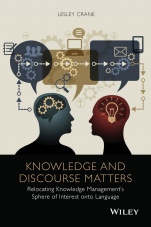
Knowledge and Discourse Matters: Relocating Knowledge Managements Sphere of Interest onto Language
ISBN 9781118931851
Autor: Lesley Crane
Wydawca: Wiley
Dostępność: 3-6 tygodni
Cena: 520,80 zł
Przed złożeniem zamówienia prosimy o kontakt mailowy celem potwierdzenia ceny.
ISBN13: |
9781118931851 |
ISBN10: |
1118931858 |
Autor: |
Lesley Crane |
Oprawa: |
Hardback |
Rok Wydania: |
2015-12-04 |
Ilość stron: |
336 |
Wymiary: |
240x158 |
Tematy: |
PB |
This book provides a practical approach to harnessing knowledge in organizations. Its focus is on knowledge sharing, tacit knowing, and a view of knowledge as an accomplishment in social interaction.
The aim of this book is to explore and show how the phenomena of trust, risk and identity, as contexts constructed by speakers themselves, influence and mediate knowledge sharing in organizational encounters. The research particularly reveals how tacit knowledge (knowing), affects the scope and directions of everyday conversation. The first part of the book presents a comprehensive critical appraisal and analysis of the field of organizational knowledge management, followed by an introduction to the theory and methodology of discourse analysis, and a view of tacit knowing drawn from studies in implicit learning. The second part reports the detailed analysis and findings of original field research, investigating how participants in regular organizational meetings, including a discussion forum, manage the business of sharing knowledge. From the perspective of the research methodology, drawing on Discursive Psychology, knowledge is approached as an accomplishment in social interaction, with talk and text shown to be constructive, functional and action–oriented.
Presents a rigorous, evidence–based approach to Knowledge Management using original research Approaches discourse as the location of knowledge work, and the site to which knowledge management practice should be focused Positions the actions of knowledge work in everyday talk and text, thus giving practitioners a ready toolset to improve their strategies, practices and understanding of knowledge within organizationsKnowledge and Discourse Matters: Relocating Knowledge Management s Sphere of Interest onto Language is a great reference for organizational leaders, knowledge managers, and human resource managers.
Dr. Lesley Crane is an independent consultant specializing in knowledge management, and technology supported learning for adults (e–learning). Much of her consultancy work involves providing strategic advice and research on the effective use of e–content, e–tools and the use of new technologies in the delivery of teaching and learning. Prior to working as a consultant, Lesley was Managing Director of her own SME business specializing in creative e–learning design and development for public and private sector organizations.Acknowledgements
Foreword
List of figures and tables
Introduction
PART ONE
Chapter 1: The nature of knowledge
1.1 Knowledge: the most precious asset and the greatest challenge
1.2 Why an understanding of the nature of knowledge is crucial
1.3 Ways of defining knowledge, and the rise of a single perspective
1.4 The tacit–explicit conundrum
1.5 Frameworks of meaning
1.6 A hierarchy of knowledge
1.7 Summary and conclusions
Chapter 2: The constitution of knowledge management
2.1 Addressing some key questions
2.2 The origins of knowledge management
2.3 Multiple perspectives and limitless boundaries
2.4 Is it a passing management fad?
2.5 Technology as a defining push factor
2.6 Should knowledge be managed?
2.7 Summary and conclusions
Chapter 3: Key issues and debates
3.1 Introduction
3.2 The commodification and reification of knowledge
3.3 Determining success or failure
3.4 Measuring knowledge management outcomes
3.5 Knowledge management and culture
3.6 Creating new knowledge
3.7 Sharing knowledge
3.8 Summary and conclusions
Chapter 4: Knowledge management s theories
4.1 Finding some new directions
4.2 What constitutes a theory?
4.3 An approach to knowledge management s theories: a novel taxonomy
4.4 The personal vs. organizational knowledge question
4.5 The personal vs. organizational knowledge on the social action axis
4.6 Reification of knowledge: one paradigm dominates
4.7 Roundup of some other perspectives in the knowledge as object spectrum
4.8 The issues over the inductionist foundation of theory
4.9 Summary and conclusions
Chapter 5: Social Constructionism and the constructionist view of knowledge
5.1 Introduction
5.2 Social Constructionism as a way of looking at the world
5.3 Simply extending directions
5.4 The Social Constructionist view of knowledge
5.5 The debate over method
5.6 On objectivity
5.7 Summary and conclusions
Chapter 6: Discourse as the site of knowledge work
6.1 Introduction and the turn to talk
6.2 Introducing Discursive Psychology
6.3 Other leading discourse analysis paradigms
6.4 Topics of study in discourse analysis
6.5 Sense–making
6.6 Summary and conclusions
Chapter 7: The implicit formation of tacit knowing and resolving matters of relevance
7.1 Introduction: questions and connections
7.2 The origins of the tacit question
7.3 The values of tacit knowledge
7.4 A disputed phenomenon
7.5 Knowledge management s implicit formulation of TK
7.6 The Implicit Learning paradigm
7.7 Comparing knowledge management s perspectives on the tacit with the Implicit Learning formulation
7.8 Philosophy, methodology and incommensurability
7.9 Summary and conclusions
Chapter 8: Thematic categories of knowledge sharing
8.1 Introduction
8.2 Identity
8.3 Trust
8.4 Risk
8.5 Context
8.6 A final problem to resolve
8.7 Summary
Chapter 9: The case for discourse as the priority
9.1 Knowledge and Discourse Matters: summarising the case
9.2 Changes in direction?
9.3 Making it work: implications and contributions
9.4 Conclusions
PART TWO
Chapter 10: Introduction to Part Two
Chapter 11: Methodology
11.1 Introduction
11.2 Locating the present study
11.3 A brief digress into the positivist account of science
11.4 Research method
11.5 Research design
11.6 Points of limitation
11.7 Summary and indicative research questions
Chapter 12: Trust as an artefact of knowledge sharing
12.1 The importance of trust
12.2 Data
12.3 Casting the characters and setting the scene for action
12.4 Working up trust through epistemic superiority and authenticity
12.5 Risk and competence as contingent factors to trust
12.6 Trust breakdown connects with knowledge sharing breaches
12.7 Knowledge, trust and blame
12.8 Preliminary reflections
Chapter 13: Knowledge sharing is a risky business
13.1 The risky business of sharing knowledge
13.2 Sequential and rhetorical organization: group norms and reputation
13.3 High stakes and truth telling
13.4 Doing uber authenticity through vivid narrative accounting
13.5 Preliminary reflections
Chapter 14: Negotiating positions of authority
14.1 Knowledge sharing accomplished from a subject position
14.2 Context, participants and expectations
14.3 Projects, complexities and appeals to common sense
14.4 Seasoned exhibitionists and Bombshells
14.5 Preliminary reflections
Chapter 15: Building identities as expert in an online forum
15.1 Introduction
15.2 Data
15.3 The trigger: more than a requires for advice
15.4 Constructing in–Groups as markers of expert status
15.5 Positioning and group membership
15.6 In–group rivalry
15.7 Consensus patterns
15.8 Claims to privileged knowledge
15.9 Preliminary reflections
Chapter 16: On matters of context
16.1 The importance of contextual particulars
16.2 Data
16.3 Shared understanding
16.4 Stance–taking
16.5 Doing historicity
16.6 Preliminary reflections
Chapter 17: Finding meaning, implications and future directions
17.1 A management practice in search of an object
17.2 Finding meaning
17.3 Relating the findings to debates and issues in knowledge management
17.4 Future directions
References
APPENDIX
Table 4: Summary of data extracts
Table 5: Transcription conventions
Index to glossary terms
Subject index
Dr. Lesley Crane is an independent consultant specializing in knowledge management, and technology supported learning for adults (e–learning). Much of her consultancy work involves providing strategic advice and research on the effective use of e–content, e–tools and the use of new technologies in the delivery of teaching and learning. Prior to working as a consultant, Lesley was Managing Director of her own SME business specializing in creative e–learning design and development for public and private sector organizations.
Koszyk
Książek w koszyku: 0 szt.
Wartość zakupów: 0,00 zł
Informacje


Kontakt
Gambit
Centrum Oprogramowania
i Szkoleń Sp. z o.o.
Al. Pokoju 29b/22-24
31-564 Kraków
Siedziba Księgarni
ul. Kordylewskiego 1
31-542 Kraków
+48 12 410 5991
+48 12 410 5987
+48 12 410 5989
Subskrypcje
Administratorem danych osobowych jest firma Gambit COiS Sp. z o.o. Na podany adres będzie wysyłany wyłącznie biuletyn informacyjny.
Autoryzacja płatności

Informacje na temat autoryzacji płatności poprzez PayU.

© Copyright 2012: GAMBIT COiS Sp. z o.o. Wszelkie prawa zastrzeżone.
Projekt i wykonanie: Alchemia Studio Reklamy