


Wydawcy
Katalog tematyczny
- Archeologia (109)
- Ekonomia, finanse, business (13704)
- Filozofia (1445)
- Historia (3040)
- Języki i językoznawstwo (2356)
- Lifestyle, hobby i rozrywka (475)
- Medycyna (9704)
- Nauki humanistyczne (4)
- Nauki o Ziemi i środowisku (2638)
- Nauki ścisłe (20412)
- Nauki społeczne (8486)
- Nauki techniczne (13450)
- Prawo (1696)
- Publikacje informacyjne i interdyscyplinarne (1288)
- Religia i wierzenia (917)
- Technika komputerowa (4067)
- Bazy danych (75)
- Bezpieczeństwo komputerowe (454)
- Certyfikacja komputerowa (1)
- Grafika i media cyfrowe (32)
- Informatyka (779)
- Komputery, ogólnie (74)
- Programowanie (351)
- Programy komercyjne (49)
- Sieci komputerowe (350)
- Bezpieczeństwo sieciowe (3)
- Protokoły sieciowe (7)
- Sieci komputerowe, zarządzanie (2)
- Systemy rozproszone (13)
- Technologia Client-Server (1)
- WAP (1)
- Sprzęt komputerowy (4)
- Systemy operacyjne (32)
- Technika cyfrowa na co dzień (7)
- Zdrowie, relacje międzyludzkie i rozwój osobisty (657)





Informacje szczegółowe o książce
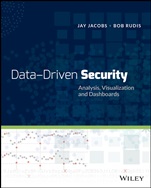
Data–Driven Security: Analysis, Visualization and Dashboards
ISBN 9781118793725
Autor: Jay Jacobs, Bob Rudis
Wydawca: Wiley
Dostępność: 3-6 tygodni
Cena: 253,05 zł
Przed złożeniem zamówienia prosimy o kontakt mailowy celem potwierdzenia ceny.
ISBN13: |
9781118793725 |
ISBN10: |
1118793722 |
Autor: |
Jay Jacobs, Bob Rudis |
Oprawa: |
Paperback |
Rok Wydania: |
2014-04-08 |
Ilość stron: |
352 |
Wymiary: |
231x181 |
Tematy: |
UT |
A practical guide to securing your data and IT infrastructure From safeguarding corporate data to keeping e–commerce transactions secure, todays IT professionals are tasked with enormous and complex data security responsibilities. In Data–Driven Security , Jay Jacobs and Bob Rudis draw together three of the most important topics in ITsecurity, data analysis, and visualizationto present a real–world security strategy to defend your networks. Turning their backs on insufficient security based on hunches and best practices, the authors help you access the world of security data analysis and visualization, where real data drives security decisions, and they teach you to apply the principles of that security with real–world cases. Develop an understanding of how to acquire, prepare, and visualize security data Learn how to use the analytical and visualization tools in R and Python Dissect IP addresses to find malicious activity Map security data and learn statistical techniques to look for significant connections Understand how visual communication works and how it can help you see and present your data clearly Develop effective, informative security dashboards Design analytical models to help you detect malicious behavior Gain practical how–to knowledge from specific, real–world use cases detailing an array of data and network security scenarios Visit the companion website at www.wiley.com/go/datadrivensecurity for additional information and resources
Introduction xv Chapter 1 • The Journey to Data–Driven Security 1 A Brief History of Learning from Data 2 Nineteenth Century Data Analysis 2 Twentieth Century Data Analysis 3 Twenty–First Century Data Analysis 4 Gathering Data Analysis Skills 5 Domain Expertise 6 Programming Skills 8 Data Management 10 Statistics 12 Visualization (aka Communication) 14 Combining the Skills 15 Centering on a Question 16 Creating a Good Research Question 17 Exploratory Data Analysis 18 Summary 18 Recommended Reading 19 Chapter 2 • Building Your Analytics Toolbox: A Primer on Using R and Python for Security Analysis 21 Why Python? Why R? And Why Both? 22 Why Python? 23 Why R? 23 Why Both? 24 Jumpstarting Your Python Analytics with Canopy 24 Understanding the Python Data Analysis and Visualization Ecosystem 25 Setting Up Your R Environment 29 Introducing Data Frames 33 Organizing Analyses 36 Summary 37 Recommended Reading 38 Chapter 3 • Learning the “Hello World” of Security Data Analysis 39 Solving a Problem 40 Getting Data41 Reading In Data 43 Exploring Data 47 Homing In on a Question 58 Summary 70 Recommended Reading 70 Chapter 4 • Performing Exploratory Security Data Analysis 71 Dissecting the IP Address73 Representing IP Addresses 73 Segmenting and Grouping IP Addresses 75 Locating IP Addresses 77 Augmenting IP Address Data80 Association/Correlation, Causation, and Security Operations Center Analysts Gone Rogue 86 Mapping Outside the Continents90 Visualizing the ZeuS Botnet 92 Visualizing Your Firewall Data 98 Summary 100 Recommended Reading101 Chapter 5 • From Maps to Regression 103 Simplifying Maps 105 How Many ZeroAccess Infections per Country? 108 Changing the Scope of Your Data 111 The Potwin Effect 113 Is This Weird? 117 Counting in Counties 120 Moving Down to Counties 122 Introducing Linear Regression 125 Understanding Common Pitfalls in Regression Analysis 130 Regression on ZeroAccess Infections 131 Summary 136 Recommended Reading 136 Chapter 6 • Visualizing Security Data 137 Why Visualize? 138 Unraveling Visual Perception 139 Understanding the Components of Visual Communications 144 Avoiding the Third Dimension 144 Using Color 146 Putting It All Together 148 Communicating Distributions 154 Visualizing Time Series 156 Experiment on Your Own 157 Turning Your Data into a Movie Star 158 Summary 159 Recommended Reading 160 Chapter 7 • Learning from Security Breaches 161 Setting Up the Research 162 Considerations in a Data Collection Framework 164 Aiming for Objective Answers 164 Limiting Possible Answers 164 Allowing “Other,” and “Unknown” Options 164 Avoiding Conflation and Merging the Minutiae 165 An Introduction to VERIS 166 Incident Tracking 168 Threat Actor 168 Threat Actions 169 Information Assets 173 Attributes 173 Discovery/Response 176 Impact 176 Victim 177 Indicators 179 Extending VERIS with Plus 179 Seeing VERIS in Action 179 Working with VCDB Data 181 Getting the Most Out of VERIS Data 185 Summary 189 Recommended Reading 189 Chapter 8 • Breaking Up with Your Relational Database 191 Realizing the Container Has Constraints 195 Constrained by Schema 196 Constrained by Storage 198 Constrained by RAM 199 Constrained by Data 200 Exploring Alternative Data Stores 200 BerkeleyDB 201 Redis 203 Hive 207 MongoDB 210 Special Purpose Databases 214 Summary 215 Recommended Reading 216 Chapter 9 • Demystifying Machine Learning 217 Detecting Malware 218 Developing a Machine Learning Algorithm 220 Validating the Algorithm 221 Implementing the Algorithm 222 Benefiting from Machine Learning 226 Answering Questions with Machine Learning 226 Measuring Good Performance 227 Selecting Features 228 Validating Your Model 230 Specific Learning Methods 230 Supervised 231 Unsupervised 234 Hands On: Clustering Breach Data 236 Multidimensional Scaling on Victim Industries 238 Hierarchical Clustering on Victim Industries 240 Summary 242 Recommended Reading 243 Chapter 10 • Designing Effective Security Dashboards 245 What Is a Dashboard, Anyway? 246 A Dashboard Is Not an Automobile 246 A Dashboard Is Not a Report 248 A Dashboard Is Not a Moving Van 251 A Dashboard Is Not an Art Show 253 Communicating and Managing “Security” through Dashboards 258 Lending a Hand to Handlers 258 Raising Dashboard Awareness 260 The Devil (and Incident Response Delays) Is in the Details 262 Projecting “Security” 263 Summary 267 Recommended Reading 267 Chapter 11 • Building Interactive Security Visualizations 269 Moving from Static to Interactive270 Interaction for Augmentation 271 Interaction for Exploration 274 Interaction for Illumination 276 Developing Interactive Visualizations 281 Building Interactive Dashboards with Tableau 281 Building Browser–Based Visualizations with D3 284 Summary 294 Recommended Reading 295 Chapter 12 • Moving Toward Data–Driven Security 297 Moving Yourself toward Data–Driven Security 298 The Hacker 299 The Statistician 302 The Security Domain Expert 302 The Danger Zone 303 Moving Your Organization toward Data–Driven Security 303 Ask Questions That Have Objective Answers 304 Find and Collect Relevant Data 304 Learn through Iteration 305 Find Statistics 306 Summary 308 Recommended Reading 308 Appendix A • Resources and Tools 309 Appendix B • References 313 Index • 321
Jay Jacobs is the coauthor of Verizon Data Breach Investigation Reports and the cofounder of the Society of Information Risk Analysts, where he currently sits on the board of directors. Bob Rudis is the Director of Enterprise Information Security & IT Risk Management at Liberty Mutual Insurance and was named one of the Top 25 Influencers in Information Security by Tripwire .
Koszyk
Książek w koszyku: 0 szt.
Wartość zakupów: 0,00 zł
Informacje


Kontakt
Gambit
Centrum Oprogramowania
i Szkoleń Sp. z o.o.
Al. Pokoju 29b/22-24
31-564 Kraków
Siedziba Księgarni
ul. Kordylewskiego 1
31-542 Kraków
+48 12 410 5991
+48 12 410 5987
+48 12 410 5989
Subskrypcje
Administratorem danych osobowych jest firma Gambit COiS Sp. z o.o. Na podany adres będzie wysyłany wyłącznie biuletyn informacyjny.
Autoryzacja płatności

Informacje na temat autoryzacji płatności poprzez PayU.

© Copyright 2012: GAMBIT COiS Sp. z o.o. Wszelkie prawa zastrzeżone.
Projekt i wykonanie: Alchemia Studio Reklamy