


Wydawcy
Katalog tematyczny
- Archeologia (109)
- Ekonomia, finanse, business (13704)
- Filozofia (1445)
- Historia (3040)
- Języki i językoznawstwo (2356)
- Lifestyle, hobby i rozrywka (475)
- Medycyna (9704)
- Nauki humanistyczne (4)
- Nauki o Ziemi i środowisku (2638)
- Nauki ścisłe (20412)
- Astronomia (294)
- Biologia (5119)
- Chemia (6540)
- Fizyka (3309)
- Matematyka (4574)
- Algebra (171)
- Analiza matematyczna (902)
- Filozofia matematyki (1)
- Geometria (237)
- Historia matematyki (57)
- Kombinatoryka, teoria grafów (67)
- Matematyka dyskretna (35)
- Matematyka stosowana (555)
- Optymalizacja (104)
- Podstawy matematyki (129)
- Statystyka, prawdopodobieństwo (296)
- Teoria grup (63)
- Teoria liczb (77)
- Topologia (66)
- Nauki ścisłe, ogólnie (503)
- Nauki społeczne (8486)
- Nauki techniczne (13450)
- Prawo (1696)
- Publikacje informacyjne i interdyscyplinarne (1288)
- Religia i wierzenia (917)
- Technika komputerowa (4067)
- Zdrowie, relacje międzyludzkie i rozwój osobisty (657)





Informacje szczegółowe o książce
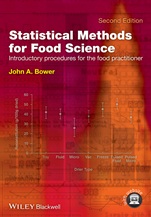
Statistical Methods for Food Science: Introductory Procedures for the Food Practitioner
ISBN 9781118541647
Autor: John A. Bower
Wydawca: Wiley
Dostępność: 3-6 tygodni
Cena: 296,10 zł
Przed złożeniem zamówienia prosimy o kontakt mailowy celem potwierdzenia ceny.
ISBN13: |
9781118541647 |
ISBN10: |
1118541642 |
Autor: |
John A. Bower |
Oprawa: |
Paperback |
Rok Wydania: |
2013-08-30 |
Numer Wydania: |
2nd Edition |
Ilość stron: |
334 |
Wymiary: |
244x170 |
Tematy: |
PB |
The recording and analysis of food data are becoming increasingly sophisticated. Consequently, the food scientist in industry or at study faces the task of using and understanding statistical methods. Statistics is often viewed as a difficult subject and is often avoided because of its complexity and a lack of specific application to the requirements of food science. This situation is changing – there is now much material on multivariate applications for the more advanced reader, but a case exists for a univariate approach aimed at the non–statistician. This second edition of Statistical Methods for Food Science provides a source text on accessible statistical procedures for the food scientist, and is aimed at professionals and students in food laboratories where analytical, instrumental and sensory data are gathered and require some form of summary and analysis before interpretation. It is suitable for the food analyst, the sensory scientist and the product developer, and others who work in food–related disciplines involving consumer survey investigations will also find many sections of use. There is an emphasis on a ‘hands–on’ approach, and worked examples using computer software packages and the minimum of mathematical formulae are included. The book is based on the experience and practice of a scientist engaged for many years in research and teaching of analytical and sensory food science at undergraduate and post–graduate level. This revised and updated second edition is accompanied by a new companion website giving the reader access to the datasets and Excel spreadsheets featured in the book. Check it out now by visiting www.wiley.com/go/bower/statistical or by scanning the QR code below.
Preface ix About the companion website xi Acknowledgements xiii Part I Introduction and basics Chapter 1 Basics and terminology 3 1.1 Introduction 3 1.2 What the book will cover 4 1.3 The importance of statistics 6 1.4 Applications of statistical procedures in food science 6 1.5 Focus and terminology 9 References 12 Software sources and links 13 Chapter 2 The nature of data and their collection 15 2.1 Introduction 15 2.2 The nature of data 15 2.3 Collection of data and sampling 26 2.4 Populations 36 References 42 Chapter 3 Descriptive statistics 44 3.1 Introduction 44 3.2 Tabular and graphical displays 45 3.3 Descriptive statistic measures 59 3.4 Measurement uncertainty 69 3.5 Determination of population nature and variance homogeneity 86 References 89 Chapter 4 Analysis of differences – significance testing 91 4.1 Introduction 91 4.2 Significance (hypothesis) testing 92 4.3 Assumptions of significance tests 102 4.4 Stages in a significance test 103 4.5 Selection of significance tests 108 4.6 Parametric or non–parametric tests 112 References 113 Chapter 5 Types of significance test 114 5.1 Introduction 114 5.2 General points 114 5.3 Significance tests for nominal data (non–parametric) 115 5.4 Significance tests for ordinal data (non–parametric) 122 5.5 Significance tests for interval and ratio data (parametric) 129 References 139 Chapter 6 Association, correlation and regression 141 6.1 Introduction 141 6.2 Association 142 6.3 Correlation 144 6.4 Regression 149 References 153 Chapter 7 Experimental design 155 7.1 Introduction 155 7.2 Terminology and general procedure 155 7.3 Sources of experimental error and its reduction 159 7.4 Types of design 164 7.5 Analysis methods and issues 174 7.6 Applicability of designs 176 References 176 Part II Applications Chapter 8 Sensory and consumer data 181 8.1 Introduction 181 8.2 The quality and nature of sensory and consumer data 181 8.3 Experimental design issues 183 8.4 Consumer data (sensory and survey) 183 8.5 Trained panel sensory data 199 8.6 Analysis of relationships 216 References 216 Chapter 9 Instrumental data 219 9.1 Introduction 219 9.2 Quality and nature of instrumental data 219 9.3 Sampling and replication 222 9.4 Experimental design issues 224 9.5 Statistical analysis of instrumental data 226 9.6 Chemical analysis applications 228 9.7 Analysis of relationships 244 References 244 Chapter 10 Food product formulation 246 10.1 Introduction 246 10.2 Design application in food product development 246 10.3 Single ingredient effects 248 10.4 Two or more ingredients 252 10.5 Screening of many ingredients 257 10.6 Formulation by constraints 263 References 269 Chapter 11 Statistical quality control 271 11.1 Introduction 271 11.2 Types of statistical quality control 272 11.3 Sampling procedures 273 11.4 Control charts 274 11.5 Acceptance sampling 288 References 292 Chapter 12 Multivariate applications 293 12.1 Introduction 293 12.2 Multivariate methods and their characteristics 293 12.3 Multivariate modes 294 12.4 Relationship of consumer preference with sensory measures 310 References 311 Index 313
John A. Bower is a former lecturer and course leader (BSc Food Studies) at Queen Margaret University, Edinburgh, UK. He retired in 2009. Since then he has continued to write statistics–related material for a variety of organisations and publications
Koszyk
Książek w koszyku: 0 szt.
Wartość zakupów: 0,00 zł
Informacje


Kontakt
Gambit
Centrum Oprogramowania
i Szkoleń Sp. z o.o.
Al. Pokoju 29b/22-24
31-564 Kraków
Siedziba Księgarni
ul. Kordylewskiego 1
31-542 Kraków
+48 12 410 5991
+48 12 410 5987
+48 12 410 5989
Subskrypcje
Administratorem danych osobowych jest firma Gambit COiS Sp. z o.o. Na podany adres będzie wysyłany wyłącznie biuletyn informacyjny.
Autoryzacja płatności

Informacje na temat autoryzacji płatności poprzez PayU.

© Copyright 2012: GAMBIT COiS Sp. z o.o. Wszelkie prawa zastrzeżone.
Projekt i wykonanie: Alchemia Studio Reklamy