


Wydawcy
Katalog tematyczny
- Archeologia (109)
- Ekonomia, finanse, business (13704)
- Filozofia (1445)
- Historia (3040)
- Języki i językoznawstwo (2356)
- Lifestyle, hobby i rozrywka (475)
- Medycyna (9704)
- Nauki humanistyczne (4)
- Nauki o Ziemi i środowisku (2638)
- Nauki ścisłe (20412)
- Astronomia (294)
- Biologia (5119)
- Chemia (6540)
- Fizyka (3309)
- Matematyka (4574)
- Algebra (171)
- Analiza matematyczna (902)
- Filozofia matematyki (1)
- Geometria (237)
- Historia matematyki (57)
- Kombinatoryka, teoria grafów (67)
- Matematyka dyskretna (35)
- Matematyka stosowana (555)
- Optymalizacja (104)
- Podstawy matematyki (129)
- Statystyka, prawdopodobieństwo (296)
- Teoria grup (63)
- Teoria liczb (77)
- Topologia (66)
- Nauki ścisłe, ogólnie (503)
- Nauki społeczne (8486)
- Nauki techniczne (13450)
- Prawo (1696)
- Publikacje informacyjne i interdyscyplinarne (1288)
- Religia i wierzenia (917)
- Technika komputerowa (4067)
- Zdrowie, relacje międzyludzkie i rozwój osobisty (657)





Informacje szczegółowe o książce
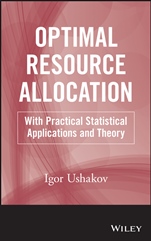
Optimal Resource Allocation: With Practical Statistical Applications and Theory
ISBN 9781118389973
Autor: Igor A. Ushakov
Wydawca: Wiley
Dostępność: 3-6 tygodni
Cena: 475,65 zł
Przed złożeniem zamówienia prosimy o kontakt mailowy celem potwierdzenia ceny.
ISBN13: |
9781118389973 |
ISBN10: |
1118389972 |
Autor: |
Igor A. Ushakov |
Oprawa: |
Hardback |
Rok Wydania: |
2013-05-17 |
Ilość stron: |
256 |
Wymiary: |
236x161 |
Tematy: |
PB |
Optimal Resource Allocation: With Practical Statistical Applications and Theory features the application of probabilistic and statistical methods used in reliability engineering during the different phases of life cycles of technical systems.
Bridging the gap between reliability engineering and applied mathematics, the book outlines different approaches to optimal resource allocation and various applications of models and algorithms for solving real-world problems. In addition, the fundamental background on optimization theory and various illustrative numerical examples are provided.
Optimal Resource Allocation is a must-have guide for electrical, mechanical, and reliability engineers dealing with engineering design and optimal reliability problems. In addition, the book is excellent for graduate and PhD-level courses in reliability theory and optimization.
Preface xi
1 BASIC MATHEMATICAL REDUNDANCY MODELS 1
1.1 Types of Models 2
1.2 Non-repairable Redundant Group with Active Redundant Units 3
1.3 Non-repairable Redundant Group with Standby Redundant Units 7
1.4 Repairable Redundant Group with Active Redundant Units 10
1.5 Repairable Redundant Group with Standby Redundant Units 13
1.6 Multi-level Systems and System Performance Estimation 15
1.7 Brief Review of Other Types of Redundancy 16
1.8 Time Redundancy 24
1.9 Some Additional Optimization Problems 27
Chronological Bibliography of Main Monographs on Reliability Theory (with topics on Optimization) 30
2 FORMULATION OF OPTIMAL REDUNDANCY PROBLEMS 33
2.1 Problem Description 33
2.2 Formulation of the Optimal Redundancy Problem with a Single Restriction 35
2.3 Formulation of Optimal Redundancy Problems with Multiple Constraints 39
2.4 Formulation of Multi-Criteria Optimal Redundancy Problems 43
Chronological Bibliography 45
3 METHOD OF LAGRANGE MULTIPLIERS 48
Chronological Bibliography 55
4 STEEPEST DESCENT METHOD 56
4.1 The Main Idea of SDM 56
4.2 Description of the Algorithm 57
4.3 The Stopping Rule 60
4.5 Approximate Solution 66
Chronological Bibliography 68
5 DYNAMIC PROGRAMMING 69
5.1 Bellman’s Algorithm 69
5.2 Kettelle’s Algorithm 73
Chronological Bibliography 84
6 UNIVERSAL GENERATING FUNCTIONS 85
6.1 Generating Function 85
6.2 Universal GF (U-function) 87
Chronological Bibliography 94
7 GENETIC ALGORITHMS 96
7.1 Introduction 96
7.2 Structure of Steady-State Genetic Algorithms 100
7.3 Related Techniques 102
Chronological Bibliography 104
8 MONTE CARLO SIMULATION 107
8.1 Introductory Remarks 107
8.2 Formulation of Optimal Redundancy Problems in Statistical Terms 108
8.3 Algorithm for Trajectory Generation 108
8.4 Description of the Idea of the Solution 111
8.5 Inverse Optimization Problem 114
8.6 Direct Optimization Problem 124
Chronological Bibliography 129
9 COMMENTS ON CALCULATION METHODS 130
9.1 Comparison of Methods 130
9.2 Sensitivity Analysis of Optimal Redundancy Solutions 135
10 OPTIMAL REDUNDANCY WITH SEVERAL LIMITING FACTORS 142
10.1 Method of “Weighing Costs” 142
10.2 Method of Generalized Generating Functions 146
Chronological Bibliography 149
11 OPTIMAL REDUNDANCY IN MULTISTATE SYSTEMS 150
Chronological Bibliography 170
12 CASE STUDIES 172
12.1 Spare Supply System for Worldwide Telecommunication System Globalstar 172
12.2 Optimal Capacity Distribution of Telecommunication Backbone Network Resources 179
12.3 Optimal Spare Allocation for Mobile Repair Station 183
Chronological Bibliography 190
13 COUNTER-TERRORISM: PROTECTION RESOURCES ALLOCATION 191
13.1 Introduction 191
13.2 Written Description of the Problem 192
13.3 Evaluation of Expected Loss 195
13.4 Algorithm of Resource Allocation 197
13.5 Branching System Protection 201
13.6 Fictional Case Study 210
13.7 Measures of Defense, Their Effectiveness, and Related Expenses 217
13.8 Antiterrorism Resource Allocation under Fuzzy Subjective Estimates 223
13.9 Conclusion 232
Chronological Bibliography 232
About the author 235
Koszyk
Książek w koszyku: 0 szt.
Wartość zakupów: 0,00 zł
Informacje


Kontakt
Gambit
Centrum Oprogramowania
i Szkoleń Sp. z o.o.
Al. Pokoju 29b/22-24
31-564 Kraków
Siedziba Księgarni
ul. Kordylewskiego 1
31-542 Kraków
+48 12 410 5991
+48 12 410 5987
+48 12 410 5989
Subskrypcje
Administratorem danych osobowych jest firma Gambit COiS Sp. z o.o. Na podany adres będzie wysyłany wyłącznie biuletyn informacyjny.
Autoryzacja płatności

Informacje na temat autoryzacji płatności poprzez PayU.

© Copyright 2012: GAMBIT COiS Sp. z o.o. Wszelkie prawa zastrzeżone.
Projekt i wykonanie: Alchemia Studio Reklamy