


Wydawcy
Katalog tematyczny
- Archeologia (109)
- Ekonomia, finanse, business (13704)
- Filozofia (1445)
- Historia (3040)
- Języki i językoznawstwo (2356)
- Lifestyle, hobby i rozrywka (475)
- Medycyna (9704)
- Nauki humanistyczne (4)
- Nauki o Ziemi i środowisku (2638)
- Nauki ścisłe (20412)
- Astronomia (294)
- Biologia (5119)
- Chemia (6540)
- Fizyka (3309)
- Matematyka (4574)
- Algebra (171)
- Analiza matematyczna (902)
- Filozofia matematyki (1)
- Geometria (237)
- Historia matematyki (57)
- Kombinatoryka, teoria grafów (67)
- Matematyka dyskretna (35)
- Matematyka stosowana (555)
- Optymalizacja (104)
- Podstawy matematyki (129)
- Statystyka, prawdopodobieństwo (296)
- Teoria grup (63)
- Teoria liczb (77)
- Topologia (66)
- Nauki ścisłe, ogólnie (503)
- Nauki społeczne (8486)
- Nauki techniczne (13450)
- Prawo (1696)
- Publikacje informacyjne i interdyscyplinarne (1288)
- Religia i wierzenia (917)
- Technika komputerowa (4067)
- Zdrowie, relacje międzyludzkie i rozwój osobisty (657)





Informacje szczegółowe o książce
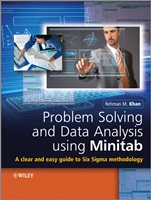
Problem Solving and Data Analysis Using Minitab: A Clear and Easy Guide to Six Sigma Methodology
ISBN 9781118307571
Autor: Rehman M. Khan
Wydawca: Wiley
Dostępność: 3-6 tygodni
Cena: 359,10 zł
Przed złożeniem zamówienia prosimy o kontakt mailowy celem potwierdzenia ceny.
ISBN13: |
9781118307571 |
ISBN10: |
1118307577 |
Autor: |
Rehman M. Khan |
Oprawa: |
Hardback |
Rok Wydania: |
2013-02-22 |
Ilość stron: |
484 |
Wymiary: |
289x224 |
Tematy: |
PB |
Problem Solving and Data Analysis using Minitab presents example-based learning to aid readers in understanding how to use MINITAB 16 for statistical analysis and problem solving. Each example and exercise is broken down into the exact steps that must be followed in order to take the reader through key learning points and work through complex analyses. Exercises are featured at the end of each example so that the reader can be assured that they have understood the key learning points.
Making Six Sigma statistical methodology accessible to beginners, this book is aimed at numerical professionals, students or academics who wish to learn and apply statistical techniques for problem solving, process improvement or data analysis whilst keeping mathematical theory to a minimum.
Acknowledgements ix
1 Introduction 1
2 Minitab Navigation 6
2.1 Windows 6
2.2 Dropdown Menus 8
2.3 Importing Data 13
2.4 Column Formats 15
2.5 The Calculator 18
2.6 Basic Graphs 20
2.7 Adding Detail to Graphs 25
2.8 Saving Graphs 27
2.9 Dotplots 28
2.10 Using the Brush 32
2.11 Boxplots 34
2.12 Bar Charts 40
2.13 The Layout Tool 42
2.14 Producing Graphs with the Assistant 44
2.15 Producing Reports 46
2.16 Creating a New Project/Worksheet Button 49
3 Basic Statistics 50
3.1 Types of Data 50
3.2 Central Location 50
3.3 Dispersion 51
3.4 Descriptive Statistics 52
3.5 Inferential Statistics 59
3.6 Confidence Intervals 60
3.7 Normal Distribution 62
3.8 Deviations from Normality 63
3.9 Central Limit Theorem 70
4 Hypothesis Testing 71
4.1 The Problem Statement 72
4.2 Null and Alternate Hypotheses 72
4.3 Establishing the Risks 73
4.4 Power and Sample Size 76
4.5 Conducting the Test and Evaluating the Results 80
4.6 One Sample t Test 81
4.7 Paired t Test 105
4.8 Two Variance Test 118
4.9 Two Sample t Test 130
5 Analysis of Variance 150
5.1 How ANOVA Works 150
5.2 One Way ANOVA (Classic) 152
5.3 One Way ANOVA with the Assistant 164
5.4 ANOVA General Linear Model 192
6 Measurement System Analysis 209
6.1 The Importance of Measurement Systems 209
6.2 How Measurement Systems Affect Data 209
6.3 Analysing the Appropriate Systems 210
6.4 Types of Measurement Systems Error 211
6.5 Measurement Systems Toolbox 213
6.6 Type 1 Gage Study 214
6.7 Gage Repeatability and Reproducibility Studies 217
6.8 Create Gage R&R Study Worksheet 219
6.9 Gage R&R (Crossed) 221
6.10 Gage R&R Crossed Studies 221
6.11 Gage R&R (Crossed) Study 222
6.12 Gage R&R (Nested) 247
6.13 Gage Bias and Linearity Study 255
7 Statistical Process Control 261
7.1 The Origins of Statistical Process Control 261
7.2 Common Cause and Special Cause Variation 262
7.3 Detection Rules for Special Causes 263
7.4 False Alarms 266
7.5 When Should We Use SPC Charts? 267
7.6 Subgrouping 268
7.7 The Appropriate Chart 268
7.8 The I-MR Chart 269
7.9 The Xbar-R Chart 291
7.10 The Xbar-S Chart 299
7.11 SPC Exercise 307
7.12 The I-MR-R/S Chart 310
8 Process Capability 313
8.1 The Basics of Process Capability 313
8.2 Short Term and Overall Capability 318
8.3 Capability Analysis for Normal Data 319
8.4 Capability Analysis for Non Normal Data 329
8.5 Capability Comparison using the Assistant 340
9 Correlation and Regression 344
9.1 What are Correlation and Regression? 344
9.2 Correlation 346
9.3 Multiple Correlations 349
9.4 Introduction to Regression 354
9.5 Single Predictor Regression 355
9.6 Introduction to Multiple Predictor Regression 372
9.7 Multiple Predictor Regression 373
9.8 Predictor Selection Procedure 396
9.9 Nonlinear Regression 400
10 Design of Experiment 407
10.1 Why Use Design of Experiment? 407
10.2 Types of DOE 407
10.3 DOE Terminology 408
10.4 Two Level Factorial Designs 412
10.5 Fractional Factorial Designs 439
11 Help 456
11.1 Help Overview 456
11.2 Help! Help! 457
11.3 Tutorials 461
11.4 StatGuide 463
11.5 Methods and Formulas 464
11.6 Meet Minitab 466
11.7 Help on the Web 466
11.8 Help on the Web and Datasets 468
11.9 Datasets 469
Index 471
Koszyk
Książek w koszyku: 0 szt.
Wartość zakupów: 0,00 zł
Informacje


Kontakt
Gambit
Centrum Oprogramowania
i Szkoleń Sp. z o.o.
Al. Pokoju 29b/22-24
31-564 Kraków
Siedziba Księgarni
ul. Kordylewskiego 1
31-542 Kraków
+48 12 410 5991
+48 12 410 5987
+48 12 410 5989
Subskrypcje
Administratorem danych osobowych jest firma Gambit COiS Sp. z o.o. Na podany adres będzie wysyłany wyłącznie biuletyn informacyjny.
Autoryzacja płatności

Informacje na temat autoryzacji płatności poprzez PayU.

© Copyright 2012: GAMBIT COiS Sp. z o.o. Wszelkie prawa zastrzeżone.
Projekt i wykonanie: Alchemia Studio Reklamy