


Wydawcy
Katalog tematyczny
- Archeologia (109)
- Ekonomia, finanse, business (13704)
- Filozofia (1445)
- Historia (3040)
- Języki i językoznawstwo (2356)
- Lifestyle, hobby i rozrywka (475)
- Medycyna (9704)
- Nauki humanistyczne (4)
- Nauki o Ziemi i środowisku (2638)
- Nauki ścisłe (20412)
- Nauki społeczne (8486)
- Nauki techniczne (13450)
- Prawo (1696)
- Publikacje informacyjne i interdyscyplinarne (1288)
- Religia i wierzenia (917)
- Technika komputerowa (4067)
- Bazy danych (75)
- Bezpieczeństwo komputerowe (454)
- Certyfikacja komputerowa (1)
- Grafika i media cyfrowe (32)
- Informatyka (779)
- Komputery, ogólnie (74)
- Programowanie (351)
- Programy komercyjne (49)
- Sieci komputerowe (350)
- Sprzęt komputerowy (4)
- Systemy operacyjne (32)
- Technika cyfrowa na co dzień (7)
- Zdrowie, relacje międzyludzkie i rozwój osobisty (657)





Informacje szczegółowe o książce
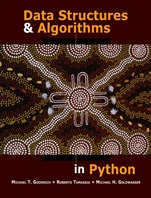
Data Structures and Algorithms in Python
ISBN 9781118290279
Autor: Michael T. Goodrich, Roberto Tamassia, Michael H. Goldwasser
Wydawca: Wiley
Dostępność: 3-6 tygodni
Cena: 887,25 zł
Przed złożeniem zamówienia prosimy o kontakt mailowy celem potwierdzenia ceny.
ISBN13: |
9781118290279 |
ISBN10: |
1118290275 |
Autor: |
Michael T. Goodrich, Roberto Tamassia, Michael H. Goldwasser |
Oprawa: |
Hardback |
Rok Wydania: |
2013-07-05 |
Ilość stron: |
768 |
Wymiary: |
246x196 |
Tematy: |
UP |
This all–new Data Structures and Algorithms in Python isdesigned to provide an introduction to data structures andalgorithms, including their design, analysis, and implementation.The authors take advantage of the beauty and simplicity of Pythonto present executable source code that is clear and concise.Furthermore, a consistent object–oriented viewpoint is retainedthroughout the book, including the use of inheritance, both tomaximize code reuse and to draw attention to the clear similaritiesand differences of various abstract data types and algorithmicapproaches.
This is a sister book to Goodrich &Tamassia s Data Structures and Algorithms in Java andGoodrich, Tamassia and Mount s Data Structures andAlgorithms in C++. This Python version retains much of the samepedagogical approach and general structure as the Java and C++versions, so that curriculums that teach data structures in Python,Java, and C++ can share the same core syllabus.
Key Features of this Book
A primer that reviews the basics of programming in Python(Chapter 1), followed by a separate introduction toobject–oriented programming in Python (Chapter 2). Extensive coverage of recursion (Chapter 4). A chapter describing the array–based underpinnings ofPython s standard list, string, and tuple classes (Chapter5), including both theoretical and empirical analyses of theirefficiencies. Source code with complete implementations of the majority ofdata structures and algorithms described in the book; the codefollows modern standards for Python 3, and makes use of thestandard collections module. 500 illustrations that present data structures and algorithmsin a clear, visual manner. More than 750 exercises, divided into categories ofreinforcement, creativity, and projects.About the cover:
The cover art is based on an indigenous Australian paintingstyle portraying what is known as Dreamtime. This style istraditionally iconic and representative of connections betweenpoints of interest or concepts; hence, it is a fitting way tocapture at a high level the connections and points of interest usedto visualize data structures and algorithms.
Preface v
1 Python Primer 1
1.1 Python Overview.2
1.2 Objects in Python.4
1.3 Expressions, Operators, and Precedence.12
1.4 Control Flow 18
1.5 Functions 23
1.6 Simple Input and Output 30
1.7 Exception Handling.33
1.8 Iterators and Generators 39
1.9 Additional Python Conveniences 42
1.10 Scopes and Namespaces 46
1.11 Modules and the Import Statement 48
1.12 Exercises 51
2 Object–Oriented Programming 56
2.1 Goals, Principles, and Patterns 57
2.2 Software Development 62
2.3 Class Definitions.69
2.4 Inheritance 82
2.5 Namespaces and Object–Orientation. 96
2.6 Shallow and Deep Copying101
2.7 Exercises 103
3 Algorithm Analysis 109
3.1 Experimental Studies 111
3.1.1 Moving Beyond Experimental Analysis.113
3.2 The Seven Functions Used in This Book.115
3.3 Asymptotic Analysis.123
3.4 Simple Justification Techniques 137
3.5 Exercises 141
4 Recursion 148
4.1 Illustrative Examples 150
4.2 Analyzing Recursive Algorithms 161
4.3 Recursion Run Amok 165
4.4 Further Examples of Recursion169
4.5 Designing Recursive Algorithms 177
4.6 Eliminating Tail Recursion178
4.7 Exercises 180
5 Array–Based Sequences 183
5.1 Python s Sequence Types 184
5.2 Low–Level Arrays.185
5.3 Dynamic Arrays and Amortization 192
5.4 Efficiency of Python s Sequence Types. 202
5.5 Using Array–Based Sequences210
5.6 Multidimensional Data Sets219
5.7 Exercises 224
6 Stacks, Queues, and Deques 228
6.1 Stacks.229
6.2 Queues.239
6.3 Double–Ended Queues 247
6.4 Exercises 250
7 Linked Lists 255
7.1 Singly Linked Lists.256
7.2 Circularly Linked Lists 266
7.3 Doubly Linked Lists.270
7.4 The Positional List ADT 277
7.5 Sorting a Positional List 285
7.6 Case Study: Maintaining Access Frequencies 286
7.7 Link–Based vs Array–Based Sequences. 292
7.8 Exercises 294
8 Trees 299
8.1 General Trees 300
8.2 Binary Trees 311
8.3 Implementing Trees.317
8.4 Tree Traversal Algorithms328
8.5 Case Study: An Expression Tree 348
8.6 Exercises 352
9 Priority Queues 362
9.1 The Priority Queue Abstract Data Type.363
9.2 Implementing a Priority Queue 365
9.3 Heaps.370
9.4 Sorting with a Priority Queue385
9.5 Adaptable Priority Queues390
9.6 Exercises 395
10 Maps, Hash Tables, and Skip Lists 401
10.1 Maps and Dictionaries 402
10.2 Hash Tables 410
10.3 Sorted Maps 427
10.4 Skip Lists 437
10.5 Sets, Multisets, and Multimaps 446
10.6 Exercises 452
11 Search Trees 459
11.1 Binary Search Trees.460
11.2 Balanced Search Trees 475
11.2.1 Python Framework for Balancing Search Trees 478
11.3 AVL Trees 481
11.4 Splay Trees 490
11.5 (2,4) Trees 502
11.6 Red–Black Trees.512
11.7 Exercises 528
12 Sorting and Selection 536
12.1 Why Study Sorting Algorithms? 537
12.2 Merge–Sort 538
12.3 Quick–Sort 550
12.4 Studying Sorting through an Algorithmic Lens 562
12.5 Comparing Sorting Algorithms567
12.6 Python s Built–In Sorting Functions 569
12.7 Selection 571
12.8 Exercises 574
13 Text Processing 581
13.1 Abundance of Digitized Text582
13.2 Pattern–Matching Algorithms584
13.3 Dynamic Programming 594
13.4 Text Compression and the Greedy Method.601
13.5 Tries.604
13.6 Exercises 613
14 Graph Algorithms 619
14.1 Graphs.620
14.2 Data Structures for Graphs627
14.3 Graph Traversals.638
14.4 Transitive Closure.651
14.5 Directed Acyclic Graphs 655
14.6 Shortest Paths659
14.7 Minimum Spanning Trees 670
14.8 Exercises 686
15 Memory Management and B–Trees 697
15.1 Memory Management 698
15.2 Memory Hierarchies and Caching 705
15.3 External Searching and B–Trees 711
15.4 External–Memory Sorting 715
15.5 Exercises 717
A Character Strings in Python 721
B Useful Mathematical Facts 725
Bibliography 732
Index 737
Koszyk
Książek w koszyku: 0 szt.
Wartość zakupów: 0,00 zł
Informacje


Kontakt
Gambit
Centrum Oprogramowania
i Szkoleń Sp. z o.o.
Al. Pokoju 29b/22-24
31-564 Kraków
Siedziba Księgarni
ul. Kordylewskiego 1
31-542 Kraków
+48 12 410 5991
+48 12 410 5987
+48 12 410 5989
Subskrypcje
Administratorem danych osobowych jest firma Gambit COiS Sp. z o.o. Na podany adres będzie wysyłany wyłącznie biuletyn informacyjny.
Autoryzacja płatności

Informacje na temat autoryzacji płatności poprzez PayU.

© Copyright 2012: GAMBIT COiS Sp. z o.o. Wszelkie prawa zastrzeżone.
Projekt i wykonanie: Alchemia Studio Reklamy