


Wydawcy
Katalog tematyczny
- Archeologia (1)
- Ekonomia, finanse, business (698)
- Filozofia (20)
- Historia (57)
- Języki i językoznawstwo (4)
- Lifestyle, hobby i rozrywka (32)
- Medycyna (1025)
- Nauki humanistyczne (2)
- Nauki o Ziemi i środowisku (430)
- Nauki ścisłe (1680)
- Astronomia (218)
- Biologia (486)
- Chemia (9)
- Fizyka (440)
- Matematyka (422)
- Algebra (47)
- Analiza matematyczna (126)
- Filozofia matematyki (1)
- Geometria (33)
- Historia matematyki (2)
- Kombinatoryka, teoria grafów (14)
- Matematyka dyskretna (11)
- Matematyka stosowana (60)
- Optymalizacja (11)
- Podstawy matematyki (28)
- Statystyka, prawdopodobieństwo (13)
- Teoria grup (7)
- Teoria liczb (15)
- Topologia (18)
- Nauki ścisłe, ogólnie (91)
- Nauki społeczne (1297)
- Nauki techniczne (530)
- Prawo (1437)
- Publikacje informacyjne i interdyscyplinarne (32)
- Religia i wierzenia (15)
- Technika komputerowa (237)
- Zdrowie, relacje międzyludzkie i rozwój osobisty (4)





Informacje szczegółowe o książce
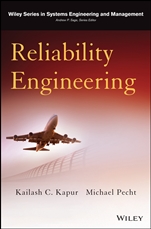
Reliability Engineering
ISBN 9781118140673
Autor: Kailash C. Kapur, Michael Pecht
Wydawca: Wiley
Dostępność: 3-6 tygodni
Cena: 665,70 zł
Przed złożeniem zamówienia prosimy o kontakt mailowy celem potwierdzenia ceny.
ISBN13: |
9781118140673 |
ISBN10: |
1118140672 |
Autor: |
Kailash C. Kapur, Michael Pecht |
Oprawa: |
Hardback |
Rok Wydania: |
2014-05-30 |
Ilość stron: |
512 |
Wymiary: |
255x186 |
Tematy: |
PB |
An Integrated Approach to Product Development Reliability Engineering presents an integrated approach to the design, engineering, and management of reliability activities throughout the life cycle of a product, including concept, research and development, design, manufacturing, assembly, sales, and service. Containing illustrative guides that include worked problems, numerical examples, homework problems, a solutions manual, and class–tested materials, it demonstrates to product development and manufacturing professionals how to distribute key reliability practices throughout an organization. The authors explain how to integrate reliability methods and techniques in the Six Sigma process and Design for Six Sigma (DFSS). They also discuss relationships between warranty and reliability, as well as legal and liability issues. Other topics covered include: Reliability engineering in the 21 st Century Probability life distributions for reliability analysis Process control and process capability Failure modes, mechanisms, and effects analysis Health monitoring and prognostics Reliability tests and reliability estimation Reliability Engineering provides a comprehensive list of references on the topics covered in each chapter. It is an invaluable resource for those interested in gaining fundamental knowledge of the practical aspects of reliability in design, manufacturing, and testing. In addition, it is useful for implementation and management of reliability programs.
Preface xv 1 Reliability Engineering in the Twenty–First Century 1 1.1 What Is Quality? 1 1.2 What Is Reliability? 2 1.2.1 The Ability to Perform as Intended 4 1.2.2 For a Specified Time 4 1.2.3 Life–Cycle Conditions 5 1.2.4 Reliability as a Relative Measure 5 1.3 Quality, Customer Satisfaction, and System Effectiveness 6 1.4 Performance, Quality, and Reliability 7 1.5 Reliability and the System Life Cycle 8 1.6 Consequences of Failure 12 1.6.1 Financial Loss 12 1.6.2 Breach of Public Trust 13 1.6.3 Legal Liability 15 1.6.4 Intangible Losses 15 1.7 Suppliers and Customers 16 1.8 Summary 16 Problems 17 2 Reliability Concepts 19 2.1 Basic Reliability Concepts 19 2.1.1 Concept of Probability Density Function 23 2.2 Hazard Rate 26 2.2.1 Motivation and Development of Hazard Rate 27 2.2.2 Some Properties of the Hazard Function 28 2.2.3 Conditional Reliability 31 2.3 Percentiles Product Life 33 2.4 Moments of Time to Failure 35 2.4.1 Moments about Origin and about the Mean 35 2.4.2 Expected Life or Mean Time to Failure36 2.4.3 Variance or the Second Moment about the Mean 36 2.4.4 Coeffi cient of Skewness 37 2.4.5 Coeffi cient of Kurtosis 37 2.5 Summary 39 Problems 40 3 Probability and Life Distributions for Reliability Analysis 45 3.1 Discrete Distributions 45 3.1.1 Binomial Distribution 46 3.1.2 Poisson Distribution 50 3.1.3 Other Discrete Distributions 50 3.2 Continuous Distributions 51 3.2.1 Weibull Distribution 55 3.2.2 Exponential Distribution 61 3.2.3 Estimation of Reliability for Exponential Distribution 64 3.2.4 The Normal (Gaussian) Distribution 67 3.2.5 The Lognormal Distribution 73 3.2.6 Gamma Distribution 75 3.3 Probability Plots 77 3.4 Summary 83 Problems 84 4 Design for Six Sigma 89 4.1 What Is Six Sigma? 89 4.2 Why Six Sigma? 90 4.3 How Is Six Sigma Implemented? 91 4.3.1 Steps in the Six Sigma Process 92 4.3.2 Summary of the Six Sigma Steps 97 4.4 Optimization Problems in the Six Sigma Process 98 4.4.1 System Transfer Function 99 4.4.2 Variance Transmission Equation 100 4.4.3 Economic Optimization and Quality Improvement 101 4.4.4 Tolerance Design Problem 102 4.5 Design for Six Sigma 103 4.5.1 Identify (I) 105 4.5.2 Characterize (C)106 4.5.3 Optimize (O) 106 4.5.4 Verify (V) 106 4.6 Summary 108 Problems 108 5 Product Development 111 5.1 Product Requirements and Constraints 112 5.2 Product Life Cycle Conditions 113 5.3 Reliability Capability 114 5.4 Parts and Materials Selection 114 5.5 Human Factors and Reliability 115 5.6 Deductive versus Inductive Methods 117 5.7 Failure Modes, Effects, and Criticality Analysis 117 5.8 Fault Tree Analysis 119 5.8.1 Role of FTA in Decision–Making 121 5.8.2 Steps of Fault Tree Analysis 122 5.8.3 Basic Paradigms for the Construction of Fault Trees 122 5.8.4 Defi nition of the Top Event 122 5.8.5 Faults versus Failures 122 5.8.6 Minimal Cut Sets 127 5.9 Physics of Failure 128 5.9.1 Stress Margins 128 5.9.2 Model Analysis of Failure Mechanisms 129 5.9.3 Derating 129 5.9.4 Protective Architectures 130 5.9.5 Redundancy 131 5.9.6 Prognostics 131 5.10 Design Review 131 5.11 Qualification 132 5.12 Manufacture and Assembly 134 5.12.1 Manufacturability 134 5.12.2 Process Verifi cation Testing 136 5.13 Analysis, Product Failure, and Root Causes 137 5.14 Summary 138 Problems 138 6 Product Requirements and Constraints 141 6.1 Defi ning Requirements 141 6.2 Responsibilities of the Supply Chain 142 6.2.1 Multiple–Customer Products 142 6.2.2 Single–Customer Products 143 6.2.3 Custom Products 144 6.3 The Requirements Document 144 6.4 Specifi cations 144 6.5 Requirements Tracking 146 6.6 Summary 147 Problems 147 7 Life–Cycle Conditions 149 7.1 Defining the Life–Cycle Profile 149 7.2 Life–Cycle Events 150 7.2.1 Manufacturing and Assembly 151 7.2.2 Testing and Screening 151 7.2.3 Storage 151 7.2.4 Transportation 151 7.2.5 Installation 151 7.2.6 Operation 152 7.2.7 Maintenance 152 7.3 Loads and Their Effects 152 7.3.1 Temperature 152 7.3.2 Humidity 155 7.3.3 Vibration and Shock 156 7.3.4 Solar Radiation 156 7.3.5 Electromagnetic Radiation 157 7.3.6 Pressure 157 7.3.7 Chemicals 158 7.3.8 Sand and Dust 159 7.3.9 Voltage 159 7.3.10 Current 159 7.3.11 Human Factors 160 7.4 Considerations and Recommendations for LCP Development 160 7.4.1 Extreme Specifications–Based Design (Global and Local Environments) 160 7.4.2 Standards–Based Profiles 161 7.4.3 Combined Load Conditions 161 7.4.4 Change in Magnitude and Rate of Change of Magnitude 165 7.5 Methods for Estimating Life–Cycle Loads 165 7.5.1 Market Studies and Standards Based Profiles as Sources of Data 165 7.5.2 In Situ Monitoring of Load Conditions 166 7.5.3 Field Trial Records, Service Records, and Failure Records 166 7.5.4 Data on Load Histories of Similar Parts, Assemblies, or Products 166 7.6 Summary 166 Problems 167 8 Reliability Capability 169 8.1 Capability Maturity Models 169 8.2 Key Reliability Practices 170 8.2.1 Reliability Requirements and Planning 170 8.2.2 Training and Development 171 8.2.3 Reliability Analysis 172 8.2.4 Reliability Testing 172 8.2.5 Supply–Chain Management 173 8.2.6 Failure Data Tracking and Analysis 173 8.2.7 Verification and Validation 174 8.2.8 Reliability Improvement 174 8.3 Summary 175 Problems 175 9 Parts Selection and Management 177 9.1 Part Assessment Process 177 9.1.1 Performance Assessment 178 9.1.2 Quality Assessment 179 9.1.3 Process Capability Index 179 9.1.4 Average Outgoing Quality 182 9.1.5 Reliability Assessment 182 9.1.6 Assembly Assessment 185 9.2 Parts Management 185 9.2.1 Supply Chain Management 185 9.2.2 Part Change Management 186 9.2.3 Industry Change Control Policies 187 9.3 Risk Management 188 9.4 Summary 190 Problems 191 10 Failure Modes, Mechanisms, and Effects Analysis 193 10.1 Development of FMMEA 193 10.2 Failure Modes, Mechanisms, and Effects Analysis 195 10.2.1 System Defi nition, Elements, and Functions 195 10.2.2 Potential Failure Modes 196 10.2.3 Potential Failure Causes 197 10.2.4 Potential Failure Mechanisms 197 10.2.5 Failure Models 197 10.2.6 Life–Cycle Profile 198 10.2.7 Failure Mechanism Prioritization 198 10.2.8 Documentation 200 10.3 Case Study 201 10.4 Summary 205 Problems 206 11 Probabilistic Design for Reliability and the Factor of Safety 207 11.1 Design for Reliability 207 11.2 Design of a Tension Element 208 11.3 Reliability Models for Probabilistic Design 209 11.4 Example of Probabilistic Design and Design for a Reliability Target 211 11.5 Relationship between Reliability, Factor of Safety, and Variability 212 11.6 Functions of Random Variables 215 11.7 Steps for Probabilistic Design 219 11.8 Summary 219 Problems 220 12 Derating and Uprating 223 12.1 Part Ratings 223 12.1.1 Absolute Maximum Ratings 224 12.1.2 Recommended Operating Conditions 224 12.1.3 Factors Used to Determine Ratings 225 12.2 Derating 225 12.2.1 How Is Derating Practiced? 225 12.2.2 Limitations of the Derating Methodology 231 12.2.3 How to Determine These Limits 238 12.3 Uprating 239 12.3.1 Parts Selection and Management Process 241 12.3.2 Assessment for Uprateability 241 12.3.3 Methods of Uprating 242 12.3.4 Continued Assurance 245 12.4 Summary 245 Problems 246 13 Reliability Estimation Techniques 247 13.1 Tests during the Product Life Cycle 247 13.1.1 Concept Design and Prototype 247 13.1.2 Performance Validation to Design Specification 248 13.1.3 Design Maturity Validation 248 13.1.4 Design and Manufacturing Process Validation 248 13.1.5 Preproduction Low Volume Manufacturing 248 13.1.6 High Volume Production 249 13.1.7 Feedback from Field Data 249 13.2 Reliability Estimation 249 13.3 Product Qualifi cation and Testing 250 13.3.1 Input to PoF Qualifi cation Methodology 250 13.3.2 Accelerated Stress Test Planning and Development 255 13.3.3 Specimen Characterization 257 13.3.4 Accelerated Life Tests 259 13.3.5 Virtual Testing 260 13.3.6 Virtual Qualification 261 13.3.7 Output 262 13.4 Case Study: System–in–Package Drop Test Qualifi cation 263 13.4.1 Step 1: Accelerated Test Planning and Development 263 13.4.2 Step 2: Specimen Characterization 265 13.4.3 Step 3: Accelerated Life Testing 266 13.4.4 Step 4: Virtual Testing 270 13.4.5 Global FEA 271 13.4.6 Strain Distributions Due to Modal Contributions 272 13.4.7 Acceleration Curves 273 13.4.8 Local FEA 273 13.4.9 Step 5: Virtual Qualification 274 13.4.10 PoF Acceleration Curves 275 13.4.11 Summary of the Methodology for Qualification 276 13.5 Basic Statistical Concepts 276 13.5.1 Confidence Interval 277 13.5.2 Interpretation of the Confidence Level 277 13.5.3 Relationship between Confidence Interval and Sample Size 279 13.6 Confi dence Interval for Normal Distribution 279 13.6.1 Unknown Mean with a Known Variance for Normal Distribution 279 13.6.2 Unknown Mean with an Unknown Variance for Normal Distribution 280 13.6.3 Differences in Two Population Means with Variances Known 281 13.7 Confidence Intervals for Proportions 282 13.8 Reliability Estimation and Confidence Limits for Success–Failure Testing 283 13.8.1 Success Testing 286 13.9 Reliability Estimation and Confidence Limits for Exponential Distribution 287 13.10 Summary 292 Problems 292 14 Process Control and Process Capability 295 14.1 Process Control System 295 14.1.1 Control Charts: Recognizing Sources of Variation 297 14.1.2 Sources of Variation297 14.1.3 Use of Control Charts for Problem Identification 297 14.2 Control Charts 299 14.2.1 Control Charts for Variables 306 14.2.2 X–Bar and R Charts 306 14.2.3 Moving Range Chart Example 08 14.2.4 X–Bar and S Charts 311 14.2.5 Control Charts for Attributes 312 14.2.6 p Chart and np Chart 312 14.2.7 np Chart Example 313 14.2.8 c Chart and u Chart 314 14.2.9 c Chart Example 315 14.3 Benefi ts of Control Charts 316 14.4 Average Outgoing Quality 317 14.4.1 Process Capability Studies 318 14.5 Advanced Control Charts 323 14.5.1 Cumulative Sum Control Charts323 14.5.2 Exponentially Weighted Moving Average Control Charts 324 14.5.3 Other Advanced Control Charts 325 14.6 Summary 325 Problems 326 15 Product Screening and Burn–In Strategies 331 15.1 Burn–In Data Observations 332 15.2 Discussion of Burn–In Data 333 15.3 Higher Field Reliability without Screening 334 15.4 Best Practices 335 15.5 Summary 336 Problems 337 16 Analyzing Product Failures and Root Causes 339 16.1 Root–Cause Analysis Processes 341 16.1.1 Preplanning 341 16.1.2 Collecting Data for Analysis and Assessing Immediate Causes 343 16.1.3 Root–Cause Hypothesization 344 16.1.4 Analysis and Interpretation of Evidence 348 16.1.5 Root–Cause Identifi cation and Corrective Actions 348 16.1.6 Assessment of Corrective Actions 350 16.2 No–Fault–Found 351 16.2.1 An Approach to Assess NFF 353 16.2.2 Common Mode Failure 355 16.2.3 Concept of Common Mode Failure 356 16.2.4 Modeling and Analysis for Dependencies for Reliability Analysis 360 16.2.5 Common Mode Failure Root Causes 362 16.2.6 Common Mode Failure Analysis 364 16.2.7 Common Mode Failure Occurrence and Impact Reduction 366 16.3 Summary 373 Problems 374 17 System Reliability Modeling 375 17.1 Reliability Block Diagram 375 17.2 Series System 376 17.3 Products with Redundancy 381 17.3.1 Active Redundancy 381 17.3.2 Standby Systems 385 17.3.3 Standby Systems with Imperfect Switching 387 17.3.4 Shared Load Parallel Models 390 17.3.5 (k, n) Systems 391 17.3.6 Limits of Redundancy 393 17.4 Complex System Reliability 393 17.4.1 Complete Enumeration Method 393 17.4.2 Conditional Probability Method 395 17.4.3 Concept of Coherent Structures 396 17.5 Summary 401 Problems 402 18 Health Monitoring and Prognostics 409 18.1 Conceptual Model for Prognostics 410 18.2 Reliability and Prognostics 412 18.3 PHM for Electronics 414 18.4 PHM Concepts and Methods 417 18.4.1 Fuses and Canaries 418 18.5 Monitoring and Reasoning of Failure Precursors 420 18.5.1 Monitoring Environmental and Usage Profiles for Damage Modeling 424 18.6 Implementation of PHM in a System of Systems 429 18.7 Summary 431 Problems 431 19 Warranty Analysis 433 19.1 Product Warranties 434 19.2 Warranty Return Information 435 19.3 Warranty Policies 436 19.4 Warranty and Reliability 437 19.5 Warranty Cost Analysis 439 19.5.1 Elements of Warranty Cost Models 440 19.5.2 Failure Distributions 440 19.5.3 Cost Modeling Calculation 440 19.5.4 Modeling Assumptions and Notation 441 19.5.5 Cost Models Examples 442 19.5.6 Information Needs 444 19.5.7 Other Cost Models 446 19.6 Warranty and Reliability Management 448 19.7 Summary 449 Problems 449 Appendix A: Some Useful Integrals 451 Appendix B: Table for Gamma Function 453 Appendix C: Table for Cumulative Standard Normal Distribution 455 Appendix D: Values for the Percentage Points tα,ν of the t–Distribution 457 Appendix E: Percentage Points χ2α ,ν of the Chi–Square Distribution 461 Appendix F: Percentage Points for the F–Distribution 467 Bibliography 473 Index 487
KAILASH KAPUR, P H D, is a Professor of Industrial Systems Engineering at the University of Washington, where he was also the Director from 1993 to 1999. Dr. Kapur has worked with General Motors Research Laboratories as a senior research engineer, Ford Motor Company as a visiting scholar, and the U.S. Army, Tank–Automotive Command as a reliability engineer. He is a Fellow of ASQ and IIE, and a registered professional engineer. MICHAEL PECHT, P H D, is the founder of CALCE (Center for Advanced Life Cycle Engineering) at the University of Maryland, which is funded by over 150 of the worlds leading electronics companies. He is also a Chair Professor in Mechanical Engineering and a Professor in Applied Mathematics at the University of Maryland. He consults for twenty–two major international electronics companies.
Koszyk
Książek w koszyku: 0 szt.
Wartość zakupów: 0,00 zł
Informacje


Kontakt
Gambit
Centrum Oprogramowania
i Szkoleń Sp. z o.o.
Al. Pokoju 29b/22-24
31-564 Kraków
Siedziba Księgarni
ul. Kordylewskiego 1
31-542 Kraków
+48 12 410 5991
+48 12 410 5987
+48 12 410 5989
Subskrypcje
Administratorem danych osobowych jest firma Gambit COiS Sp. z o.o. Na podany adres będzie wysyłany wyłącznie biuletyn informacyjny.
Autoryzacja płatności

Informacje na temat autoryzacji płatności poprzez PayU.

© Copyright 2012: GAMBIT COiS Sp. z o.o. Wszelkie prawa zastrzeżone.
Projekt i wykonanie: Alchemia Studio Reklamy