


Wydawcy
Katalog tematyczny
- Archeologia (109)
- Ekonomia, finanse, business (13704)
- Filozofia (1445)
- Historia (3040)
- Języki i językoznawstwo (2356)
- Lifestyle, hobby i rozrywka (475)
- Medycyna (9704)
- Nauki humanistyczne (4)
- Nauki o Ziemi i środowisku (2638)
- Nauki ścisłe (20412)
- Astronomia (294)
- Biologia (5119)
- Chemia (6540)
- Fizyka (3309)
- Matematyka (4574)
- Algebra (171)
- Analiza matematyczna (902)
- Filozofia matematyki (1)
- Geometria (237)
- Historia matematyki (57)
- Kombinatoryka, teoria grafów (67)
- Matematyka dyskretna (35)
- Matematyka stosowana (555)
- Optymalizacja (104)
- Podstawy matematyki (129)
- Statystyka, prawdopodobieństwo (296)
- Teoria grup (63)
- Teoria liczb (77)
- Topologia (66)
- Nauki ścisłe, ogólnie (503)
- Nauki społeczne (8486)
- Nauki techniczne (13450)
- Prawo (1696)
- Publikacje informacyjne i interdyscyplinarne (1288)
- Religia i wierzenia (917)
- Technika komputerowa (4067)
- Zdrowie, relacje międzyludzkie i rozwój osobisty (657)





Informacje szczegółowe o książce
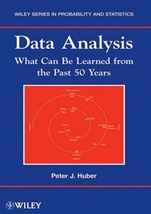
Data Analysis: What Can Be Learned From the Past 50 Years
ISBN 9781118010648
Autor: Peter J. Huber
Wydawca: Wiley
Dostępność: 3-6 tygodni
Cena: 614,25 zł
Przed złożeniem zamówienia prosimy o kontakt mailowy celem potwierdzenia ceny.
ISBN13: |
9781118010648 |
ISBN10: |
1118010647 |
Autor: |
Peter J. Huber |
Oprawa: |
Hardback |
Rok Wydania: |
2011-05-10 |
Ilość stron: |
234 |
Wymiary: |
244x158 |
Tematy: |
PB |
A comprehensive overview of statistical data analysis research, featuring real–world case studies and applications
How should data analysis be taught? How valid are the results? How should one deal with inhomogeneous data? What kinds of computing languages should be used, if used at all? These are but a few of the many challenging questions surrounding the fundamentals of data analysis. Data Analysis: What Can Be Learned from the Past 50 Years explores the historical and philosophical implications inherent in any study of statistical data analysis. This book addresses the needs of researchers who are working with larger, complicated data sets by offering an understanding of the significance of robust data sets, the implementation of software languages, and the use of models.
Rather than focus on specific procedures, this book concentrates on general insights that can be drawn from data analysis research. The author utilizes case studies to explore the impact of technological advances on data analysis techniques and other thought–provoking issues, including:
Homogeneous, unstructured data
Statistical pitfalls
Singular value decomposition
Nonlinear weighted least squares
Simulation of stochastic models
Scatter– and curve–plots
With plentiful examples that showcase best practices for working with challenges in the field, Data Analysis is an excellent supplement for courses on data analysis, robust statistics, data mining, and computational statistics at the upper–undergraduate and graduate levels. It is also a valuable reference for applied statisticians working in the fields of business, engineering, and the life and health sciences.
Spis treści:
Preface.
1 What is Data Analysis?
1.1 Tukey′s 1962 paper.
1.2 The Path of Statistics.
2 Strategy Issues in Data Analysis.
2.1 Strategy in Data Analysis
.
2.2 Philosophical issues.
2.3 Issues of size.
2.4 Strategic planning.
2.5 The stages of data analysis.
2.6 Tools required for strategy reasons.
3 Massive Data Sets.
3.1 Introduction.
3.2 Disclosure: Personal experiences.
3.3 What is i massive? A classification of size.
3.4 Obstacles to scaling.
3.5 On the structure of large data sets.
3.6 Data base management and related issues.
3.7 The stages of a data analysis.
3.8 Examples and some thoughts on strategy.
3.9 Volume reduction.
3.10 Supercomputers and software challenges.
3.11 Summary of conclusions.
4 Languages for Data Analysis.
4.1 Goals and purposes.
4.2 Natural languages and computing languages.
4.3 Interface issues.
4.4 Miscellaneous issues.
4.5 Requirements for a general purpose immediate language.
5 Approximate Models.
5.1 Models.
5.2 Bayesian modeling.
5.3 Mathematical statistics and approximate models.
5.4 Statistical significance and physical relevance.
5.5 Judicious use of a wrong model.
5.6 Composite models.
5.7 Modeling the length of day.
5.8 The role of simulation.
5.9 Summary of conclusions.
6 Pitfalls.
6.1 Simpson′s paradox.
6.2 Missing data.
6.3 Regression of Y on X or of X on Y.
7 Create order in data.
7.1 General considerations.
7.2 Principal component methods.
7.3 Multidimensional scaling.
7.4 Correspondence analysis.
7.5 Multidimensional scaling vs. Correspondence analysis.
8 More case studies.
8.1 A nutshell example.
8.2 Shape invariant modeling.
8.3 Comparison of point configurations.
8.4 Notes on numerical optimization.
References.
Index.
Nota biograficzna:
Peter J. Huber, PhD, is a world–renowned statistician who has published four books and more than seventy journal articles in the areas of statistics and data analysis. He has held aca
demic positions at Harvard University, Massachusetts Institute of Technology, Cornell University, and ETH Zurich (Switzerland), and has made significant research contributions in the areas of robust statistics, computational statistics, and strategies in data analysis. A Fellow of the Institute of Mathematical Statistics and the American Academy of Arts and Sciences, Dr. Huber is the coauthor of Robust Statistics, Second Edition, also published by Wiley.
Okładka tylna:
A comprehensive overview of statistical data analysis research, featuring real–world case studies and applications
How should data analysis be taught? How valid are the results? How should one deal with inhomogeneous data? What kinds of computing languages should be used, if used at all? These are but a few of the many challenging questions surrounding the fundamentals of data analysis. Data Analysis: What Can Be Learned from the Past 50 Years explores the historical and philosophical implications inherent in any study of statistical data analysis. This book addresses the needs of researchers who are working with larger, complicated data sets by offering an understanding of the significance of robust data sets, the implementation of software languages, and the use of models.
Rather than focus on specific procedures, this book concentrates on general insights that can be drawn from data analysis research. The author utilizes case studies to explore the impact of technological advances on data analysis techniques and other thought–provoking issues, including:
Homogeneous, unstructured data
Statistical pitfalls
Singular value decomposition
Nonlinear weighted least squares
Simulation of stochastic models
Scatter– and curve–plots
With plentiful examples that showcase best practices for working with challenges in the field, Data Analysis is an excellent supplement for
courses on data analysis, robust statistics, data mining, and computational statistics at the upper–undergraduate and graduate levels. It is also a valuable reference for applied statisticians working in the fields of business, engineering, and the life and health sciences.
Koszyk
Książek w koszyku: 0 szt.
Wartość zakupów: 0,00 zł
Informacje


Kontakt
Gambit
Centrum Oprogramowania
i Szkoleń Sp. z o.o.
Al. Pokoju 29b/22-24
31-564 Kraków
Siedziba Księgarni
ul. Kordylewskiego 1
31-542 Kraków
+48 12 410 5991
+48 12 410 5987
+48 12 410 5989
Subskrypcje
Administratorem danych osobowych jest firma Gambit COiS Sp. z o.o. Na podany adres będzie wysyłany wyłącznie biuletyn informacyjny.
Autoryzacja płatności

Informacje na temat autoryzacji płatności poprzez PayU.

© Copyright 2012: GAMBIT COiS Sp. z o.o. Wszelkie prawa zastrzeżone.
Projekt i wykonanie: Alchemia Studio Reklamy