


Wydawcy
Katalog tematyczny
- Archeologia (109)
- Ekonomia, finanse, business (13704)
- Filozofia (1445)
- Historia (3040)
- Języki i językoznawstwo (2356)
- Lifestyle, hobby i rozrywka (475)
- Medycyna (9704)
- Nauki humanistyczne (4)
- Nauki o Ziemi i środowisku (2638)
- Nauki ścisłe (20412)
- Nauki społeczne (8486)
- Nauki techniczne (13450)
- Prawo (1696)
- Publikacje informacyjne i interdyscyplinarne (1288)
- Religia i wierzenia (917)
- Technika komputerowa (4067)
- Bazy danych (75)
- Bezpieczeństwo komputerowe (454)
- Certyfikacja komputerowa (1)
- Grafika i media cyfrowe (32)
- Informatyka (779)
- Komputery, ogólnie (74)
- Programowanie (351)
- Programy komercyjne (49)
- Sieci komputerowe (350)
- Sprzęt komputerowy (4)
- Systemy operacyjne (32)
- Technika cyfrowa na co dzień (7)
- Zdrowie, relacje międzyludzkie i rozwój osobisty (657)





Informacje szczegółowe o książce
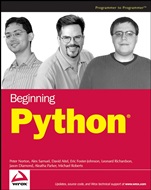
Beginning Python®
ISBN 9780764596544
Autor: Peter C. Norton, Alex Samuel, Dave Aitel, Eric Foster–Johnson, Leonard Richardson, Jason Diamond,
Wydawca: Wiley
Dostępność: 3-6 tygodni
Cena: 164,85 zł
Przed złożeniem zamówienia prosimy o kontakt mailowy celem potwierdzenia ceny.
ISBN13: |
9780764596544 |
ISBN10: |
0764596543 |
Autor: |
Peter C. Norton, Alex Samuel, Dave Aitel, Eric Foster–Johnson, Leonard Richardson, Jason Diamond, |
Oprawa: |
Paperback |
Rok Wydania: |
2005-08-05 |
Ilość stron: |
696 |
Wymiary: |
231x188 |
Tematy: |
UP |
Beginning Python
As a portable, open source, object–oriented programming language, Python combines remarkable power with clear syntax. And, as one of the fastest growing languages, Python manages systems and can be used for data mining and Web development. With this book, you′ll learn how to program using the latest release — Python 2.4 — and create robust, reliable, and reusable Python applications.
You′ll quickly see why Python is an ideal first programming language to learn, both for its ease of use and the fact that it offers interpreters for most operating system platforms. This in–depth look at Python 2.4 examines how it has become even easier for you to tell a computer what tasks you want it to do in an environment where you are in control.
What you will learn from this bookMethods that can be used to quickly develop Web applications and scientific applications and to incorporate databasesHow to master system tasks on Linux,® Windows,®and Mac OS® X platforms How to handle — and recover from — any unforeseen problemsWays in which Python prides itself on its consistency, control, and ability to cope with changeHow Python incorporates modules, exceptions, dynamic typing, and very high level dynamic types and classes
Who this book is for
This book is for anyone who wants to learn how to program with Python or who wants to quickly learn how to use Python for rapid development of applications for the Web, scientific applications, bioinformatics, and applications for system tasks.
Wrox Beginning guides are crafted to make learning programming languages and technologies easier than you think, providing a structured, tutorial format that will guide you through all the techniques involved.
Spis treści:
Acknowledgments.
Introduction.
Chapter 1: Programming Basics and Strings.
Chapter 2: Numbers and Operators
.
Chapter 3: Variables—Names for Values.
Chapter 4: Making Decisions.
Chapter 5: Functions.
Chapter 6: Classes and Objects.
Chapter 7: Organizing Programs.
Chapter 8: Files and Directories.
Chapter 9: Other Features of the Language.
Chapter 10: Building a Module.
Chapter 11: Text Processing.
Chapter 12: Testing.
Chapter 13: Writing a GUI with Python.
Chapter 14: Accessing Databases.
Chapter 15: Using Python for XML.
Chapter 16: Network Programming.
Chapter 17: Extension Programming with C.
Chapter 18: Writing Shareware and Commercial Programs.
Chapter 19: Numerical Programming.
Chapter 20: Python in the Enterprise.
Chapter 21: Web Applications and Web Services.
Chapter 22: Integrating Java with Python.
Appendix A: Answers to Exercises.
Appendix B: Online Resources.
Appendix C: What’s New in Python 2.4.
Glossary.
Index.
Nota biograficzna:
Peter Norton (NY, NY) has been working with Unix and Linux for over a decade at companies large and small solving problems with Linux. An officer of the NY Linux Users Group, he can be found on the nylug–talk mailing list. Peter coauthored Professional RHEL3. He works for a very large financial company in NYC, plying his Python and open–source skills.
Alex Samuel (San Diego, CA) has developed software for biology researchers and now studies highenergy physics at Caltech. Alex has worked on many GNU/Linux development tools, including GCC, and co–founded CodeSourcery LLC, a consulting firm specializing in GNU/Linux development tools.
David Aitel (NY, NY) is the CEO of Immunity and a coauthor of Shellcoder’s Handbook.
Eric Foster–Johnson (Minneapolis, MN) uses Python extensively with Java, and is a veteran author, most recently completing Beginning Shell Scripting.
Leonard Richardson (San Francisco, CA) writes useful Python packages wit
h silly names.
Jason Diamond (CA) Jason Diamond is a software development instructor for DevelopMentor and a consultant specializing in C++, .NET, Python, and XML. He spends most of his spare time contributing to open–source projects using his favorite language, Python.
Aleathea Parker (San Francisco CA) is a programmer working as a publication engineer for a major software company, coding primarily in Python and XSLT. She has a background in web applications and content management.
Michael Roberts (Puerto Rico) has been programming professionally in C, Perl, and Python for long enough that Python didn’t actually exist when he started. He is the chief perpetrator of the wftk open–source workflow toolkit, and he swears that it will someday be finished, for certain values of “finished”.
Okładka tylna:
Beginning Python
As a portable, open source, object–oriented programming language, Python combines remarkable power with clear syntax. And, as one of the fastest growing languages, Python manages systems and can be used for data mining and Web development. With this book, you′ll learn how to program using the latest release — Python 2.4 — and create robust, reliable, and reusable Python applications.
You′ll quickly see why Python is an ideal first programming language to learn, both for its ease of use and the fact that it offers interpreters for most operating system platforms. This in–depth look at Python 2.4 examines how it has become even easier for you to tell a computer what tasks you want it to do in an environment where you are in control.
What you will learn from this bookMethods that can be used to quickly develop Web applications and scientific applications and to incorporate databasesHow to master system tasks on Linux,® Windows,®and Mac OS® X platforms How to handle — and recover from &#
151; any unforeseen problemsWays in which Python prides itself on its consistency, control, and ability to cope with changeHow Python incorporates modules, exceptions, dynamic typing, and very high level dynamic types and classes
Who this book is for
This book is for anyone who wants to learn how to program with Python or who wants to quickly learn how to use Python for rapid development of applications for the Web, scientific applications, bioinformatics, and applications for system tasks.
Wrox Beginning guides are crafted to make learning programming languages and technologies easier than you think, providing a structured, tutorial format that will guide you through all the techniques involved.
Koszyk
Książek w koszyku: 0 szt.
Wartość zakupów: 0,00 zł
Informacje


Kontakt
Gambit
Centrum Oprogramowania
i Szkoleń Sp. z o.o.
Al. Pokoju 29b/22-24
31-564 Kraków
Siedziba Księgarni
ul. Kordylewskiego 1
31-542 Kraków
+48 12 410 5991
+48 12 410 5987
+48 12 410 5989
Subskrypcje
Administratorem danych osobowych jest firma Gambit COiS Sp. z o.o. Na podany adres będzie wysyłany wyłącznie biuletyn informacyjny.
Autoryzacja płatności

Informacje na temat autoryzacji płatności poprzez PayU.

© Copyright 2012: GAMBIT COiS Sp. z o.o. Wszelkie prawa zastrzeżone.
Projekt i wykonanie: Alchemia Studio Reklamy