


Wydawcy
Katalog tematyczny
- Archeologia (109)
- Ekonomia, finanse, business (13704)
- Filozofia (1445)
- Historia (3040)
- Języki i językoznawstwo (2356)
- Lifestyle, hobby i rozrywka (475)
- Medycyna (9704)
- Nauki humanistyczne (4)
- Nauki o Ziemi i środowisku (2638)
- Nauki ścisłe (20412)
- Nauki społeczne (8486)
- Nauki techniczne (13450)
- Prawo (1696)
- Publikacje informacyjne i interdyscyplinarne (1288)
- Religia i wierzenia (917)
- Technika komputerowa (4067)
- Bazy danych (75)
- Bezpieczeństwo komputerowe (454)
- Certyfikacja komputerowa (1)
- Grafika i media cyfrowe (32)
- Informatyka (779)
- Komputery, ogólnie (74)
- Programowanie (351)
- Programy komercyjne (49)
- Sieci komputerowe (350)
- Sprzęt komputerowy (4)
- Systemy operacyjne (32)
- Technika cyfrowa na co dzień (7)
- Zdrowie, relacje międzyludzkie i rozwój osobisty (657)





Informacje szczegółowe o książce
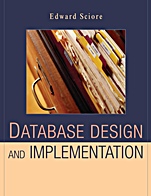
Database Design and Implementation
ISBN 9780471757160
Autor: Edward Sciore
Wydawca: Wiley
Dostępność: 3-6 tygodni
Cena: 1 157,10 zł
Przed złożeniem zamówienia prosimy o kontakt mailowy celem potwierdzenia ceny.
ISBN13: |
9780471757160 |
ISBN10: |
0471757160 |
Autor: |
Edward Sciore |
Oprawa: |
Hardback |
Rok Wydania: |
2008-11-28 |
Ilość stron: |
784 |
Wymiary: |
242x193 |
Tematy: |
UH |
A software developer’s hands–on guide to database systems
Combining an eminently readable style with a practical approach, Edward Sciore’s Database Design and Implementation introduces you to database systems from a software developer’s perspective. In its pages, you will learn how to use a database and how to develop one of your own.
Organized according to the components of a database, Database Design and Implementation takes you through database systems concepts from low–level disk access all the way to the query planner. Presenting only the essential algorithms and techniques that most clearly illustrate the issues discussed, the book covers such topics as data design and manipulation; integrity and security; memory and record management; metadata; query processing and optimization; integrity and security; indexing, and more.
As you proceed through the chapters and numerous exercises, you’ll learn:How to build database applications in JavaJDBC, JPA, XML, and Servlet developmentThe internals of a database serverSophisticated techniques for indexing, sorting, intelligent buffer usage, and query optimization
Best of all, this book includes a simple but fully functional database system, SimpleDB, that enables you to apply your conceptual knowledge by examining and modifying the code. With numerous hands–on exercises and such tools as SimpleDB, Database Design and Implementation will give the self–studier as well as the traditional student an ideal introduction to the world of database systems.
Spis treści:
1. Introduction: Why a Database System?
1.1. Databases and Database Systems.
1.2. Record Storage.
1.3. Multi–User Access.
1.4. Memory Management.
1.5. Data Models and Schemas.
1.6. Physical Data Independence.
1.7. Logical Data Independence.
1.8. Chapter Summary.
1.9. Suggest
ed Reading.
1.10. Exercises.
Part 1: Rational Databases.
2. Data Definition.
2.1. Tables.
2.2. Null Values.
2.3. Keys.
2.4. Foreign Keys and Referential Integrity.
2.5. Integrity Constraints.
2.6. Specifying Tables in SQL.
2.7. Chapter Summary.
2.8. Suggested Reading.
2.9. Exercises.
3. Data Design.
3.1. Designing Tables is Difficult.
3.2. Class Diagrams.
3.3. Transforming Class Diagrams to Tables.
3.4. The Design Process.
3.5. Relationships to Constraints.
3.6. Functional Dependancies and Normalization.
3.7. Chapter Summary.
3.8. Suggested Reading.
3.9. Exercises.
4. Data Manipulation.
4.1. Queries.
4.2. Relational Algebra.
4.3. SQL Queries.
4.4. SQL Updates.
4.5. Views.
4.6. Chapter Summary.
4.7. Suggested Reading.
4.8. Exercises.
5. Integrity and Security.
5.1. The Need for Integrity and Security.
5.2. Assertions.
5.3. Triggers.
5.4. Authorization.
5.5. Mandatory Access Control.
5.6. Chapter Summary.
5.7. Suggested Reading.
5.8. Exercises.
6. Improving Query Efficiency.
6.1. The Virtues of Controlled Redundancy.
6.2. Materialized Views.
6.3. Indexes.
6.4. Chapter Summary.
6.5. Suggested Reading.
6.6. Exercises.
Part 2: Client–Server Database Systems.
7. Clients and Servers.
7.1. The Data–Sharing Problem.
7.2. Database Clients and Servers.
7.3. The Derby and SimpleDB Database Servers.
7.4. Running Database Clients.
7.5. The Derby ij Client.
7.6. The SimpleDB Version of SQL.
7.7. Chapter Summary.
7.8. Suggested Reading.
7.9. Exercises.
8. Using JDBC.
8.1. Basic JDBC.
8.2. Advanced JDBC.
8.3. Computing in Java vs. SQL.
8.4. Chapter Summary.
8.5. Suggested Reading.
8.6. Exercises.
9. Persistent Java Objects.
9.1. The Domain Model and View of a Client Program.
9.2. The Problem wi
th Our Domain Model.
9.3. The Java Persistence Architecture.
9.4. The Java Persistence Query Language.
9.5. Downloading a JPA Implementation.
9.6. Chapter Summary.
9.7. Suggested Reading.
9.8. Exercises.
10. Data Exchange.
10.1. Sharing Database Data with NonUsers.
10.2. Saving Data in an XML Document.
10.3. Restructuring an XML Document.
10.4. Generating XML Data from the Database.
10.5. Chapter Summary.
10.6. Suggested Reading.
10.7. Exercises.
11. Webserver–Based Database Clients.
11.1. Types of Database Clients.
11.2. Interacting with a Web Server.
11.3. Basic Servlet Programming.
11.4. Managing Database Connections.
11.5. Configuring a Servlet Container.
11.6. Chapter Summary.
11.7. Suggested Reading.
11.8. Exercises.
Part 3. Inside the Database Server.
12. Disk and File Management.
12.1. Persistent Data Storage.
12.2. The Block–Level Interface to the Disk.
12.3. The File–Level Interface to the Disk.
12.4. The Database System and the OS.
12.5. The SimpleDB File Manager.
12.6. Chapter Summary.
12.7. Suggested Reading.
12.8. Exercises.
13. Memory Management.
13.1. Two Principles of Database Memory Management.
13.2. Managing Log Information.
13.3. The SimpleDB Log Manager.
13.4. Managing User Data.
13.5. The SimpleDB Buffer Manager.
13.6. Chapter Summary.
13.7. Suggested Reading.
13.8. Exercises.
14. Transaction Management.
14.1. Transactions.
14.2. Using Transactions in SimpleDB.
14.3. Recovery Management.
14.4. Concurrency Management.
14.5. Implementing SimpleDB Transactions.
14.6. Testing Transactions.
14.7. Chapter Summary.
14.8. Suggested Reading.
14.9. Exercises.
15. Record Management.
15.1. The Record Manager.
15.2. Implementing a File of Records.
15.3. The SimpleDB Record Manager.
15.4. Chapter Summary.
15.5. Suggested
Reading.
15.6. Exercises.
16. Metadata Management.
16.1. The Metadata Manager.
16.2. Table Metadata.
16.3. View Metadata.
16.4. Statistical Metadata.
16.5. Index Metadata.
16.6. Implementing the Metadata Manager.
16.7 .Chapter Summary.
16.8. Suggested Reading.
16.9. Exercises.
17. Query Processing.
17.1. Scans.
17.2. Update Scans.
17.3. Implementing Scans.
17.4. Pipelined Query Processing.
17.5. The Cost of a Scan.
17.6. Plans.
17.7. Predicates.
17.8. Chapter Summary.
17.9. Suggested Reading.
17.10. Exercises.
18. Parsing.
18.1. Syntax vs. Semantics.
18.2. Lexical Analysis.
18.3. Implementing the Lexical Analyzer.
18.4. Grammars.
18.5. Recursive–Descent Parsers.
18.6. Adding Actions to the Parser.
18.7. Chapter Summary.
18.8. Suggested Reading.
18.9. Exercises.
19. Planning.
19.1. The SimpleDB Planner.
19.2. Verification.
19.3. Query Planning.
19.4. Update Planning.
19.5. Implementing the SimpleDB Planner.
19.6. Chapter Summary.
19.7. Suggested Reading.
19.8. Exercises.
20. The Database Server.
20.1. Server Databases vs. Embedded Databases.
20.2. Client–Server Communication.
20.3. Implementing the Remote Interfaces.
20.4. Implementing the JDBC Interfaces.
20.5. Chapter Summary.
20.6. Suggested Reading.
20.7. Exercises.
Part 4: Efficient Query Processing.
21. Indexing.
21.1. The Index Interface.
21.2. Static Hash Indexes.
21.3. Extendable Hash Indexes.
21.4. B–Tree Indexes.
21.5. Index–Aware Operator Implementations.
21.6. Index Update Planning.
21.7. Chapter Summary.
21.8. Suggested Reading.
21.9. Exercises.
22. Materialization and Sorting.
22.1. The Value of Materialization.
22.2. Temporary Tables.
22.3. Materialization.
22.4. Sorting.
22.5. Grouping and Aggregation.
22.6. Merge Joi
Koszyk
Książek w koszyku: 0 szt.
Wartość zakupów: 0,00 zł
Informacje


Kontakt
Gambit
Centrum Oprogramowania
i Szkoleń Sp. z o.o.
Al. Pokoju 29b/22-24
31-564 Kraków
Siedziba Księgarni
ul. Kordylewskiego 1
31-542 Kraków
+48 12 410 5991
+48 12 410 5987
+48 12 410 5989
Subskrypcje
Administratorem danych osobowych jest firma Gambit COiS Sp. z o.o. Na podany adres będzie wysyłany wyłącznie biuletyn informacyjny.
Autoryzacja płatności

Informacje na temat autoryzacji płatności poprzez PayU.

© Copyright 2012: GAMBIT COiS Sp. z o.o. Wszelkie prawa zastrzeżone.
Projekt i wykonanie: Alchemia Studio Reklamy