


Wydawcy
Katalog tematyczny
- Archeologia (109)
- Ekonomia, finanse, business (13704)
- Filozofia (1445)
- Historia (3040)
- Języki i językoznawstwo (2356)
- Lifestyle, hobby i rozrywka (475)
- Medycyna (9704)
- Nauki humanistyczne (4)
- Nauki o Ziemi i środowisku (2638)
- Nauki ścisłe (20412)
- Astronomia (294)
- Biologia (5119)
- Chemia (6540)
- Fizyka (3309)
- Matematyka (4574)
- Algebra (171)
- Analiza matematyczna (902)
- Filozofia matematyki (1)
- Geometria (237)
- Historia matematyki (57)
- Kombinatoryka, teoria grafów (67)
- Matematyka dyskretna (35)
- Matematyka stosowana (555)
- Optymalizacja (104)
- Podstawy matematyki (129)
- Statystyka, prawdopodobieństwo (296)
- Teoria grup (63)
- Teoria liczb (77)
- Topologia (66)
- Nauki ścisłe, ogólnie (503)
- Nauki społeczne (8486)
- Nauki techniczne (13450)
- Prawo (1696)
- Publikacje informacyjne i interdyscyplinarne (1288)
- Religia i wierzenia (917)
- Technika komputerowa (4067)
- Zdrowie, relacje międzyludzkie i rozwój osobisty (657)





Informacje szczegółowe o książce
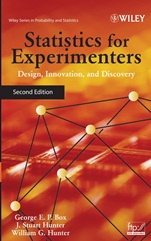
Statistics for Experimenters: Design, Innovation, and Discovery
ISBN 9780471718130
Autor: George E. P. Box, J. Stuart Hunter, William G. Hunter
Wydawca: Wiley
Dostępność: 3-6 tygodni
Cena: 763,35 zł
Przed złożeniem zamówienia prosimy o kontakt mailowy celem potwierdzenia ceny.
ISBN13: |
9780471718130 |
ISBN10: |
0471718130 |
Autor: |
George E. P. Box, J. Stuart Hunter, William G. Hunter |
Oprawa: |
Hardback |
Rok Wydania: |
2005-07-15 |
Numer Wydania: |
2nd Edition |
Ilość stron: |
672 |
Wymiary: |
242x164 |
Tematy: |
PB |
The new classic
For many years, the First Edition of Statistics for Experimenters has been a premier guide and reference for the application of statistical methods, especially as applied to experimental design. Rewritten and updated, this new edition of Statistics for Experimenters adopts the same approach as the landmark First Edition by demonstrating through worked examples, readily understood graphics, and the appropriate use of computers. Catalyzing innovation, problem solving, and discovery, the Second Edition provides experimenters with the scientific and statistical tools needed to maximize the knowledge gained from investigation and research. The authors′ practical approach starts with a problem that needs to be solved and then illustrates the statistical methods best utilized in all stages of design and analysis.
Providing even greater accessibility for its users, the Second Edition reflects new techniques and technologies developed since the publication of the classic First Edition.
Among the new topics included are:Graphical analysis of varianceComputer analysis to determine best follow–up runsSimplification by transformationHands–on experimentation using response surface methodsFurther development of robust product and process design using split–plot arrangements and minimization of error transmissionIntroduction to process control, forecasting, and time seriesIllustrations demonstrating how multiresponse problems can be solved using the concepts of active and inert factor spaces and canonical spacesBayesian approaches to model selection and sequential experimentationApplications for Six Sigma initiatives in a variety of disciplinesAappendix featuring Quaquaversal quotes from noted statisticians, scientists, and philosophers that embellish key concepts and enliven the learning process
Computations in the Second
Edition can be done utilizing the statistical language R. Functions for displaying ANOVA and lambda plots, Bayesian screening, and model building are all included, and R packages are available on a related FTP site. These topics can also be applied utilizing easy–to–use commercial software packages.
Complete with applications covering the physical, engineering, biological, and social sciences, Statistics for Experimenters is designed for all individuals who must use statistical approaches to conduct an experiment. Experimenters need only a basic understanding of mathematics to master all the statistical methods presented. This text is an essential reference for all researchers and an invaluable course book for undergraduate and graduate students.
Spis treści:
Preface to the Second Edition.
Chapter 1. Catalizing the Generation of Knowledge.
1.1. The Learning Process.
1.2. Important Considerations.
1.3. The Experimenter’s Problem and Statistical Methods.
1.4. A Typical Investigation.
1.5. How to Use Statistical Techniques.
References and Further Reading.
Chapter 2. Basics: Probability, Parameters and Statistics.
2.1. Experimental Error.
2.2. Distributions.
2.3. Statistics and Parameters.
2.4. Measures of Location and Spread.
2.5. The Normal Distribution.
2.6. Normal Probability Plots.
2.7. Randomness and Random Variables.
2.8. Covariance and Correlation as Measures of Linear Dependence.
2.9. Student’s t Distribution.
2.10. Estimates of Parameters.
2.11. Random Sampling from a Normal Population.
2.12. The Chi–Square and F Distributions.
2.13. The Binomial Distribution.
2.14. The Poisson Distribution.
Appendix 2A. Mean and Variance of Linear Combinations of Observations.
References and Further Reading.
Chapter 3. Comparing Two Entities: Relevant Reference Distributions, Tests and Confidence Intervals
.
3.1. Relevant Reference Sets and Distributions.
3.2. Randomized Paired Comparison Design: Boys’ Shoes Example.
3.3. Blocking and Randomization.
3.4. Reprise: Comparison, Replication, Randomization, and Blocking in Simple Experiments.
3.5. More on Significance Tests.
3.6. Inferences About Data that are Discrete: Binomial Distribution.
3.7. Inferences about Frequencies (Counts Per Unit): The Poisson Distribution.
3.8. Contingency Tables and Tests of Association.
Appendix 3A. Comparison of the Robustness of Tests to Compare Two Entities.
Appendix 3B. Calculation of reference distribution from past data.
References and Further Reading.
Chapter 4. Comparing a Number of Entities: Randomized Blocks and Latin Squares.
4.1. Comparing k Treatments in a Fully Randomized Design.
4.2. Randomized Block Designs.
4.3. A Preliminary Note on Split–Plot Experiments and their Relationship to Randomized Blocks.
4.4. More than one blocking component: Latin Squares.
4.5. Balanced Incomplete Block Designs.
Appendix 4A. The Rationale for the Graphical ANOVA.
Appendix 4B. Some Useful Latin Square, Graeco–Latin Square, and Hyper–Graeco–Latin Square Designs.
References and Further Reading.
Chapter 5. Factorial Designs at Two Levels: Advantages of Experimental Design.
5.1. Introduction.
5.2. Example 1: The Effects of Three Factors (Variables) on Clarity of Film.
5.3. Example 2: The Effects of Three Factors on Three Physical Properties of a Polymer Solution.
5.4. A 23 Factorial Design: Pilot Plant Investigation.
5.5. Calculation of Main Effects.
5.6. Interaction Effects.
5.7. Genuine Replicate Runs.
5.8. Interpretation of Results.
5.9. The Table of Contrasts.
5.10. Misuse of the ANOVA for 2k Factorial Experiments.
5.11. Eyeing the Data.
5.12. Dealing with More Than One Response: A Pet Food Experiment.
5.13. A 24 Factorial Design: P
rocess Development Study.
5.14. Analysis Using Normal and Lenth Plots.
5.15. Other Models for Factorial Data.
5.16. Blocking the 2k Factorial Designs.
5.17. Learning by Doing.
5.18. Summary.
Appendix 5A. Blocking Larger Factorial Designs.
Appendix 5B. Partial Confounding.
References and Further Reading.
Chapter 6. Fraction Factorial Designs: Economy in Experimentation.
6.1. Effects of Five Factors on Six Properties of Films in Eight Runs.
6.2. Stability of New Product, Four Factors in Eight Runs, a 24−1 Design.
6.3. A Half–Fraction Example: The Modification of a Bearing.
6.4. The Anatomy of the Half Fraction.
6.5. The 27−4III Design: A Bicycle Example.
6.6. Eight–Run Designs.
6.7. Using Table 6.6: An Illustration.
6.8. Sign Switching, Foldover, and Sequential Assembly.
6.9. An Investigation Using Multiple–Column Foldover.
6.10. Increasing Design Resolution from III to IV by Foldover.
6.11. Sixteen–Run Designs.
6.12. The 25−1 Nodal Half Replicate of the 25 Factorial: Reactor Example.
6.13. The 28−4 IV Nodal Sixteenth Fraction of a 28 Factorial.
6.14. The 215−11 III Nodal Design: The Sixty–Fourth Fraction of the 215 Factorial.
6.15. Constructing Other Two–Level Fractions.
6.16. Elimination of Block Effects.
References and Further Reading.
Chapter 7. Other Fractionals, Analysis and Choosing Follow–up Runs.
7.1. Plackett and Burman Designs.
7.2. Choosing Follow–Up Runs.
7.3. Justifications for the Use of Fractionals.
Appendix 7A. Technical Details.
Appendix 7B. An Approximate Partial Analysis for PB Designs.
Appendix 7C. Hall’s Orthogonal Designs.
References and Further Reading.
Chapter 8. Factorial Designs and Data Transformation.
8.1. A Two–Way (Factorial) Design.
8.2. Simplification and Increased Sensitivity from Transformation.
Appendix
Koszyk
Książek w koszyku: 0 szt.
Wartość zakupów: 0,00 zł
Informacje


Kontakt
Gambit
Centrum Oprogramowania
i Szkoleń Sp. z o.o.
Al. Pokoju 29b/22-24
31-564 Kraków
Siedziba Księgarni
ul. Kordylewskiego 1
31-542 Kraków
+48 12 410 5991
+48 12 410 5987
+48 12 410 5989
Subskrypcje
Administratorem danych osobowych jest firma Gambit COiS Sp. z o.o. Na podany adres będzie wysyłany wyłącznie biuletyn informacyjny.
Autoryzacja płatności

Informacje na temat autoryzacji płatności poprzez PayU.

© Copyright 2012: GAMBIT COiS Sp. z o.o. Wszelkie prawa zastrzeżone.
Projekt i wykonanie: Alchemia Studio Reklamy