


Wydawcy
Katalog tematyczny
- Archeologia (109)
- Ekonomia, finanse, business (13704)
- Filozofia (1445)
- Historia (3040)
- Języki i językoznawstwo (2356)
- Lifestyle, hobby i rozrywka (475)
- Medycyna (9704)
- Nauki humanistyczne (4)
- Nauki o Ziemi i środowisku (2638)
- Nauki ścisłe (20412)
- Astronomia (294)
- Biologia (5119)
- Chemia (6540)
- Fizyka (3309)
- Matematyka (4574)
- Algebra (171)
- Analiza matematyczna (902)
- Filozofia matematyki (1)
- Geometria (237)
- Historia matematyki (57)
- Kombinatoryka, teoria grafów (67)
- Matematyka dyskretna (35)
- Matematyka stosowana (555)
- Optymalizacja (104)
- Podstawy matematyki (129)
- Statystyka, prawdopodobieństwo (296)
- Teoria grup (63)
- Teoria liczb (77)
- Topologia (66)
- Nauki ścisłe, ogólnie (503)
- Nauki społeczne (8486)
- Nauki techniczne (13450)
- Prawo (1696)
- Publikacje informacyjne i interdyscyplinarne (1288)
- Religia i wierzenia (917)
- Technika komputerowa (4067)
- Zdrowie, relacje międzyludzkie i rozwój osobisty (657)





Informacje szczegółowe o książce
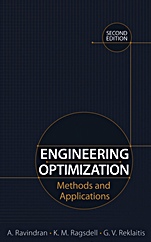
Engineering Optimization: Methods and Applications
ISBN 9780471558149
Autor: A. Ravindran, Ken M. Ragsdell, Gintaras V. Reklaitis
Wydawca: Wiley
Dostępność: 3-6 tygodni
Cena: 801,15 zł
Przed złożeniem zamówienia prosimy o kontakt mailowy celem potwierdzenia ceny.
ISBN13: |
9780471558149 |
ISBN10: |
0471558141 |
Autor: |
A. Ravindran, Ken M. Ragsdell, Gintaras V. Reklaitis |
Oprawa: |
Hardback |
Rok Wydania: |
2006-06-16 |
Numer Wydania: |
2nd Edition |
Ilość stron: |
688 |
Wymiary: |
239x167 |
Tematy: |
PBWD |
The classic introduction to engineering optimization theory and practice—now expanded and updated
Engineering optimization helps engineers zero in on the most effective, efficient solutions to problems. This text provides a practical, real–world understanding of engineering optimization. Rather than belaboring underlying proofs and mathematical derivations, it emphasizes optimization methodology, focusing on techniques and stratagems relevant to engineering applications in design, operations, and analysis. It surveys diverse optimization methods, ranging from those applicable to the minimization of a single–variable function to those most suitable for large–scale, nonlinear constrained problems. New material covered includes the duality theory, interior point methods for solving LP problems, the generalized Lagrange multiplier method and generalization of convex functions, and goal programming for solving multi–objective optimization problems. A practical, hands–on reference and text, Engineering Optimization, Second Edition covers:Practical issues, such as model formulation, implementation, starting point generation, and moreCurrent, state–of–the–art optimization softwareThree engineering case studies plus numerous examples from chemical, industrial, and mechanical engineeringBoth classical methods and new techniques, such as successive quadratic programming, interior point methods, and goal programming
Excellent for self–study and as a reference for engineering professionals, this Second Edition is also ideal for senior and graduate courses on engineering optimization, including television and online instruction, as well as for in–plant training.
Spis treści:
Preface.
1 Introduction to Optimization.
1.1 Requirements for the Application of Optimization Methods.
1.2 Applications of Optimization in Engineering.
1.3 Structur
e of Optimization Problems.
1.4 Scope of This Book.
References.
2 Functions of a Single Variable.
2.1 Properties of Single–Variable Functions.
2.2 Optimality Criteria.
2.3 Region Elimination Methods.
2.4 Polynomial Approximation or Point Estimation Methods.
2.5 Methods Requiring Derivatives.
2.6 Comparison of Methods.
2.7 Summary.
References.
Problems.
3 Functions of Several Variables.
3.1 Optimality Criteria.
3.2 Direct–Search Methods.
3.3 Gradient–Based Methods.
3.4 Comparison of Methods and Numerical Results.
3.5 Summary.
References.
Problems.
4 Linear Programming.
4.1 Formulation of Linear Programming Models.
4.2 Graphical Solution of Linear Programs in Two Variables.
4.3 Linear Program in Standard Form.
4.5 Computer Solution of Linear Programs.
4.5.1 Computer Codes.
4.6 Sensitivity Analysis in Linear Programming.
4.7 Applications.
4.8 Additional Topics in Linear Programming.
4.9 Summary.
References.
Problems.
5 Constrained Optimality Criteria.
5.1 Equality–Constrained Problems.
5.2 Lagrange Multipliers.
5.3 Economic Interpretation of Lagrange Multipliers.
5.4 Kuhn–Tucker Conditions.
5.5 Kuhn–Tucker Theorems.
5.6 Saddlepoint Conditions.
5.7 Second–Order Optimality Conditions.
5.8 Generalized Lagrange Multiplier Method.
5.9 Generalization of Convex Functions.
5.10 Summary.
References.
Problems.
6 Transformation Methods.
6.1 Penalty Concept.
6.2 Algorithms, Codes, and Other Contributions.
6.3 Method of Multipliers.
6.4 Summary.
References.
Problems.
7 Constrained Direct Search.
7.1 Problem Preparation.
7.2 Adaptations of Unconstrained Search Methods.
7.3 Random–Search Methods.
7.4 Summary.
References.
Problems.
8 Linearization Methods for Constrained Problems.
8.1 Direct Use of Successive
Linear Programs.
8.2 Separable Programming.
8.3 Summary.
References.
Problems.
9 Direction Generation Methods Based on Linearization.
9.1 Method of Feasible Directions.
9.2 Simplex Extensions for Linearly Constrained Problems.
9.3 Generalized Reduced Gradient Method.
9.4 Design Application.
9.5 Summary.
References.
Problems.
10 Quadratic Approximation Methods for Constrained Problems.
10.1 Direct Quadratic Approximation.
10.2 Quadratic Approximation of the Lagrangian Function.
10.3 Variable Metric Methods for Constrained Optimization.
10.4 Discussion.
10.5 Summary.
References.
Problems.
11 Structured Problems and Algorithms.
11.1 Integer Programming.
11.2 Quadratic Programming.
11.3 Complementary Pivot Problems.
11.4 Goal Programming.
11.5 Summary.
References.
Problems.
12 Comparison of Constrained Optimization Methods.
12.1 Software Availability.
12.2 A Comparison Philosophy.
12.3 Brief History of Classical Comparative Experiments.
12.4 Summary.
References.
13 Strategies for Optimization Studies.
13.1 Model Formulation.
13.2 Problem Implementation.
13.3 Solution Evaluation.
13.4 Summary.
References.
Problems.
14 Engineering Case Studies.
14.1 Optimal Location of Coal–Blending Plants by Mixed–Integer
Programming.
14.2 Optimization of an Ethylene Glycol–Ethylene Oxide Process.
14.3 Optimal Design of a Compressed Air Energy Storage System.
14.4 Summary.
References.
Appendix A Review of Linear Algebra.
A.1 Set Theory.
A.2 Vectors.
A.3 Matrices.
A.3.1 Matrix Operations.
A.3.2 Determinant of a Square Matrix.
A.3.3 Inverse of a Matrix.
A.3.4 Condition of a Matrix.
A.3.5 Sparse Matrix.
A.4 Quadratic Forms.
A.4.1 Principal Minor.
A.4.2 Completing the Square.
A.5 Convex Sets.
Appendix B Convex and Concave Functions.Appendix C Gauss–Jordan Elimination Scheme.
Author Index.
Subject Index.
Nota biograficzna:
A. RAVINDRAN, PhD, is Professor of Industrial and Manufacturing Engineering at Penn State University in University Park, Pennsylvania.
K. M. RAGSDELL, PhD, is Professor of Engineering Management at the University of Missouri in Rolla, Missouri.
G. V. REKLAITIS, PhD, is Edward W. Comings Professor of Chemical Engineering at Purdue University in West Lafayette, Indiana.
Okładka tylna:
The classic introduction to engineering optimization theory and practice—now expanded and updated
Engineering optimization helps engineers zero in on the most effective, efficient solutions to problems. This text provides a practical, real–world understanding of engineering optimization. Rather than belaboring underlying proofs and mathematical derivations, it emphasizes optimization methodology, focusing on techniques and stratagems relevant to engineering applications in design, operations, and analysis. It surveys diverse optimization methods, ranging from those applicable to the minimization of a single–variable function to those most suitable for large–scale, nonlinear constrained problems. New material covered includes the duality theory, interior point methods for solving LP problems, the generalized Lagrange multiplier method and generalization of convex functions, and goal programming for solving multi–objective optimization problems. A practical, hands–on reference and text, Engineering Optimization, Second Edition covers:Practical issues, such as model formulation, implementation, starting point generation, and moreCurrent, state–of–the–art optimization softwareThree engineering case studies plus numerous examples from chemical, industrial, and mechanical engineeringBoth classical methods and new techniques, such as s
Koszyk
Książek w koszyku: 0 szt.
Wartość zakupów: 0,00 zł
Informacje


Kontakt
Gambit
Centrum Oprogramowania
i Szkoleń Sp. z o.o.
Al. Pokoju 29b/22-24
31-564 Kraków
Siedziba Księgarni
ul. Kordylewskiego 1
31-542 Kraków
+48 12 410 5991
+48 12 410 5987
+48 12 410 5989
Subskrypcje
Administratorem danych osobowych jest firma Gambit COiS Sp. z o.o. Na podany adres będzie wysyłany wyłącznie biuletyn informacyjny.
Autoryzacja płatności

Informacje na temat autoryzacji płatności poprzez PayU.

© Copyright 2012: GAMBIT COiS Sp. z o.o. Wszelkie prawa zastrzeżone.
Projekt i wykonanie: Alchemia Studio Reklamy