


Wydawcy
Katalog tematyczny
- Archeologia (109)
- Ekonomia, finanse, business (13704)
- Filozofia (1445)
- Historia (3040)
- Języki i językoznawstwo (2356)
- Lifestyle, hobby i rozrywka (475)
- Medycyna (9704)
- Nauki humanistyczne (4)
- Nauki o Ziemi i środowisku (2638)
- Nauki ścisłe (20412)
- Astronomia (294)
- Biologia (5119)
- Chemia (6540)
- Fizyka (3309)
- Matematyka (4574)
- Algebra (171)
- Analiza matematyczna (902)
- Filozofia matematyki (1)
- Geometria (237)
- Historia matematyki (57)
- Kombinatoryka, teoria grafów (67)
- Matematyka dyskretna (35)
- Matematyka stosowana (555)
- Optymalizacja (104)
- Podstawy matematyki (129)
- Statystyka, prawdopodobieństwo (296)
- Teoria grup (63)
- Teoria liczb (77)
- Topologia (66)
- Nauki ścisłe, ogólnie (503)
- Nauki społeczne (8486)
- Nauki techniczne (13450)
- Prawo (1696)
- Publikacje informacyjne i interdyscyplinarne (1288)
- Religia i wierzenia (917)
- Technika komputerowa (4067)
- Zdrowie, relacje międzyludzkie i rozwój osobisty (657)





Informacje szczegółowe o książce
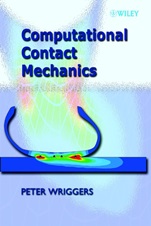
Computational Contact Mechanics
ISBN 9780471496809
Autor: Peter Wriggers
Wydawca: Wiley
Dostępność: 3-6 tygodni
Cena: 702,45 zł
Przed złożeniem zamówienia prosimy o kontakt mailowy celem potwierdzenia ceny.
ISBN13: |
9780471496809 |
ISBN10: |
0471496804 |
Autor: |
Peter Wriggers |
Oprawa: |
Hardback |
Rok Wydania: |
2002-07-25 |
Ilość stron: |
464 |
Wymiary: |
253x178 |
Tematy: |
PB |
Boundary value problems involving contact are important for industrial applications in both mechanical and civil engineering, such as structural foundations, bearings, metal forming processes, rubber sealings, drilling problems, crash analysis of cars, rolling contact between car tyres and the road, cooling of electronic devices, and many more. Other applications are related to biomechanical engineering design, where human joints, implants or teeth are considered. Due to this variety, contact problems today are combined either with large elastic or inelastic deformations, including time–dependent responses. Thermal coupling may also have to be considered, and even stability behaviour has to be linked to contact, such as wrinkling arising in metal forming problems.
The topic of computational contact is described in depth here, providing different formulations, algorithms and discretisation techniques for contact problems that have been established in the geometrically linear and nonlinear ranges. This book provides the necessary continuum mechanics background. Special geometrical relations needed to set up the contact constraints are derived, and constitutive equations stemming from tribology which are valid at the contact interface are discussed in detail, without going into a numerical treatment. Solid and beam contact is considered, as is contact of unstable systems and thermomechanical contact. The algorithmic aspects cover a broad range of solution methods. Additionally, adaptive discretisation techniques for contact analysis are presented as a modern tool for engineering design simulations.
This book:applies to a wide variety of industrial applications,
starts from a sound continuum mechanics background,
introduces new discretisation techniques and algorithms, and
includes thermo–mechanical considerations and adaptive methods.Computational Contact Mechanics has been written not only for graduate, Mast
ers and PhD students, but also for engineers in the car, tyre and packaging industries who simulate contact problems in practical applications and need to understand the theoretical and algorithmic background of contact treatment in modern finite element systems.
Spis treści:
Preface.
Introduction.
Introduction to Contact Mechanics.
Continuum Solid Mechanics and Weak Forms.
Contact Kinematics.
Constitutive Equations for Contact Interfaces.
Contact Boundary Value Problem and Weak Form.
Discretization of the Continuum.
Discretization, Small Deformation Contact.
Discretization, Large Deformation Contact.
Solution Algorithms.
Thermo–mechanical Contact.
Beam Contact.
Adaptive Finite Element Methods for Contact Problems.
Computation of Critical Points with Contact Constraints.
Appendix A: Gauss Integration Rules.
Appendix B: Convective Coordinates.
Appendix C: Parameter Identification for Friction Materials.
References.
Index.
Okładka tylna:
Boundary value problems involving contact are important for industrial applications in both mechanical and civil engineering, such as structural foundations, bearings, metal forming processes, rubber sealings, drilling problems, crash analysis of cars, rolling contact between car tyres and the road, cooling of electronic devices, and many more. Other applications are related to biomechanical engineering design, where human joints, implants or teeth are considered. Due to this variety, contact problems today are combined either with large elastic or inelastic deformations, including time–dependent responses. Thermal coupling may also have to be considered, and even stability behaviour has to be linked to contact, such as wrinkling arising in metal forming problems.
The topic of computational contact is described in depth here, providing different formulations, algorithms and discretisation techniques for contact problem
s that have been established in the geometrically linear and nonlinear ranges. This book provides the necessary continuum mechanics background. Special geometrical relations needed to set up the contact constraints are derived, and constitutive equations stemming from tribology which are valid at the contact interface are discussed in detail, without going into a numerical treatment. Solid and beam contact is considered, as is contact of unstable systems and thermomechanical contact. The algorithmic aspects cover a broad range of solution methods. Additionally, adaptive discretisation techniques for contact analysis are presented as a modern tool for engineering design simulations.
This book:applies to a wide variety of industrial applications,
starts from a sound continuum mechanics background,
introduces new discretisation techniques and algorithms, and
includes thermo–mechanical considerations and adaptive methods.Computational Contact Mechanics has been written not only for graduate, Masters and PhD students, but also for engineers in the car, tyre and packaging industries who simulate contact problems in practical applications and need to understand the theoretical and algorithmic background of contact treatment in modern finite element systems.
Koszyk
Książek w koszyku: 0 szt.
Wartość zakupów: 0,00 zł
Informacje


Kontakt
Gambit
Centrum Oprogramowania
i Szkoleń Sp. z o.o.
Al. Pokoju 29b/22-24
31-564 Kraków
Siedziba Księgarni
ul. Kordylewskiego 1
31-542 Kraków
+48 12 410 5991
+48 12 410 5987
+48 12 410 5989
Subskrypcje
Administratorem danych osobowych jest firma Gambit COiS Sp. z o.o. Na podany adres będzie wysyłany wyłącznie biuletyn informacyjny.
Autoryzacja płatności

Informacje na temat autoryzacji płatności poprzez PayU.

© Copyright 2012: GAMBIT COiS Sp. z o.o. Wszelkie prawa zastrzeżone.
Projekt i wykonanie: Alchemia Studio Reklamy