


Wydawcy
Katalog tematyczny
- Archeologia (109)
- Ekonomia, finanse, business (13704)
- Filozofia (1445)
- Historia (3040)
- Języki i językoznawstwo (2356)
- Lifestyle, hobby i rozrywka (475)
- Medycyna (9704)
- Nauki humanistyczne (4)
- Nauki o Ziemi i środowisku (2638)
- Nauki ścisłe (20412)
- Astronomia (294)
- Biologia (5119)
- Chemia (6540)
- Fizyka (3309)
- Matematyka (4574)
- Algebra (171)
- Analiza matematyczna (902)
- Filozofia matematyki (1)
- Geometria (237)
- Historia matematyki (57)
- Kombinatoryka, teoria grafów (67)
- Matematyka dyskretna (35)
- Matematyka stosowana (555)
- Optymalizacja (104)
- Podstawy matematyki (129)
- Statystyka, prawdopodobieństwo (296)
- Teoria grup (63)
- Teoria liczb (77)
- Topologia (66)
- Nauki ścisłe, ogólnie (503)
- Nauki społeczne (8486)
- Nauki techniczne (13450)
- Prawo (1696)
- Publikacje informacyjne i interdyscyplinarne (1288)
- Religia i wierzenia (917)
- Technika komputerowa (4067)
- Zdrowie, relacje międzyludzkie i rozwój osobisty (657)





Informacje szczegółowe o książce
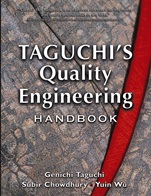
Taguchis Quality Engineering Handbook
ISBN 9780471413349
Autor: Genichi Taguchi, Subir Chowdhury, Yuin Wu
Wydawca: Wiley
Dostępność: 3-6 tygodni
Cena: 962,85 zł
Przed złożeniem zamówienia prosimy o kontakt mailowy celem potwierdzenia ceny.
ISBN13: |
9780471413349 |
ISBN10: |
0471413348 |
Autor: |
Genichi Taguchi, Subir Chowdhury, Yuin Wu |
Oprawa: |
Hardback |
Rok Wydania: |
2004-11-19 |
Ilość stron: |
1696 |
Wymiary: |
217x195 |
Tematy: |
PB |
Praise for Taguchi′s Quality Engineering handbook
"This book is a great demonstration of this powerful approach and how it can make a meaningful difference in any type of business. It takes a dedicated engineering approach to implement, but the payback in customer satisfaction and growth is dramatic."
—Lou Giuliano, Chairman, President, and CEO, ITT Industries
"Dr. Taguchi′s enduring work is of great importance to the field of quality."
—Dr. A. V. Feigenbaum, President and CEO, General Systems Company, Inc.
In the last fifty years, one man stands out as the driving force behind the quality revolution—Genichi Taguchi. Now, for the first time in one volume, Taguchi′s Quality Engineering Handbook presents all the methods and beliefs that have made Taguchi one of the most respected authorities on quality engineering and management in the world.
No other single volume presents the full breadth of founding beliefs behind the successful engineering practices used by today′s leading companies. Helpful to companies in both manufacturing and service industries, Taguchi′s Quality Engineering Handbook provides accessible material on such topics as:Quality loss functionOn–line quality engineeringSignal–to–noise ratioRobust engineeringDesign of experiments (known as the "Taguchi method")Mahalanobis–Taguchi Systems (MTS)
Taguchi′s Quality Engineering Handbook is a landmark resource for everyone interested in quality and engineering, from engineers and managers to upper–level VPs and educators.
Spis treści:
Preface.
Acknowledgments.
About the Authors.
SECTION 1. THEORY.
PART I: GENICHI TAGUCHI′S LATEST THINKING.
1. The 2nd Industrial Revolution and Information Technology.
2. Management for Quality Engineering.
3. Quality Engineering: Strategy in Research and Development.
4.
Quality Engineering: The Taguchi Method.
PART II: QUALITY ENGINEERING: A HISTORICAL PERSPECTIVE.
5. Development of Quality Engineering in Japan.
6. History of Taguchi′s Quality Engineering in the United States.
PART III: QUALITY LOSS FUNCTION.
7. Introduction to QLF.
8. Quality Loss Function for Different Quality Characteristics.
9. Specification Tolerancing.
10. Tolerance Design.
PART IV: SIGNAL–TO–NOISE RATIO.
11. Introduction to the Signal–to–Noise Ratio.
12. SN Ratios for Continuous Variables.
13. SN Ratio for Classified Attributes.
PART V: ROBUST ENGINEERING.
14. System Design.
15. Parameter Design.
16. Tolerance Design.
17. Robust Technology Development.
18. Robust Engineering: A Manager′s Perspective.
19. Implementation Strategies.
PART VI: MAHALANOBIS–TAGUCHI SYSTEM (MTS).
20. Mahalanobis–Taguchi System.
PART VII: SOFTWARE TESTING AND APPLICATION.
21. Application of Taguchi Methods to Software System Testing.
PART VIII: ON–LINE QUALITY ENGINEERING.
22. Tolerancing and Quality Level.
23. Feedback Control Based on Product Characteristics.
24. Feedback Control of a Process Condition.
25. Process Diagnosis and Adjustment.
PART IX: EXPERIMENTAL REGRESSION.
26. Parameter Estimation in Regression Equations.
PART X: DESIGN OF EXPERIMENTS.
27. Introduction to Design of Experiments.
28. Fundamentals of Data Analysis.
29. Introduction to Analysis of Variance.
30. One–Way Layout..
31. Decomposition to Components with Unit Degrees of Freedom.
32. Two–Way Layout.
33. Two–Way Layout with Decomposition.
34. Two–Way Layout with Repetition.
35. Introduction to Orthogonal Arrays.
36. Layout of Orthogonal Arrays Using Linear Graphs.
37. Incomplete Data.
38. Youden Squares.
SECTION 2. APPLICATION (CASE STUD
IES).
PART I: ROBUST ENGINEERING: CHEMICAL APPLICATIONS.
Biochemistry.
Case 1. Optimization of Bean Sprouting Conditions by Parameter Design.
Case 2. Optimization of Small Algae Production by Parameter Design.
Chemical Reaction.
Case 3. Optimization of Polymerization Reactions.
Case 4. Evaluation of Photographic Systems by Dynamic Operating Window.
Measurement.
Case 5. Application of Dynamic Optimization in Ultra–Trace Analysis.
Case 6. Evaluation of Component Separation Using a Dynamic Operating Window.
Case 7. Optimization of the Measuring Method for Granule Strength.
Case 8. A Detection of Thermoresistant Bacteria.
Pharmacology.
Case 9. Optimization of Model Ointment Prescriptions for in Vitro Percutaneous Permeation.
Separation.
Case 10. Use of a Dynamic Operating Window for Herbal Medicine Granulation.
Case 11. Particle–Size Adjustment in a Fine Grinding Process for Developer.
PART II: ROBUST ENGINEERING: ELECTRICAL APPLICATIONS.
Circuits.
Case 12. Design for Amplifier Stabilization.
Case 13. Parameter Design of Ceramic Oscillation Circuits.
Case 14. Evaluation Method of Electric Waveforms by Momentary Values.
Case 15. Robust Design for Frequency–Modulation Circuits.
Electronic Devices.
Case 16. Optimization of Blow–Off Charge Measurement Systems.
Case 17. Evaluation of the Generic Function of Film Capacitors.
Case 18. Parameter Design of Fine Line Patterning for IC Fabrication.
Case 19. Minimizing Variation in Pot Core Transformer Processing .
Case 20. Optimization of Back Contact of Power MOSFETs.
Electrophoto.
Case 21. Development of High–Quality Developers for Electrophotography.
Case 22. Functional Evaluation for the Electrophotographic Process.
PART III: ROBUST ENGINEERING: MECHANICAL APPLICATIONS.
Biomechanical.
Case 23. Biomechanical
Comparison of Flexor Tendon Repairs..
Machining.
Case 24. Optimization of Machining Conditions by Electric Power.
Case 25. Development of Machining Technology for High Performance Steel by Transformability.
Case 26. Transformability of Plastic Injection–Molded Gear.
Material Design.
Case 27. Optimization of a Felt Resist Paste Formula Used in Partial Felting.
Case 28. Development of Friction Material for Automatic Transmissions.
Case 29. Parameter Design on a Foundry Process Using Green Sand.
Case 30. Development of Functional Material by Plasma Spraying.
Material Strength.
Case 31. Optimization of Two–Piece Gear Brazing Conditions.
Case 32. Optimization of Resistance Welding Conditions for Electronic Components.
Case 33. Tile Manufacturing Using Industrial Waste.
Measurement
Case 34. Development of an Electrophotographic Toner Charging Function Measuring System.
Case 35. Clear Vision by Robust Design.
Case 36. Optimization of Adhesion Condition of Resin Board and Copper Plate.
Case 37. Optimization of a Wave Soldering Process.
Case 38. Optimization of Casting Conditions for Camshafts by Simulation.
Case 39. Optimization of Photoresist Profile Using Simulation.
Case 40. Optimization of a Deep Drawing Process.
Case 41. Robust Technology Development of an Encapsulation Process.
Case 42. Gas–Arc Stud Weld Process Parameter Optimization Utilizing Robust Design..
Case 43. Optimization of Molding Conditions of Thick–Walled Products.
Case 44. Quality Improvement of Electro–Deposited Process for Magnet Production.
Case 45. Optimization of an Electrical Encapsulation Process Through Parameter Design.
Case 46. Development of Plastic Injection Molding Technology by Transformability.
Product Development.
Case 47. Stability Design of Shutter Mechanisms of Single–Use Cameras by Simulation.
Case 48. Optimization of a Clut
Koszyk
Książek w koszyku: 0 szt.
Wartość zakupów: 0,00 zł
Informacje


Kontakt
Gambit
Centrum Oprogramowania
i Szkoleń Sp. z o.o.
Al. Pokoju 29b/22-24
31-564 Kraków
Siedziba Księgarni
ul. Kordylewskiego 1
31-542 Kraków
+48 12 410 5991
+48 12 410 5987
+48 12 410 5989
Subskrypcje
Administratorem danych osobowych jest firma Gambit COiS Sp. z o.o. Na podany adres będzie wysyłany wyłącznie biuletyn informacyjny.
Autoryzacja płatności

Informacje na temat autoryzacji płatności poprzez PayU.

© Copyright 2012: GAMBIT COiS Sp. z o.o. Wszelkie prawa zastrzeżone.
Projekt i wykonanie: Alchemia Studio Reklamy