


Wydawcy
Katalog tematyczny
- Archeologia (109)
- Ekonomia, finanse, business (13704)
- Filozofia (1445)
- Historia (3040)
- Języki i językoznawstwo (2356)
- Lifestyle, hobby i rozrywka (475)
- Medycyna (9704)
- Nauki humanistyczne (4)
- Nauki o Ziemi i środowisku (2638)
- Nauki ścisłe (20412)
- Nauki społeczne (8486)
- Nauki techniczne (13450)
- Prawo (1696)
- Publikacje informacyjne i interdyscyplinarne (1288)
- Religia i wierzenia (917)
- Technika komputerowa (4067)
- Bazy danych (75)
- Bezpieczeństwo komputerowe (454)
- Certyfikacja komputerowa (1)
- Grafika i media cyfrowe (32)
- Informatyka (779)
- Komputery, ogólnie (74)
- Programowanie (351)
- Programy komercyjne (49)
- Sieci komputerowe (350)
- Sprzęt komputerowy (4)
- Systemy operacyjne (32)
- Technika cyfrowa na co dzień (7)
- Zdrowie, relacje międzyludzkie i rozwój osobisty (657)





Informacje szczegółowe o książce
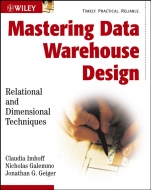
Mastering Data Warehouse Design: Relational and Dimensional Techniques
ISBN 9780471324218
Autor: Claudia Imhoff, Nicholas Galemmo, Jonathan G. Geiger
Wydawca: Wiley
Dostępność: 3-6 tygodni
Cena: 214,20 zł
Przed złożeniem zamówienia prosimy o kontakt mailowy celem potwierdzenia ceny.
ISBN13: |
9780471324218 |
ISBN10: |
0471324213 |
Autor: |
Claudia Imhoff, Nicholas Galemmo, Jonathan G. Geiger |
Oprawa: |
Paperback |
Rok Wydania: |
2003-08-22 |
Ilość stron: |
456 |
Wymiary: |
233x188 |
Tematy: |
UH |
At last, a balanced approach to data warehousing that leverages the techniques pioneered by Ralph Kimball and Bill Inmon
Since its groundbreaking inception, the approach to understanding data warehousing has been split into two mindsets: Ralph Kimball, who pioneered the use of dimensional modeling techniques for building the data warehouse, and Bill Inmon, who introduced the Corporate Information Factory and leads those who believe in using relational modeling techniques for the data warehouse. Mastering Data Warehouse Design successfully merges Inmon’s data ware– house design philosophies with Kimball’s data mart design philosophies to provide you with a compelling and complete overview of exactly what is involved in designing and building a sustainable and extensible data warehouse.
Most data warehouse managers, designers, and developers are familiar with the open letter written by Ralph Kimball in 2001 to the data warehouse community in which he challenged those in the Inmon camp to answer some tough questions about the effectiveness of the relational approach. Cowritten by one of the best–known experts of the Inmon approach, Claudia Imhoff, this team of authors addresses head–on the challenging questions raised by Kimball in his letter and offers a how–to guide on the appropriate use of both relational and dimensional modeling in a comprehensive business intelligence environment. In addition, you’ll learn the authors’ take on issues such as:Which approach has been found most successful in data warehouse environments at companies spanning virtually all major industrial sectorsThe pros and cons of relational vs. dimensional modeling techniques so developers can decide on the best approach for their projects Why the architecture should include a data warehouse built on relational data modeling conceptsThe construction and utilization of keys, the historical nature of the data ware
house, hierarchies, and transactional dataTechnical issues needed to ensure that the data warehouse design meets appropriate performance expectationsRelational modeling techniques for ensuring optimum data warehouse performance and handling changes to data over time
Spis treści:
Acknowledgments.
About the Authors.
PART ONE: CONCEPTS.
Chapter 1. Introduction.
Chapter 2. Fundamental Relational Concepts.
PART TWO: MODEL DEVELOPMENT.
Chapter 3. Understanding the Business Model.
Chapter 4. Developing the Model.
Chapter 5. Creating and Maintaining Keys.
Chapter 6. Modeling the Calendar.
Chapter 7. Modeling Hierarchies.
Chapter 8. Modeling Transactions.
Chapter 9. Data Warehouse Optimization.
PART THREE: OPERATION AND MANAGEMENT.
Chapter 10. Accommodating Business Change.
Chapter 11. Maintaining the Models.
Chapter 12. Deploying the Relational Solution.
Chapter 13. Comparison of Data Warehouse Methodologies.
Glossary.
Recommended Reading.
Index.
Nota biograficzna:
CLAUDIA IMHOFF (CImhoff@Intelsols.com) is President and Founder of Intelligent Solutions, a leading consultancy on analytic CRM and BI technologies and strategies. She is a popular speaker, an internationally recognized expert, and coauthor of five books.
NICHOLAS GALEMMO (ngalemmo@yahoo.com) was Information Architect at Nestlé USA. He has twenty–seven years’ experience as a practitioner and consultant involved in all aspects of application systems design and development. He is currently an independent consultant.
JONATHAN G. GEIGER (JGeiger@IntelSols.com) is Executive Vice President at Intelligent Solutions, Inc. In his thirty years as a practitioner and consultant, he has managed or performed work in virtually every aspect of information management.
Okładka tylna:
At last, a balanced approach to data warehousing that leverages the techniques
pioneered by Ralph Kimball and Bill Inmon
Since its groundbreaking inception, the approach to understanding data warehousing has been split into two mindsets: Ralph Kimball, who pioneered the use of dimensional modeling techniques for building the data warehouse, and Bill Inmon, who introduced the Corporate Information Factory and leads those who believe in using relational modeling techniques for the data warehouse. Mastering Data Warehouse Design successfully merges Inmon’s data ware– house design philosophies with Kimball’s data mart design philosophies to provide you with a compelling and complete overview of exactly what is involved in designing and building a sustainable and extensible data warehouse.
Most data warehouse managers, designers, and developers are familiar with the open letter written by Ralph Kimball in 2001 to the data warehouse community in which he challenged those in the Inmon camp to answer some tough questions about the effectiveness of the relational approach. Cowritten by one of the best–known experts of the Inmon approach, Claudia Imhoff, this team of authors addresses head–on the challenging questions raised by Kimball in his letter and offers a how–to guide on the appropriate use of both relational and dimensional modeling in a comprehensive business intelligence environment. In addition, you’ll learn the authors’ take on issues such as:Which approach has been found most successful in data warehouse environments at companies spanning virtually all major industrial sectorsThe pros and cons of relational vs. dimensional modeling techniques so developers can decide on the best approach for their projects Why the architecture should include a data warehouse built on relational data modeling conceptsThe construction and utilization of keys, the historical nature of the data warehouse, hierarchies, and transactional dataTechnical issues needed to
ensure that the data warehouse design meets appropriate performance expectationsRelational modeling techniques for ensuring optimum data warehouse performance and handling changes to data over time
Koszyk
Książek w koszyku: 0 szt.
Wartość zakupów: 0,00 zł
Informacje


Kontakt
Gambit
Centrum Oprogramowania
i Szkoleń Sp. z o.o.
Al. Pokoju 29b/22-24
31-564 Kraków
Siedziba Księgarni
ul. Kordylewskiego 1
31-542 Kraków
+48 12 410 5991
+48 12 410 5987
+48 12 410 5989
Subskrypcje
Administratorem danych osobowych jest firma Gambit COiS Sp. z o.o. Na podany adres będzie wysyłany wyłącznie biuletyn informacyjny.
Autoryzacja płatności

Informacje na temat autoryzacji płatności poprzez PayU.

© Copyright 2012: GAMBIT COiS Sp. z o.o. Wszelkie prawa zastrzeżone.
Projekt i wykonanie: Alchemia Studio Reklamy