


Wydawcy
Katalog tematyczny
- Archeologia (109)
- Ekonomia, finanse, business (13704)
- Filozofia (1445)
- Historia (3040)
- Języki i językoznawstwo (2356)
- Lifestyle, hobby i rozrywka (475)
- Medycyna (9704)
- Nauki humanistyczne (4)
- Nauki o Ziemi i środowisku (2638)
- Nauki ścisłe (20412)
- Astronomia (294)
- Biologia (5119)
- Chemia (6540)
- Fizyka (3309)
- Matematyka (4574)
- Algebra (171)
- Analiza matematyczna (902)
- Filozofia matematyki (1)
- Geometria (237)
- Historia matematyki (57)
- Kombinatoryka, teoria grafów (67)
- Matematyka dyskretna (35)
- Matematyka stosowana (555)
- Optymalizacja (104)
- Podstawy matematyki (129)
- Statystyka, prawdopodobieństwo (296)
- Teoria grup (63)
- Teoria liczb (77)
- Topologia (66)
- Nauki ścisłe, ogólnie (503)
- Nauki społeczne (8486)
- Nauki techniczne (13450)
- Prawo (1696)
- Publikacje informacyjne i interdyscyplinarne (1288)
- Religia i wierzenia (917)
- Technika komputerowa (4067)
- Zdrowie, relacje międzyludzkie i rozwój osobisty (657)





Informacje szczegółowe o książce
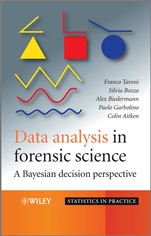
Data Analysis in Forensic Science: A Bayesian Decision Perspective
ISBN 9780470998359
Autor: Franco Taroni, Silvia Bozza, Alex Biedermann, Paolo Garbolino, Colin Aitken
Wydawca: Wiley
Dostępność: 3-6 tygodni
Cena: 431,55 zł
Przed złożeniem zamówienia prosimy o kontakt mailowy celem potwierdzenia ceny.
ISBN13: |
9780470998359 |
ISBN10: |
0470998350 |
Autor: |
Franco Taroni, Silvia Bozza, Alex Biedermann, Paolo Garbolino, Colin Aitken |
Oprawa: |
Hardback |
Rok Wydania: |
2010-04-09 |
Ilość stron: |
388 |
Wymiary: |
235x162 |
Tematy: |
PB |
The use of formal statistical methods to analyse quantitative data in forensic science has increased considerably over the last few years. Students, researchers and practitioners in forensic science regularly ask questions concerning the relative merits of differing approaches, in particular the frequentist and Bayesian approaches, to statistical inference in the forensic context. The ideas of the Bayesian approach in forensic science are now being extended to include decision theory and the associated concept of utility.
Data Analysis in Forensic Science: A Bayesian Decision Perspective sets forth procedures for data analysis that rely on the decision–theoretic approach to inference. Emphasis is made on foundational philosophical tenets as well as the implications of the decision–theoretic approach in practice. This book discusses a range of statistical decision–theoretic methods that are useful in the analysis of forensic scientific data. Forensic scientific examples include point estimation, the comparison of means and proportions in populations, the choice of sample size and the classification of items of evidence of unknown origin into predefined populations.
Key Features:Comprehensive coverage of the analysis of forensic data from a Bayesian perspective, featuring numerous real–world examples and applications.Explanation and definition of key concepts and methods from historical, philosophical and theoretical points of view.An incremental approach for consideration of examples inspired and motivated by issues that may arise in routine forensic practice.Consideration of the arguments and methods, including those of decision theory, used at each stage of the analyses.Inclusion of code written in R to offer an opportunity for enhanced exploration of the ideas.The use of graphical models (e.g. Bayesian networks) to illustrate selected applications of Bayesian methodology.
This book introduces students and practitioners to the application, interpretation and summary of data analyses from a Bayesian decision theoretic perspective.
“A wider understanding of the mathematical techniques and the philosophical ideas in this book can and will enhance the contributions of forensic science in criminal and civil investigations and litigation.”
Professor David Kaye, Pennsylvania State University, USA
Spis treści:
Foreword
Preface
I The foundations of inference and decision in forensic science
1 Introduction
1.1 The inevitability of uncertainty
1.2 Desiderata in evidential assessment
1.3 The importance of the propositional framework and the nature of evidential
assessment
1.4 From desiderata to applications
1.5 The Bayesian core of forensic science
1.6 Structure of the book
2 Scientific reasoning and decision making
2.1 Coherent reasoning under uncertainty
2.2 Coherent decision making under uncertainty
of reasoning
2.3 Scientific reasoning as coherent decision–making
2.4 Forensic reasoning as coherent decision–making
3 Concepts of statistical science and decision theory
3.1 Random variables and distribution functions
3.2 Statistical inference and decision theory
3.3 The Bayesian paradigm
3.4 Bayesian decision theory
3.5 R code
II Forensic data analysis
4 Point estimation
4.1 Introduction
4.2 Bayesian decision for a proportion
4.3 Bayesian decision for a Poisson mean
4.4 Bayesian decision for Normal mean
4.5 R code
5 Credible intervals
5.1 Introduction
5.2 Credible intervals
5.3 Decision–theoretic evaluation of credible intervals
5.4 R code
6 Hypothesis testing
6.1 Introduction
6.2 Bayesian hypothesis testing
6.3 One–sided testing
6.4 Two–sided testing
6.5 R code
7 Sampling
7.1 Introduction
7.2 Sampling inspection
7.3 Graphical models
for sampling inspection
7.4 Sampling inspection under a decision–theoretic approach
7.5 R code
8 Classification of observations
8.1 Introduction
8.2 Standards of coherent classification
8.3 Comparing models using discrete data
8.4 Comparison of models using continuous data
8.5 Non–Normal distributions and cocaine on bank notes
8.6 A note on multivariate continuous data
8.7 R code
9 Bayesian forensic data analysis: conclusions and implications
9.1 Introduction
9.2 What is the past and current position of statistics in forensic science?
9.3 Why should forensic scientists conform to a Bayesian framework for inference
and decision making?
9.4 Why regard probability as a personal degree of belief?
9.5 Why should scientists be aware of decision analysis?
9.6 How to implement Bayesian inference and decision analysis?
A Discrete distributions
B Continuous distributions
Bibliography
Author Index
Subject Index
Okładka tylna:
The use of formal statistical methods to analyse quantitative data in forensic science has increased considerably over the last few years. Students, researchers and practitioners in forensic science regularly ask questions concerning the relative merits of differing approaches, in particular the frequentist and Bayesian approaches, to statistical inference in the forensic context. The ideas of the Bayesian approach in forensic science are now being extended to include decision theory and the associated concept of utility.
Data Analysis in Forensic Science: A Bayesian Decision Perspective sets forth procedures for data analysis that rely on the decision–theoretic approach to inference. Emphasis is made on foundational philosophical tenets as well as the implications of the decision–theoretic approach in practice. This book discusses a range of statistical decision–theoretic methods that are useful in the analysis of
forensic scientific data. Forensic scientific examples include point estimation, the comparison of means and proportions in populations, the choice of sample size and the classification of items of evidence of unknown origin into predefined populations.
Key Features:Comprehensive coverage of the analysis of forensic data from a Bayesian perspective, featuring numerous real–world examples and applications.Explanation and definition of key concepts and methods from historical, philosophical and theoretical points of view.An incremental approach for consideration of examples inspired and motivated by issues that may arise in routine forensic practice.Consideration of the arguments and methods, including those of decision theory, used at each stage of the analyses.Inclusion of code written in R to offer an opportunity for enhanced exploration of the ideas.The use of graphical models (e.g. Bayesian networks) to illustrate selected applications of Bayesian methodology.
This book introduces students and practitioners to the application, interpretation and summary of data analyses from a Bayesian decision theoretic perspective.
“A wider understanding of the mathematical techniques and the philosophical ideas in this book can and will enhance the contributions of forensic science in criminal and civil investigations and litigation.”
Professor David Kaye, Pennsylvania State University, USA
Koszyk
Książek w koszyku: 0 szt.
Wartość zakupów: 0,00 zł
Informacje


Kontakt
Gambit
Centrum Oprogramowania
i Szkoleń Sp. z o.o.
Al. Pokoju 29b/22-24
31-564 Kraków
Siedziba Księgarni
ul. Kordylewskiego 1
31-542 Kraków
+48 12 410 5991
+48 12 410 5987
+48 12 410 5989
Subskrypcje
Administratorem danych osobowych jest firma Gambit COiS Sp. z o.o. Na podany adres będzie wysyłany wyłącznie biuletyn informacyjny.
Autoryzacja płatności

Informacje na temat autoryzacji płatności poprzez PayU.

© Copyright 2012: GAMBIT COiS Sp. z o.o. Wszelkie prawa zastrzeżone.
Projekt i wykonanie: Alchemia Studio Reklamy