


Wydawcy
Katalog tematyczny
- Archeologia (109)
- Ekonomia, finanse, business (13704)
- Filozofia (1445)
- Historia (3040)
- Języki i językoznawstwo (2356)
- Lifestyle, hobby i rozrywka (475)
- Medycyna (9704)
- Nauki humanistyczne (4)
- Nauki o Ziemi i środowisku (2638)
- Nauki ścisłe (20412)
- Astronomia (294)
- Biologia (5119)
- Chemia (6540)
- Fizyka (3309)
- Matematyka (4574)
- Algebra (171)
- Analiza matematyczna (902)
- Filozofia matematyki (1)
- Geometria (237)
- Historia matematyki (57)
- Kombinatoryka, teoria grafów (67)
- Matematyka dyskretna (35)
- Matematyka stosowana (555)
- Optymalizacja (104)
- Podstawy matematyki (129)
- Statystyka, prawdopodobieństwo (296)
- Teoria grup (63)
- Teoria liczb (77)
- Topologia (66)
- Nauki ścisłe, ogólnie (503)
- Nauki społeczne (8486)
- Nauki techniczne (13450)
- Prawo (1696)
- Publikacje informacyjne i interdyscyplinarne (1288)
- Religia i wierzenia (917)
- Technika komputerowa (4067)
- Zdrowie, relacje międzyludzkie i rozwój osobisty (657)





Informacje szczegółowe o książce
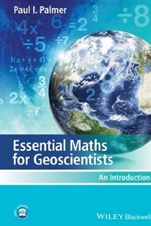
Essential Maths for Geoscientists: An Introduction
ISBN 9780470971949
Autor: Paul I. Palmer
Wydawca: Wiley
Dostępność: 3-6 tygodni
Cena: 223,65 zł
Przed złożeniem zamówienia prosimy o kontakt mailowy celem potwierdzenia ceny.
ISBN13: |
9780470971949 |
ISBN10: |
0470971940 |
Autor: |
Paul I. Palmer |
Oprawa: |
Paperback |
Rok Wydania: |
2014-05-07 |
Ilość stron: |
216 |
Wymiary: |
244x170 |
Tematy: |
PB |
Maths for Geoscientists is an accessible, student–friendly introduction to the essential mathematics required by those students taking degree courses within the Geosciences. Clearly structured throughout, this book carefully guides the student step by step through the mathematics they will encounter and will provide numerous applied examples throughout to enhance students understanding and to place each technique into context. Opening with a chapter explaining the need for studying mathematics within geosciences the book then moves on to cover algebra, equations, solutions, logarithms and exponentials, statistics and probability, trigonometry, vectors and calculus. The final chapter helps to bring it all together and provides the students with sample projects to test their knowledge. Worked applied examples are included in each chapter along with applied problem questions which are a mix of straightforward maths questions, word questions (developing maths to words), and more involved questions that involve the manipulation and interpretation of real and synthetic data.
Preface xi 1 How Do You Know that Global Warming Is Not a Hoax? 1 2 Preamble 7 2.1 The scientific method: pushing back the frontiers of ignorance 7 2.2 Subscript and superscripts 9 2.3 Scientific number format 10 2.4 Significant figures and rounding numbers 12 2.5 Units and dimensions 13 2.6 Symbols and numbers 14 2.7 Mean, median and variance: commonly encountered statistics 15 2.8 Guesstimation 19 2.9 Exercises 21 3 Algebra 37 3.1 Introduction 37 3.2 Evaluating algebraic equations 37 3.2.1 Preamble: symbols and numbers 37 3.2.2 Powers, roots and bases 38 3.3 Simplifying algebraic equations 39 3.4 Factorization 44 3.4.1 Factorizing quadratic equations 46 3.5 Transposing formulae 46 3.6 Word problems 49 3.7 Exercises 50 4 Solving Equations 53 4.1 Solving linear equations 53 4.1.1 Graphically 54 4.1.2 Analytically 58 4.2 Solving simultaneous equations 58 4.3 Solving quadratic equations 59 4.3.1 Square roots 60 4.3.2 Completing the square 60 4.4 Exercises 62 5 Logarithms and Exponentials 67 5.1 Exponentials 67 5.2 Logarithms 67 5.2.1 Logarithm laws 68 5.2.2 Solving exponential equations 69 5.2.3 Power laws and scaling exponents 69 5.3 Log–normal and log–log plots: when and how to use them 72 5.4 Exercises 74 6 Uncertainties, Errors, and Statistics 77 6.1 Errors 77 6.1.1 Important definitions 78 6.1.2 Measures of error 80 6.2 Combining errors 83 6.2.1 Equations with one variable 83 6.2.2 Equations with two or more variables 84 6.2.3 Linear equations 84 6.2.4 Products 85 6.2.5 Combining results of different experiments 86 6.3 Statistics 87 6.3.1 Graphs 87 6.3.2 Descriptive statistics 89 6.4 Correlations 91 6.5 Exercises 93 7 Trigonometry 95 7.1 Some geoscience applications of trigonometry 95 7.2 Anatomy of a triangle 96 7.3 Angles: degrees and radians 99 7.4 Calculating angles given a trigonometric ratio 100 7.5 Cosine and sine rules for non–right–angled triangles 101 7.6 Exercises 101 8 Vectors 105 8.1 What is a vector? 105 8.2 Resolving a vector 105 8.3 Vector algebra 107 8.3.1 Adding and subtracting vectors 107 8.3.2 Multiplying a vector by a scalar 107 8.3.3 The resultant of two perpendicular vectors 107 8.4 Resolving non–perpendicular vectors 108 8.5 Exercises 110 9 Calculus 1: Differentiation 113 9.1 A graphical interpretation of differentiation 114 9.2 A general formula for differentiation 116 9.3 The derivative of some common functions 118 9.4 Differentiation of the sum and difference of functions 118 9.5 Higher derivatives 120 9.6 Maxima and minima 120 9.7 Exercises 122 10 Calculus 2: Integration 125 10.1 Introduction 125 10.2 Definite integrals 127 10.3 Numerical integration 129 10.4 Exercises 130 11 Bringing It All Together 133 A Answers to Problems 143 A.1 Chapter 2: Preamble 143 A.2 Chapter 3: Algebra 148 A.3 Chapter 4: Solving Equations 152 A.4 Chapter 5: Logarithms and Exponentials 158 A.5 Chapter 6: Uncertainties, Errors, and Statistics 162 A.6 Chapter 7: Trigonometry 166 A.7 Chapter 8: Vectors 171 A.8 Chapter 9: Differentiation 174 A.9 Chapter 10: Integration 179 A.10 Chapter 11: Bringing it all together 182 B A Brief Note on Excel 197 C Further Reading 199 Index 201
Koszyk
Książek w koszyku: 0 szt.
Wartość zakupów: 0,00 zł
Informacje


Kontakt
Gambit
Centrum Oprogramowania
i Szkoleń Sp. z o.o.
Al. Pokoju 29b/22-24
31-564 Kraków
Siedziba Księgarni
ul. Kordylewskiego 1
31-542 Kraków
+48 12 410 5991
+48 12 410 5987
+48 12 410 5989
Subskrypcje
Administratorem danych osobowych jest firma Gambit COiS Sp. z o.o. Na podany adres będzie wysyłany wyłącznie biuletyn informacyjny.
Autoryzacja płatności

Informacje na temat autoryzacji płatności poprzez PayU.

© Copyright 2012: GAMBIT COiS Sp. z o.o. Wszelkie prawa zastrzeżone.
Projekt i wykonanie: Alchemia Studio Reklamy