


Wydawcy
Katalog tematyczny
- Archeologia (109)
- Ekonomia, finanse, business (13704)
- Filozofia (1445)
- Historia (3040)
- Języki i językoznawstwo (2356)
- Lifestyle, hobby i rozrywka (475)
- Medycyna (9704)
- Nauki humanistyczne (4)
- Nauki o Ziemi i środowisku (2638)
- Nauki ścisłe (20412)
- Astronomia (294)
- Biologia (5119)
- Chemia (6540)
- Fizyka (3309)
- Matematyka (4574)
- Algebra (171)
- Analiza matematyczna (902)
- Filozofia matematyki (1)
- Geometria (237)
- Historia matematyki (57)
- Kombinatoryka, teoria grafów (67)
- Matematyka dyskretna (35)
- Matematyka stosowana (555)
- Optymalizacja (104)
- Podstawy matematyki (129)
- Statystyka, prawdopodobieństwo (296)
- Teoria grup (63)
- Teoria liczb (77)
- Topologia (66)
- Nauki ścisłe, ogólnie (503)
- Nauki społeczne (8486)
- Nauki techniczne (13450)
- Prawo (1696)
- Publikacje informacyjne i interdyscyplinarne (1288)
- Religia i wierzenia (917)
- Technika komputerowa (4067)
- Zdrowie, relacje międzyludzkie i rozwój osobisty (657)





Informacje szczegółowe o książce
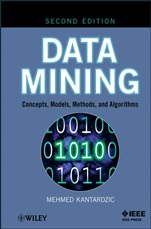
Data Mining: Concepts, Models, Methods, and Algorithms
ISBN 9780470890455
Autor: Mehmed Kantardzic
Wydawca: Wiley
Dostępność: 3-6 tygodni
Cena: 565,95 zł
Przed złożeniem zamówienia prosimy o kontakt mailowy celem potwierdzenia ceny.
ISBN13: |
9780470890455 |
ISBN10: |
0470890452 |
Autor: |
Mehmed Kantardzic |
Oprawa: |
Hardback |
Rok Wydania: |
2011-09-23 |
Numer Wydania: |
2nd Edition |
Ilość stron: |
552 |
Wymiary: |
246x152 |
Tematy: |
PB |
Now updated—the systematic introductory guide to modern analysis of large data sets
As data sets continue to grow in size and complexity, there has been an inevitable move towards indirect, automatic, and intelligent data analysis in which the analyst works via more complex and sophisticated software tools. This book reviews state–of–the–art methodologies and techniques for analyzing enormous quantities of raw data in high–dimensional data spaces to extract new information for decision–making.
This Second Edition of Data Mining: Concepts, Models, Methods, and Algorithms discusses data mining principles and then describes representative state–of–the–art methods and algorithms originating from different disciplines such as statistics, machine learning, neural networks, fuzzy logic, and evolutionary computation. Detailed algorithms are provided with necessary explanations and illustrative examples, and questions and exercises for practice at the end of each chapter. This new edition features the following new techniques/methodologies:
Support Vector Machines (SVM)—developed based on statistical learning theory, they have a large potential for applications in predictive data mining
Kohonen Maps (Self–Organizing Maps – SOM)—one of very applicative neural–networks–based methodologies for descriptive data mining and multi–dimensional data visualizations
DBSCAN, BIRCH, and distributed DBSCAN clustering algorithms—representatives of an important class of density–based clustering methodologies
Bayesian Networks (BN) methodology often used for causality modeling
Algorithms for measuring Betweeness and Centrality parameters in graphs, important for applications in mining large social networks
CART algorithm and Gini index in building decision trees
Bagging & Boosting approac
hes to ensemble–learning methodologies, with details of AdaBoost algorithm
Relief algorithm, one of the core feature selection algorithms inspired by instance–based learning
PageRank algorithm for mining and authority ranking of web pages
Latent Semantic Analysis (LSA) for text mining and measuring semantic similarities between text–based documents
New sections on temporal, spatial, web, text, parallel, and distributed data mining
More emphasis on business, privacy, security, and legal aspects of data mining technology
This text offers guidance on how and when to use a particular software tool (with the companion data sets) from among the hundreds offered when faced with a data set to mine. This allows analysts to create and perform their own data mining experiments using their knowledge of the methodologies and techniques provided. The book emphasizes the selection of appropriate methodologies and data analysis software, as well as parameter tuning. These critically important, qualitative decisions can only be made with the deeper understanding of parameter meaning and its role in the technique that is offered here.
This volume is primarily intended as a data–mining textbook for computer science, computer engineering, and computer information systems majors at the graduate level. Senior students at the undergraduate level and with the appropriate background can also successfully comprehend all topics presented here.
Spis treści:
Preface.
1. Data Mining Concepts.
2. Preparing the Data.
3. Data Reduction.
4. Learning from Data.
5. Statistical Methods.
6. Decision Trees & Decision Rules.
7. Neural Networks.
8. Ensemble Learning.
9. Cluster Analysis.
10. Association Rules.
11. Web Mining & Text Mining.
12. Advances in Data Mining.
13. Genetic Algorithms.
14. Fuzzy Systems.
15. Visua
lization Methods.
16. References.
Appendix A: Data mining tools.
Appendix B: Data mining applications.
Nota biograficzna:
MEHMED KANTARDZIC, PhD, is a professor in the Department of Computer Engineering and Computer Science (CECS) in the Speed School of Engineering at the University of Louisville, Director of CECS Graduate Studies, as well as Director of the Data Mining Lab. A member of IEEE, ISCA, and SPIE, Dr. Kantardzic has won awards for several of his papers, has been published in numerous referred journals, and has been an invited presenter at various conferences. He has also been a contributor to numerous books.
Okładka tylna:
Now updated—the systematic introductory guide to modern analysis of large data sets
As data sets continue to grow in size and complexity, there has been an inevitable move towards indirect, automatic, and intelligent data analysis in which the analyst works via more complex and sophisticated software tools. This book reviews state–of–the–art methodologies and techniques for analyzing enormous quantities of raw data in high–dimensional data spaces to extract new information for decision–making.
This Second Edition of Data Mining: Concepts, Models, Methods, and Algorithms discusses data mining principles and then describes representative state–of–the–art methods and algorithms originating from different disciplines such as statistics, machine learning, neural networks, fuzzy logic, and evolutionary computation. Detailed algorithms are provided with necessary explanations and illustrative examples, and questions and exercises for practice at the end of each chapter. This new edition features the following new techniques/methodologies:
Support Vector Machines (SVM)—developed based on statistical learning theory, they have a large potential for applications in predictive data mining
Kohonen Maps (S
elf–Organizing Maps – SOM)—one of very applicative neural–networks–based methodologies for descriptive data mining and multi–dimensional data visualizations
DBSCAN, BIRCH, and distributed DBSCAN clustering algorithms—representatives of an important class of density–based clustering methodologies
Bayesian Networks (BN) methodology often used for causality modeling
Algorithms for measuring Betweeness and Centrality parameters in graphs, important for applications in mining large social networks
CART algorithm and Gini index in building decision trees
Bagging & Boosting approaches to ensemble–learning methodologies, with details of AdaBoost algorithm
Relief algorithm, one of the core feature selection algorithms inspired by instance–based learning
PageRank algorithm for mining and authority ranking of web pages
Latent Semantic Analysis (LSA) for text mining and measuring semantic similarities between text–based documents
New sections on temporal, spatial, web, text, parallel, and distributed data mining
More emphasis on business, privacy, security, and legal aspects of data mining technology
This text offers guidance on how and when to use a particular software tool (with the companion data sets) from among the hundreds offered when faced with a data set to mine. This allows analysts to create and perform their own data mining experiments using their knowledge of the methodologies and techniques provided. The book emphasizes the selection of appropriate methodologies and data analysis software, as well as parameter tuning. These critically important, qualitative decisions can only be made with the deeper understanding of parameter meaning and its role in the technique that is offered here.
This volume is primarily intended as a data–mining textbook for
computer science, computer engineering, and computer information systems majors at the graduate level. Senior students at the undergraduate level and with the appropriate background can also successfully comprehend all topics presented here.
Koszyk
Książek w koszyku: 0 szt.
Wartość zakupów: 0,00 zł
Informacje


Kontakt
Gambit
Centrum Oprogramowania
i Szkoleń Sp. z o.o.
Al. Pokoju 29b/22-24
31-564 Kraków
Siedziba Księgarni
ul. Kordylewskiego 1
31-542 Kraków
+48 12 410 5991
+48 12 410 5987
+48 12 410 5989
Subskrypcje
Administratorem danych osobowych jest firma Gambit COiS Sp. z o.o. Na podany adres będzie wysyłany wyłącznie biuletyn informacyjny.
Autoryzacja płatności

Informacje na temat autoryzacji płatności poprzez PayU.

© Copyright 2012: GAMBIT COiS Sp. z o.o. Wszelkie prawa zastrzeżone.
Projekt i wykonanie: Alchemia Studio Reklamy