


Wydawcy
Katalog tematyczny
- Archeologia (109)
- Ekonomia, finanse, business (13704)
- Filozofia (1445)
- Historia (3040)
- Języki i językoznawstwo (2356)
- Lifestyle, hobby i rozrywka (475)
- Medycyna (9704)
- Nauki humanistyczne (4)
- Nauki o Ziemi i środowisku (2638)
- Nauki ścisłe (20412)
- Astronomia (294)
- Biologia (5119)
- Chemia (6540)
- Fizyka (3309)
- Matematyka (4574)
- Algebra (171)
- Analiza matematyczna (902)
- Filozofia matematyki (1)
- Geometria (237)
- Historia matematyki (57)
- Kombinatoryka, teoria grafów (67)
- Matematyka dyskretna (35)
- Matematyka stosowana (555)
- Optymalizacja (104)
- Podstawy matematyki (129)
- Statystyka, prawdopodobieństwo (296)
- Teoria grup (63)
- Teoria liczb (77)
- Topologia (66)
- Nauki ścisłe, ogólnie (503)
- Nauki społeczne (8486)
- Nauki techniczne (13450)
- Prawo (1696)
- Publikacje informacyjne i interdyscyplinarne (1288)
- Religia i wierzenia (917)
- Technika komputerowa (4067)
- Zdrowie, relacje międzyludzkie i rozwój osobisty (657)





Informacje szczegółowe o książce
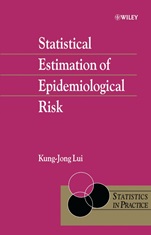
Statistical Estimation of Epidemiological Risk
ISBN 9780470850718
Autor: Kung–Jong Lui
Wydawca: Wiley
Dostępność: 3-6 tygodni
Cena: 533,40 zł
Przed złożeniem zamówienia prosimy o kontakt mailowy celem potwierdzenia ceny.
ISBN13: |
9780470850718 |
ISBN10: |
047085071X |
Autor: |
Kung–Jong Lui |
Oprawa: |
Hardback |
Rok Wydania: |
2004-01-29 |
Ilość stron: |
212 |
Wymiary: |
235x166 |
Tematy: |
PB |
Statistical estimation of indices for measuring risk is a key topic in epidemiology. A good estimator, that is unbiased and efficient, can help investigators search for the possible causes of disease. Good use of statistical methods can enable public health administrators to confidently allocate their limited resources to the appropriate methods of prevention and treatment. Statistical Estimation of Epidemiological Risk presents the most–commonly used measures of risk, and adopts a practical approach using many real and numerical examples to support the methodology. Presents a practical overview of the key measures of epidemiological risk.Features coverage of various sampling methods, and pointers to where each should be used.Each measure discussed is supported by a number of real and numerical examples that highlight their practical use.Each chapter is self–contained, allowing the book to be used as a reference source.Includes an abundance of exercises, which give the reader a clearer understanding of the theory.Suitable for epidemiologists and public health professionals with a modest statistical background.
Statistical Estimation of Epidemiological Risk is both a useful practical reference for researchers from biostatistics and epidemiology, and an accessible textbook for graduate students studying epidemiological risk. The range of examples and exercises are of great practical benefit to public health professionals working in disease prevention and control, and set this book apart from others on the topic.
Spis treści:
About the author.
Preface.
1 Population Proportion or Prevalence.
1.1 Binomial sampling.
1.2 Cluster sampling.
1.3 Inverse sampling.
Exercises.
References.
2 Risk Difference.
2.1 Independent binomial sampling.
2.2 A series of independent binomial sampling procedures.
2.2.1 Summary interval e
stimators.
2.2.2 Test for the homogeneity of risk difference.
2.3 Independent cluster sampling.
2.4 Paired–sample data.
2.5 Independent negative binomial sampling (inverse sampling).
2.6 Independent poisson sampling.
2.7 Stratified poisson sampling.
Exercises.
References.
3 Relative Difference.
3.1 Independent binomial sampling.
3.2 A series of independent binomial sampling procedures.
3.2.1 Asymptotic interval estimators.
3.2.2 Test for the homogeneity of relative difference.
3.3 Independent cluster sampling.
3.4 Paired–sample data.
3.5 Independent inverse sampling.
Exercises.
References.
4 Relative Risk.
4.1 Independent binomial sampling.
4.2 A series of independent binomial sampling procedures.
4.2.1 Asymptotic interval estimators.
4.2.2 Test for the homogeneity of risk ratio.
4.3 Independent cluster sampling.
4.4 Paired–sample data.
4.5 Independent inverse sampling.
4.5.1 Uniformly minimum variance unbiased estimator of relative risk.
4.5.2 Interval estimators of relative risk.
4.6 Independent poisson sampling.
4.7 Stratified poisson sampling.
Exercises.
References.
5 Odds Ratio.
5.1 Independent binomial sampling.
5.1.1 Asymptotic interval estimators.
5.1.2 Exact confidence interval.
5.2 A series of independent binomial sampling procedures.
5.2.1 Asymptotic interval estimators.
5.2.2 Exact confidence interval.
5.2.3 Test for homogeneity of the odds ratio.
5.3 Independent cluster sampling.
5.4 One–to–one matched sampling.
5.5 Logistic modeling.
5.5.1 Estimation under multinomial or independent binomial sampling.
5.5.2 Estimation in the case of paired–sample data.
5.6 Independent inverse sampling.
5.7 Negative multinomial sampling for paired–sample data.
Exercises.
References.
6 Generalized Odds Ratio.
6.1 Independent multinomial sampling.
6
.2 Data with repeated measurements (or under cluster sampling).
6.3 Paired–sample data.
6.4 Mixed negative multinomial and multinomial sampling.
Exercises.
References.
7 Attributable Risk.
7.1 Study designs with no confounders.
7.1.1 Cross–sectional sampling.
7.1.2 Case–control studies.
7.2 Study designs with confounders.
7.2.1 Cross–sectional sampling.
7.2.2 Case–control studies.
7.3 Case–control studies with matched pairs.
7.4 Multiple levels of exposure in case–control studies.
7.5 Logistic modeling in case–control studies.
7.5.1 Logistic model containing only the exposure variables of interest.
7.5.2 Logistic regression model containing both exposure and confounding variables.
7.6 Case–control studies under inverse sampling.
Exercises.
References.
8 Number Needed to Treat.
8.1 Independent binomial sampling.
8.2 A series of independent binomial sampling procedures.
8.3 Independent cluster sampling.
8.4 Paired–sample data.
Exercises.
References.
Appendix Maximum Likelihood Estimator and Large–Sample Theory.
A.1: The maximum likelihood estimator, Wald’s test, the score test, and the asymptotic likelihood ratio test.
A.2: The delta method and its applications.
References.
Answers to Selected Exercises.
Index.
Nota biograficzna:
KUNG–JONG LUI is a professor in the Department of Mathematics and Statistics at San Diego State University. Since he obtained his Ph.D. in biostatistics from UCLA in 1982, he has published more than 100 papers in peer–reviewed journals, including Biometrics, Statistics in Medicine, Biometrical Journal, Psychometrika, Communications in Statistics: Theory and Methods, Science, Proceedings of National Academy of Sciences, Controlled Clinical Trials, Journal of Official Statistics, IEEE Transactions on Relia
bility, Environmetrics, Test, Computational Statistics and Data Analysis, American Journal of Epidemiology, American Journal of Public Health, etc. He is a Fellow of the American Statistical Association, a life member of the International Chinese Statistical Association, and a member of the Western North American Region of the International Biometric Society.
Okładka tylna:
Statistical estimation of indices for measuring risk is a key topic in epidemiology. A good estimator, that is unbiased and efficient, can help investigators search for the possible causes of disease. Good use of statistical methods can enable public health administrators to confidently allocate their limited resources to the appropriate methods of prevention and treatment. Statistical Estimation of Epidemiological Risk presents the most–commonly used measures of risk, and adopts a practical approach using many real and numerical examples to support the methodology. Presents a practical overview of the key measures of epidemiological risk.Features coverage of various sampling methods, and pointers to where each should be used.Each measure discussed is supported by a number of real and numerical examples that highlight their practical use.Each chapter is self–contained, allowing the book to be used as a reference source.Includes an abundance of exercises, which give the reader a clearer understanding of the theory.Suitable for epidemiologists and public health professionals with a modest statistical background.
Statistical Estimation of Epidemiological Risk is both a useful practical reference for researchers from biostatistics and epidemiology, and an accessible textbook for graduate students studying epidemiological risk. The range of examples and exercises are of great practical benefit to public health professionals working in disease prevention and control, and set this book apart from others on the to
Koszyk
Książek w koszyku: 0 szt.
Wartość zakupów: 0,00 zł
Informacje


Kontakt
Gambit
Centrum Oprogramowania
i Szkoleń Sp. z o.o.
Al. Pokoju 29b/22-24
31-564 Kraków
Siedziba Księgarni
ul. Kordylewskiego 1
31-542 Kraków
+48 12 410 5991
+48 12 410 5987
+48 12 410 5989
Subskrypcje
Administratorem danych osobowych jest firma Gambit COiS Sp. z o.o. Na podany adres będzie wysyłany wyłącznie biuletyn informacyjny.
Autoryzacja płatności

Informacje na temat autoryzacji płatności poprzez PayU.

© Copyright 2012: GAMBIT COiS Sp. z o.o. Wszelkie prawa zastrzeżone.
Projekt i wykonanie: Alchemia Studio Reklamy