


Wydawcy
Katalog tematyczny
- Archeologia (109)
- Ekonomia, finanse, business (13704)
- Filozofia (1445)
- Historia (3040)
- Języki i językoznawstwo (2356)
- Lifestyle, hobby i rozrywka (475)
- Medycyna (9704)
- Nauki humanistyczne (4)
- Nauki o Ziemi i środowisku (2638)
- Nauki ścisłe (20412)
- Nauki społeczne (8486)
- Nauki techniczne (13450)
- Prawo (1696)
- Publikacje informacyjne i interdyscyplinarne (1288)
- Religia i wierzenia (917)
- Technika komputerowa (4067)
- Bazy danych (75)
- Bezpieczeństwo komputerowe (454)
- Certyfikacja komputerowa (1)
- Grafika i media cyfrowe (32)
- Informatyka (779)
- Komputery, ogólnie (74)
- Programowanie (351)
- Programy komercyjne (49)
- Sieci komputerowe (350)
- Sprzęt komputerowy (4)
- Systemy operacyjne (32)
- Technika cyfrowa na co dzień (7)
- Zdrowie, relacje międzyludzkie i rozwój osobisty (657)





Informacje szczegółowe o książce
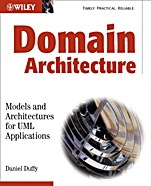
Domain Architectures: Models and Architectures for UML Applications
ISBN 9780470848333
Autor: Daniel J. Duffy
Wydawca: Wiley
Dostępność: 3-6 tygodni
Cena: 236,25 zł
Przed złożeniem zamówienia prosimy o kontakt mailowy celem potwierdzenia ceny.
ISBN13: |
9780470848333 |
ISBN10: |
0470848332 |
Autor: |
Daniel J. Duffy |
Oprawa: |
Paperback |
Rok Wydania: |
2004-05-11 |
Ilość stron: |
406 |
Wymiary: |
236x194 |
Tematy: |
UP |
Domain Architectures describes and documents a number of recurring patterns and models which emerge in real–life software projects. A domain architecture is an archetype of a system designed to show functionality, behaviour and structure traits. It provides a top down view of a system – which has profound implications for system analysts, software developers and architects. It can enable developers to borrow or learn from design solutions that have worked in the same domain, and help to predict major system requirements.
This book describes how to accommodate system requirements by integrating them with one or more instances of a domain architecture. The artefacts of this process can then be mapped to the popular POSA and GOF design patterns.
Described and documented using UML (incorporating UML 2.0) models and meta–models, and concentrating on medium to large–scale systems, the domain architectures described in this book will help software professionals to build a stable architectural framework for high–quality systems.
The five domain architectures presented are:Manufacturing (MAN)Management and Information Systems (MIS)Process Control and Real–Time (PCS)Interactive and Access Control Systems (INT)Access Control Systems (ACS)
Domain Architectures is a catalog or repository of proven solutions, and is a handbook and a reference for software professionals using object–oriented technology and UML to solve real–life problems.
Spis treści:
Acknowledgements.
PART I: BACKGROUND AND FUNDAMENTALS.
1. Introducing and motivating domain architectures .
1.1 What is this book?
1.2 Why have we written this book?
1.3 For whom is this book intended?
1.4 Why should I read this book?
1.5 What is a domain architecture,
really?
1.6 The Datasim Development Process (DDP).
1.7 The structure of this book.
1.8 What this book does not cover.
2. Domain architecture catalogue.
2.1 Introduction and objectives.
2.2 Management Information Systems (MIS) (Chapter 5).
2.3 Process Control Systems (PCS) (Chapter 6).
2.4 Resource Allocation and Tracking (RAT) systems (Chapter 7).
2.5 Manufacturing (MAN) systems (Chapter 8).
2.6 Access Control Systems (ACS) (Chapter 9).
2.7 Lifecycle and composite models (Chapter 10).
3. Software lifecycle and Datasim Development Process (DDP).
3.1 Introduction and objectives.
3.2 The software lifecycle.
3.3 Reducing the scope.
3.4 The requirements/architecture phase in detail.
3.5 The object–oriented analysis process.
3.6 Project cultures and DDP.
3.6.1 Calendar–driven projects.
3.6.2 Requirements–driven projects.
3.6.3 Documentation–driven style.
3.6.4 Quality–driven style.
3.6.5 Architecture–driven style.
3.6.6 Process–driven style and the DDP.
3.7 Summary and conclusions.
4. Fundamental concepts and documentation issues.
4.1 Introduction and objectives.
4.2 How we document domain architectures.
4.3 Characteristics of ISO 9126 and its relationship with domain architectures.
4.4 Documenting high–level artefacts.
4.5 Goals and core processes.
4.6 System context.
4.7 Stakeholders and viewpoints.
4.7.1 Documenting viewpoints.
4.8 Documenting requirements.
4.9 Defining and documenting use cases.
4.10 Summary and conclusions.
Appendix 4.1 A critical look at use cases.
PART II: DOMAIN ARCHITECTURES (META MODELS).
5.Management Information Systems (MIS).
5.1 Introduction and objectives.
5.2 Background and history.
5.3 Motivational examples.
5.3.1 Simple Digital Watch (SDW).
5.3.2 Instrumentation and control systems .<
br>5.4 General applicability.
5.5 Goals, processes and activities.
5.6 Context diagram and system decomposition.
5.7 Stakeholders, viewpoints and requirements.
5.8 UML classes.
5.9 Use cases.
5.10 Specializations of MIS systems.
5.10.1 Example: Noise control engineering.
5.11 Using MIS systems with other systems.
5.12 Summary and conclusions.
6. Process Control Systems (PCS ).
6.1 Introduction and objectives.
6.2 Background and history.
6.3 Motivational examples.
6.3.1 Simple water level control.
6.3.2 Bioreactor.
6.3.3 Barrier options.
6.4 Reference models for Process Control Systems.
6.4.1 Basic components and variables.
6.4.2 Control engineering fundamentals.
6.5 General applicability.
6.6 Goals, processes and activities.
6.7 Context diagram and system decomposition.
6.7.1 Decomposition strategies.
6.8 Stakeholders, viewpoints and requirements.
6.8.1 Input and output variable completeness.
6.8.2 Robustness criteria.
6.8.3 Timing.
6.8.4 Human–Computer Interface (HCI) criteria.
6.8.5 State completeness.
6.8.6 Data age requirement.
6.9 UML classes.
6.10 Use cases.
6.11 Specializations of PCS systems.
6.11.1 Multi–level architectures.
6.12 Using PCS systems with other systems.
6.13 Summary and conclusions.
Appendix 6.1 Message patterns in Process Control Systems.
7. Resource Allocation and Tracking (RAT) systems .
7.1 Introduction and objectives.
7.2 Background and history.
7.3 Motivational examples.
7.3.1 Help Desk System (HDS).
7.3.2 Discrete manufacturing.
7.4 General applicability.
7.5 Goals, processes and activities.
7.6 Context diagram and system decomposition.
7.7 Stakeholders, viewpoints and requirements.
7.8 UML classes.
7.9 Use cases.
7.10 Specializations of RAT systems.
7
.11 Using RAT systems with other systems.
7.12 Summary and conclusions.
8. Manufacturing (MAN) systems.
8.1 Introduction and objectives.
8.2 Background and history.
8.3 Motivational examples.
8.3.1 Compiler theory.
8.3.2 Graphics applications.
8.3.3 Human memory models.
8.4 General applicability.
8.5 Goals, processes and activities.
8.6 Context diagram and system decomposition.
8.7 Stakeholders, viewpoints and requirements.
8.7.1 Stakeholders and viewpoints.
8.7.2 Requirements.
8.8 UML classes.
8.9 Use cases.
8.10 Specializations of MAN systems.
8.11 Using MAN systems with other systems.
8.12 Summary and conclusions.
9. Access Control Systems (ACS).
9.1 Introduction and objectives.
9.2 Background and history.
9.3 Motivational examples.
9.3.1 The Reference Monitor model.
9.4 General applicability.
9.5 Goals, processes and activities.
9.6 Context diagram and system decomposition.
9.7 Stakeholders, viewpoints and requirements.
9.8 UML classes.
9.9 Use cases.
9.10 Specializations of ACS systems.
9.10.1 Security models for Web–based applications.
9.10.2 Access control during design: the Proxy pattern.
9.11 Using ACS systems with other systems.
10. Lifecycle and composite models.
10.1 Introduction and objectives.
10.2 Background and history.
10.3 Motivational example: Rent–a–machine.
10.4 General applicability.
10.5 Goals, processes and activities.
10.6 Context diagram and system decomposition.
10.7 Stakeholders, viewpoints and requirements.
10.8 UML classes.
10.9 Use cases.
10.10 Specializations of LCM systems.
10.11 Using LCM systems with other systems.
10.12 Summary and conclusions.
PART III: APPLICATIONS (MODELS).
11. Project resource manage
Koszyk
Książek w koszyku: 0 szt.
Wartość zakupów: 0,00 zł
Informacje


Kontakt
Gambit
Centrum Oprogramowania
i Szkoleń Sp. z o.o.
Al. Pokoju 29b/22-24
31-564 Kraków
Siedziba Księgarni
ul. Kordylewskiego 1
31-542 Kraków
+48 12 410 5991
+48 12 410 5987
+48 12 410 5989
Subskrypcje
Administratorem danych osobowych jest firma Gambit COiS Sp. z o.o. Na podany adres będzie wysyłany wyłącznie biuletyn informacyjny.
Autoryzacja płatności

Informacje na temat autoryzacji płatności poprzez PayU.

© Copyright 2012: GAMBIT COiS Sp. z o.o. Wszelkie prawa zastrzeżone.
Projekt i wykonanie: Alchemia Studio Reklamy