


Wydawcy
Katalog tematyczny
- Archeologia (109)
- Ekonomia, finanse, business (13704)
- Filozofia (1445)
- Historia (3040)
- Języki i językoznawstwo (2356)
- Lifestyle, hobby i rozrywka (475)
- Medycyna (9704)
- Nauki humanistyczne (4)
- Nauki o Ziemi i środowisku (2638)
- Nauki ścisłe (20412)
- Nauki społeczne (8486)
- Nauki techniczne (13450)
- Prawo (1696)
- Publikacje informacyjne i interdyscyplinarne (1288)
- Religia i wierzenia (917)
- Technika komputerowa (4067)
- Bazy danych (75)
- Bezpieczeństwo komputerowe (454)
- Certyfikacja komputerowa (1)
- Grafika i media cyfrowe (32)
- Informatyka (779)
- Komputery, ogólnie (74)
- Programowanie (351)
- Programy komercyjne (49)
- Sieci komputerowe (350)
- Sprzęt komputerowy (4)
- Systemy operacyjne (32)
- Technika cyfrowa na co dzień (7)
- Zdrowie, relacje międzyludzkie i rozwój osobisty (657)





Informacje szczegółowe o książce
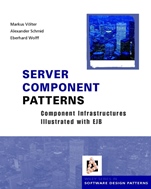
Server Component Patterns: Component Infrastructures Illustrated with EJB
ISBN 9780470843192
Autor: Markus Völter, Alexander Schmid, Eberhard Wolff
Wydawca: Wiley
Dostępność: 3-6 tygodni
Cena: 219,45 zł
Przed złożeniem zamówienia prosimy o kontakt mailowy celem potwierdzenia ceny.
ISBN13: |
9780470843192 |
ISBN10: |
0470843195 |
Autor: |
Markus Völter, Alexander Schmid, Eberhard Wolff |
Oprawa: |
Hardback |
Rok Wydania: |
2002-09-27 |
Ilość stron: |
488 |
Wymiary: |
241x189 |
Tematy: |
UH |
Component technologies like Enterprise JavaBeans (EJB), COM+ and CORBA Components (CCM) have become mainstream in many application domains. Developers and architects who use this technology in their everyday work need to know more about component infrastructures than the API′s of the respective technology. And this is the book they need.
The first part of the book introduces a pattern language that describes how server–side component infrastructures work internally. It does not only adress the basic building blocks and their interactions. It also provides details about the reasons and rationales for this kind of system architecture. For each pattern, the book provides short examples of how it is implemented in EJB, CCM and COM+. These examples thus also serve as a good comparison of those three mainstream component infrastructures.
The second part of the book uses EJB technology to provide even more detailed examples for the patterns, including UML diagrams and extensive source code. Also serving as a comprehensive overview of EJB, it introduces it from the architectural viewpoint and for the developer highlights the consequences of working with that architecture.
Part three offers another approach to the material: a conversation between two people that describes how a concrete application has been built using component technology, focusing on the benefits of this approach.
After reading this book you will:
∗ understand the principles and patterns of server–side component infrastructures
∗ be able to design your own proprietary component infrastructures for specific projects
∗ have learnt about the commonalities and differences between EJB, CCM and COM+
∗ gain a comprehensive overview of EJB technology
∗ see how server–side component infrastructures can be used to great benefit in a real application
The "comic" illustrations accompanying the patterns have been created by Stefan Schu
lz who, when not drawing, works as an independent technology consultant.
Spis treści:
Preface.
Foreword by Frank Buschmann.
Foreword by Clemens Szyperski.
Foundations.
Part I: A Server Component Patterns Language.
Core Infrastructure Elements.
Component Implementation Building Blocks.
Container Implementation Basics.
A Component and its Environment.
Identifying and Managing Instances.
Remote Access to Components.
More Container Implementation.
Component Deployment.
Part II: The Patterns Illustrated with EJB.
EJB Core Infrastructure Elements.
EJB Component Implementation Building Blocks.
EJB Container Implementation Basics.
A Bean and its Environment.
Identifying and Managing Bean Instances.
Remote Access to Beans.
More EJB Container Implementation.
Bean Deployment.
Part III: A Story.
Literature and Online Resources.
Glossary.
Index.
Nota biograficzna:
Markus Völter, Alexander Schmid and Eberhard Wolff work as IT consultants, trainers and office managers for MATHEMA AG in Germany. They share a professional interest in new software development technologies, distributed systems and have experience of component–based development and enterprise architecture obtained during many development projects of all kinds and size. The three of them are regular speakers at conferences. Markus Völter is an active member of the international pattern community.
Okładka tylna:
Component technologies like Enterprise JavaBeans (EJB), COM+ and CORBA Components (CCM) have become mainstream in many application domains. Developers and architects who use this technology in their everyday work need to know more about component infrastructures than the API′s of the respective technology. And this is the book they need.
The first part of the book introduces a pattern language that describes how server–side component infrastructure
s work internally. It does not only adress the basic building blocks and their interactions. It also provides details about the reasons and rationales for this kind of system architecture. For each pattern, the book provides short examples of how it is implemented in EJB, CCM and COM+. These examples thus also serve as a good comparison of those three mainstream component infrastructures.
The second part of the book uses EJB technology to provide even more detailed examples for the patterns, including UML diagrams and extensive source code. Also serving as a comprehensive overview of EJB, it introduces it from the architectural viewpoint and for the developer highlights the consequences of working with that architecture.
Part three offers another approach to the material: a conversation between two people that describes how a concrete application has been built using component technology, focusing on the benefits of this approach.
After reading this book you will:
∗ understand the principles and patterns of server–side component infrastructures
∗ be able to design your own proprietary component infrastructures for specific projects
∗ have learnt about the commonalities and differences between EJB, CCM and COM+
∗ gain a comprehensive overview of EJB technology
∗ see how server–side component infrastructures can be used to great benefit in a real application
The "comic" illustrations accompanying the patterns have been created by Stefan Schulz who, when not drawing, works as an independent technology consultant.
Koszyk
Książek w koszyku: 0 szt.
Wartość zakupów: 0,00 zł
Informacje


Kontakt
Gambit
Centrum Oprogramowania
i Szkoleń Sp. z o.o.
Al. Pokoju 29b/22-24
31-564 Kraków
Siedziba Księgarni
ul. Kordylewskiego 1
31-542 Kraków
+48 12 410 5991
+48 12 410 5987
+48 12 410 5989
Subskrypcje
Administratorem danych osobowych jest firma Gambit COiS Sp. z o.o. Na podany adres będzie wysyłany wyłącznie biuletyn informacyjny.
Autoryzacja płatności

Informacje na temat autoryzacji płatności poprzez PayU.

© Copyright 2012: GAMBIT COiS Sp. z o.o. Wszelkie prawa zastrzeżone.
Projekt i wykonanie: Alchemia Studio Reklamy