


Wydawcy
Katalog tematyczny
- Archeologia (109)
- Ekonomia, finanse, business (13704)
- Filozofia (1445)
- Historia (3040)
- Języki i językoznawstwo (2356)
- Lifestyle, hobby i rozrywka (475)
- Medycyna (9704)
- Nauki humanistyczne (4)
- Nauki o Ziemi i środowisku (2638)
- Nauki ścisłe (20412)
- Astronomia (294)
- Biologia (5119)
- Chemia (6540)
- Fizyka (3309)
- Matematyka (4574)
- Algebra (171)
- Analiza matematyczna (902)
- Filozofia matematyki (1)
- Geometria (237)
- Historia matematyki (57)
- Kombinatoryka, teoria grafów (67)
- Matematyka dyskretna (35)
- Matematyka stosowana (555)
- Optymalizacja (104)
- Podstawy matematyki (129)
- Statystyka, prawdopodobieństwo (296)
- Teoria grup (63)
- Teoria liczb (77)
- Topologia (66)
- Nauki ścisłe, ogólnie (503)
- Nauki społeczne (8486)
- Nauki techniczne (13450)
- Prawo (1696)
- Publikacje informacyjne i interdyscyplinarne (1288)
- Religia i wierzenia (917)
- Technika komputerowa (4067)
- Zdrowie, relacje międzyludzkie i rozwój osobisty (657)





Informacje szczegółowe o książce
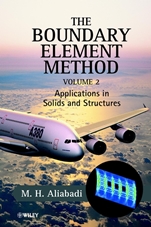
The Boundary Element Method, Volume 2: Applications in Solids and Structures
ISBN 9780470842980
Autor: M. H. Aliabadi
Wydawca: Wiley
Dostępność: 3-6 tygodni
Cena: 1 219,05 zł
Przed złożeniem zamówienia prosimy o kontakt mailowy celem potwierdzenia ceny.
ISBN13: |
9780470842980 |
ISBN10: |
0470842989 |
Autor: |
M. H. Aliabadi |
Oprawa: |
Hardback |
Rok Wydania: |
2002-03-28 |
Ilość stron: |
598 |
Wymiary: |
263x179 |
Tematy: |
PB |
The boundary element method (BEM) is a modern numerical technique, which has enjoyed increasing popularity over the last two decades, and is now an established alternative to traditional computational methods of engineering analysis. The main advantage of the BEM is its unique ability to provide a complete solution in terms of boundary values only, with substantial savings in modelling effort.
This two volume book set is designed to provide the readers with a comprehensive and up–to–date account of the boundary element method and its application to solving engineering problems. Each volume is a self–contained book including a substantial amount of material not previously covered by other text books on the subject. Volume 1 covers applications to heat transfer, acoustics, electrochemistry and fluid mechanics problems, while volume 2 concentrates on solids and structures, describing applications to elasticity, plasticity, elastodynamics, fracture mechanics and contact analysis. The early chapters are designed as a teaching text for final year undergraduate courses. Both volumes reflect the experience of the authors over a period of more than twenty years of boundary element research.
This volume, Applications in Solids and Structures, provides a comprehensive presentation of the BEM from fundamentals to advanced engineering applications and encompasses:Elasticity for 2D, 3D and plates and shells
Non–linear, transient and thermal stress analysis
Crack growth and multi–body contact mechanics
Sensitivity analysis and optimisation
Analysis of assembled structures.An important feature of this book is the in–depth presentation of BEM formulations in all of the above fields, including detailed discussions of the basic theory, numerical algorithms and where possible simple examples are included, as well as test results for practical engineering applications of the method. Although most
of the methods presented are the latest developments in the field, the author has included some simple techniques, which are helpful in understanding the computer implementation of BEM. Another notable feature is the comprehensive presentation of a new generation of boundary elements known as the Dual Boundary Element Method.
Written by an internationally recognised authority in the field, this is essential reading for postgraduates, researchers and practitioners in aerospace, mechanical and civil engineering and applied mathematics.
Spis treści:
Preface
Preface to Volume 2
Acknowledgements
Introduction
Elastostatics
Plates and Shells
Thermoelasticity
Elastodynamics
Elastoplasticity
Contact Mechanics
Fracture Mechanics
Sensitivity Analysis and Shape Optimization
Assembled Structures
Numerical Integration
A Complex Stress Functions
B Limiting Process for Boundary Stress Equation
C Limits Integrals for Shallow Shells
D Particular Solutions for Shear Deformable Plates
E Fundamental Solutions for Elastodynamics
F Shape Functions of Brick Cell elements
G Fast Solver for Contact Problems
Index
Okładka tylna:
The boundary element method (BEM) is a modern numerical technique, which has enjoyed increasing popularity over the last two decades, and is now an established alternative to traditional computational methods of engineering analysis. The main advantage of the BEM is its unique ability to provide a complete solution in terms of boundary values only, with substantial savings in modelling effort.
This two volume book set is designed to provide the readers with a comprehensive and up–to–date account of the boundary element method and its application to solving engineering problems. Each volume is a self–contained book including a substantial amount of material not previously covered by other text books on the subject. Volume 1 covers applica
tions to heat transfer, acoustics, electrochemistry and fluid mechanics problems, while volume 2 concentrates on solids and structures, describing applications to elasticity, plasticity, elastodynamics, fracture mechanics and contact analysis. The early chapters are designed as a teaching text for final year undergraduate courses. Both volumes reflect the experience of the authors over a period of more than twenty years of boundary element research.
This volume, Applications in Solids and Structures, provides a comprehensive presentation of the BEM from fundamentals to advanced engineering applications and encompasses:Elasticity for 2D, 3D and plates and shells
Non–linear, transient and thermal stress analysis
Crack growth and multi–body contact mechanics
Sensitivity analysis and optimisation
Analysis of assembled structures.An important feature of this book is the in–depth presentation of BEM formulations in all of the above fields, including detailed discussions of the basic theory, numerical algorithms and where possible simple examples are included, as well as test results for practical engineering applications of the method. Although most of the methods presented are the latest developments in the field, the author has included some simple techniques, which are helpful in understanding the computer implementation of BEM. Another notable feature is the comprehensive presentation of a new generation of boundary elements known as the Dual Boundary Element Method.
Written by an internationally recognised authority in the field, this is essential reading for postgraduates, researchers and practitioners in aerospace, mechanical and civil engineering and applied mathematics.
Koszyk
Książek w koszyku: 0 szt.
Wartość zakupów: 0,00 zł
Informacje


Kontakt
Gambit
Centrum Oprogramowania
i Szkoleń Sp. z o.o.
Al. Pokoju 29b/22-24
31-564 Kraków
Siedziba Księgarni
ul. Kordylewskiego 1
31-542 Kraków
+48 12 410 5991
+48 12 410 5987
+48 12 410 5989
Subskrypcje
Administratorem danych osobowych jest firma Gambit COiS Sp. z o.o. Na podany adres będzie wysyłany wyłącznie biuletyn informacyjny.
Autoryzacja płatności

Informacje na temat autoryzacji płatności poprzez PayU.

© Copyright 2012: GAMBIT COiS Sp. z o.o. Wszelkie prawa zastrzeżone.
Projekt i wykonanie: Alchemia Studio Reklamy