


Wydawcy
Katalog tematyczny
- Archeologia (109)
- Ekonomia, finanse, business (13704)
- Filozofia (1445)
- Historia (3040)
- Języki i językoznawstwo (2356)
- Lifestyle, hobby i rozrywka (475)
- Medycyna (9704)
- Nauki humanistyczne (4)
- Nauki o Ziemi i środowisku (2638)
- Nauki ścisłe (20412)
- Astronomia (294)
- Biologia (5119)
- Chemia (6540)
- Fizyka (3309)
- Matematyka (4574)
- Algebra (171)
- Analiza matematyczna (902)
- Filozofia matematyki (1)
- Geometria (237)
- Historia matematyki (57)
- Kombinatoryka, teoria grafów (67)
- Matematyka dyskretna (35)
- Matematyka stosowana (555)
- Optymalizacja (104)
- Podstawy matematyki (129)
- Statystyka, prawdopodobieństwo (296)
- Teoria grup (63)
- Teoria liczb (77)
- Topologia (66)
- Nauki ścisłe, ogólnie (503)
- Nauki społeczne (8486)
- Nauki techniczne (13450)
- Prawo (1696)
- Publikacje informacyjne i interdyscyplinarne (1288)
- Religia i wierzenia (917)
- Technika komputerowa (4067)
- Zdrowie, relacje międzyludzkie i rozwój osobisty (657)





Informacje szczegółowe o książce
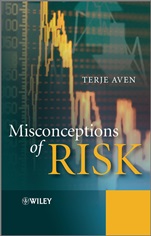
Misconceptions of Risk
ISBN 9780470683880
Autor: Terje Aven
Wydawca: Wiley
Dostępność: 3-6 tygodni
Cena: 363,30 zł
Przed złożeniem zamówienia prosimy o kontakt mailowy celem potwierdzenia ceny.
ISBN13: |
9780470683880 |
ISBN10: |
0470683880 |
Autor: |
Terje Aven |
Oprawa: |
Hardback |
Rok Wydania: |
2010-01-12 |
Ilość stron: |
252 |
Wymiary: |
232x161 |
Tematy: |
PB |
We all face risks in a variety of ways, as individuals, businesses and societies. The discipline of risk assessment and risk management is growing rapidly and there is an enormous drive for the implementation of risk assessment methods and risk management in organizations. There are great expectations that these tools provide suitable frameworks for obtaining high levels of performance and balance different concerns such as safety and costs.
The analysis and management of risk are not straightforward. There are many challenges. The risk discipline is young and there are a number of ideas, perspectives and conceptions of risk out there. For example many analysts and researchers consider it appropriate to base their risk management policies on the use of expected values, which basically means that potential losses are multiplied with their associated consequences. However, the rationale for such a policy is questionable.
A number of such common conceptions of risk are examined in the book, related to the risk concept, risk assessments, uncertainty analyses, risk perception, the precautionary principle, risk management and decision making under uncertainty. The Author discusses these concepts, their strengths and weaknesses, and concludes that they are often better judged as misconceptions of risk than conceptions of risk.
Key Features:Discusses common conceptions of risk with supporting examples.Provides recommendations and guidance to risk analysis and risk management.Relevant for all types of applications, including engineering and business.Presents the Author′s overall conclusions on the issues addressed throughout the book.
All those working with risk–related problems need to understand the fundamental ideas and concepts of risk. Professionals in the field of risk, as well as researchers and graduate students will benefit from this book. Policy makers and business people will also find this book of interest.
Spis treści:
Preface.
Acknowledgements.
1 Risk is equal to the expected value.
2 Risk is a probability or probability distribution.
3 Risk equals a probability distribution quantile (value–at–risk).
4 Risk equals uncertainty.
5 Risk is equal to an event.
6 Risk equals expected disutility.
7 Risk is restricted to the case of objective probabilities.
8 Risk is the same as risk perception.
9 Risk relates to negative consequences only.
10 Risk is determined by the historical data.
11 Risk assessments produce an objective risk picture.
12 There are large inherent uncertainties in risk analyses.
13 Model uncertainty should be quantified.
14 It is meaningful and useful to distinguish between stochastic and epistemic uncertainties.
15 Bayesian analysis is based on the use of probability models and bayesian updating.
16 Sensitivity analysis is a type of uncertainty analysis.
17 The main objective of risk management is risk reduction.
18 Decision–making under uncertainty should be based on science (analysis).
19 The precautionary principle and risk management cannot be meaningfully integrated.
20 Conclusions.
Index.
Okładka tylna:
We all face risks in a variety of ways, as individuals, businesses and societies. The discipline of risk assessment and risk management is growing rapidly and there is an enormous drive for the implementation of risk assessment methods and risk management in organizations. There are great expectations that these tools provide suitable frameworks for obtaining high levels of performance and balance different concerns such as safety and costs.
The analysis and management of risk are not straightforward. There are many challenges. The risk discipline is young and there are a number of ideas, perspectives and conceptions of risk out there. For example many analysts and researchers consider it appropriate to base their risk manage
ment policies on the use of expected values, which basically means that potential losses are multiplied with their associated consequences. However, the rationale for such a policy is questionable.
A number of such common conceptions of risk are examined in the book, related to the risk concept, risk assessments, uncertainty analyses, risk perception, the precautionary principle, risk management and decision making under uncertainty. The Author discusses these concepts, their strengths and weaknesses, and concludes that they are often better judged as misconceptions of risk than conceptions of risk.
Key Features:Discusses common conceptions of risk with supporting examples.Provides recommendations and guidance to risk analysis and risk management.Relevant for all types of applications, including engineering and business.Presents the Author′s overall conclusions on the issues addressed throughout the book.
All those working with risk–related problems need to understand the fundamental ideas and concepts of risk. Professionals in the field of risk, as well as researchers and graduate students will benefit from this book. Policy makers and business people will also find this book of interest.
Koszyk
Książek w koszyku: 0 szt.
Wartość zakupów: 0,00 zł
Informacje


Kontakt
Gambit
Centrum Oprogramowania
i Szkoleń Sp. z o.o.
Al. Pokoju 29b/22-24
31-564 Kraków
Siedziba Księgarni
ul. Kordylewskiego 1
31-542 Kraków
+48 12 410 5991
+48 12 410 5987
+48 12 410 5989
Subskrypcje
Administratorem danych osobowych jest firma Gambit COiS Sp. z o.o. Na podany adres będzie wysyłany wyłącznie biuletyn informacyjny.
Autoryzacja płatności

Informacje na temat autoryzacji płatności poprzez PayU.

© Copyright 2012: GAMBIT COiS Sp. z o.o. Wszelkie prawa zastrzeżone.
Projekt i wykonanie: Alchemia Studio Reklamy