


Wydawcy
Katalog tematyczny
- Archeologia (109)
- Ekonomia, finanse, business (13704)
- Filozofia (1445)
- Historia (3040)
- Języki i językoznawstwo (2356)
- Lifestyle, hobby i rozrywka (475)
- Medycyna (9704)
- Nauki humanistyczne (4)
- Nauki o Ziemi i środowisku (2638)
- Nauki ścisłe (20412)
- Nauki społeczne (8486)
- Nauki techniczne (13450)
- Prawo (1696)
- Publikacje informacyjne i interdyscyplinarne (1288)
- Religia i wierzenia (917)
- Technika komputerowa (4067)
- Bazy danych (75)
- Bezpieczeństwo komputerowe (454)
- Certyfikacja komputerowa (1)
- Grafika i media cyfrowe (32)
- Informatyka (779)
- Komputery, ogólnie (74)
- Programowanie (351)
- Programy komercyjne (49)
- Sieci komputerowe (350)
- Sprzęt komputerowy (4)
- Systemy operacyjne (32)
- Technika cyfrowa na co dzień (7)
- Zdrowie, relacje międzyludzkie i rozwój osobisty (657)





Informacje szczegółowe o książce
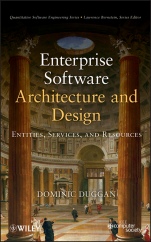
Enterprise Software Architecture and Design: Entities, Services, and Resources
ISBN 9780470565452
Autor: Dominic Duggan
Wydawca: Wiley
Dostępność: 3-6 tygodni
Cena: 627,90 zł
Przed złożeniem zamówienia prosimy o kontakt mailowy celem potwierdzenia ceny.
ISBN13: |
9780470565452 |
ISBN10: |
0470565454 |
Autor: |
Dominic Duggan |
Oprawa: |
Hardback |
Rok Wydania: |
2012-03-09 |
Ilość stron: |
512 |
Wymiary: |
240x156 |
Tematy: |
UP |
Provides principles and best practices for the design and development of enterprise software applications Enterprise software drives much of the world′s IT systems in critical domains such as healthcare, finance, e–commerce, and government. Web services and cloud computing are two manifestations of the growing sophistication and interconnectedness of business IT processes. Despite its importance, the agreed best practices for building enterprise software are still very much a "work in progress." This text provides a timely review of the principles and practice of enterprise software architecture, including the perspectives of software–oriented architecture (SOA), domain–driven design, and representational state transfer (REST). It also features: Both the implementation–oriented perspective of the hands–on developer and the design–oriented perspective of the software architect Discussion of the support for enterprise software development provided by popular frameworks such as Java Enterprise Edition and Windows Communication Foundation, including illustrative examples Discussion of trends in computer science research that promise to have a bearing on the hard problems associated with building reliable enterprise applications Review of basic concepts that any enterprise software developer or architect will need to understand, in programming languages and distributed systems Intended to bridge the gap between high–level conceptual overviews and in–depth technical tutorials, Enterprise Software Architecture and Design is ideal for students in computer science, information systems, and systems engineering, as well as software development professionals, computer scientists, and software architects.
List of Figures xv Acknowledgements xxiii 1. Introduction 1 References / 6 2. Middleware 7 2.1 Enterprise Information Systems / 7 2.2 Communication / 12 2.3 System and Failure Models / 21 2.4 Remote Procedure Call / 34 2.5 Message–Oriented Middleware / 42 2.6 Web Services and Service–Oriented Architecture (SOA) / 46 2.7 Cloud Computing / 52 2.8 Naming and Discovery / 55 2.9 Further Reading / 56 References / 57 3. Data Modeling 59 3.1 Entities and Relationships / 60 3.1.1 Concepts and Entities / 60 3.1.2 Attributes and Relationships / 61 3.1.3 Properties of Relationship Types / 65 3.1.4 Special Relationship Types / 69 3.2 XML Schemas / 74 3.3 Defining New Types / 79 3.3.1 Defining Simple Types / 79 3.3.2 Defining Complex Types / 82 3.4 Derived Types / 85 3.4.1 Derived Simple Types / 86 3.4.2 Derived Complex Types / 87 3.5 Document Hierarchies / 94 3.6 Relationship Types in XML Schemas / 98 3.7 Metaschemas and Metamodels / 100 3.8 Further Reading / 102 References / 102 4. Data Processing 104 4.1 Processing XML Data / 104 4.1.1 Tree Processing / 105 4.1.2 Schema Binding / 109 4.1.3 Stream Processing / 114 4.1.4 External Processing / 119 4.2 Query Languages and XQuery / 122 4.3 XML Databases / 134 4.3.1 Storage as Relational Tables / 135 4.3.2 Storage as Large Strings / 137 4.3.3 Native XML Storage / 137 4.4 Web Services / 138 4.4.1 SOAP: (not so) Simple Object Access Protocol / 139 4.4.2 WSDL: Web Services Description Language / 145 4.4.3 Web Service Policy / 155 4.5 Presentation Layer: JSON and JQUERY / 159 References / 166 5. Domain–Driven Architecture 167 5.1 Software Architecture / 167 5.2 Domain–Driven Design / 168 5.3 Application Frameworks / 175 5.4 Domain–Specific Languages (DSLs) / 180 5.5 An Example API for Persistent Domain Objects / 188 5.6 Domain–Driven Architecture / 197 5.7 Further Reading / 205 References / 205 6. Service–Oriented Architecture 207 6.1 Services and Procedures / 207 6.2 Service–Oriented Architecture (SOA) / 211 6.3 Service Design Principles / 216 6.4 Service–Oriented Architecture (SOA) Governance / 218 6.5 Standardized Service Contract / 221 6.5.1 Operations Contract / 222 6.5.2 Data Contract / 223 6.5.3 Policy Contract / 224 6.5.4 Binding Contract / 226 6.5.5 Contract Versioning / 231 6.6 Service Loose Coupling / 237 6.6.1 Motivation for Loose Coupling / 237 6.6.2 Contract Development / 239 6.6.3 Loose Coupling Patterns / 242 6.6.4 Cost of Loose Coupling / 246 6.7 Service Abstraction / 248 6.7.1 Platform Abstraction / 248 6.7.2 Protocol Abstraction / 249 6.7.3 Procedural Abstraction / 261 6.7.4 State Abstraction / 264 6.7.5 Data Abstraction / 269 6.7.6 Endpoint Abstraction / 278 6.8 Service Reusability / 278 6.8.1 Parameterization and Bounded Polymorphism / 279 6.8.2 Subtyping, Inheritance, and Contracts / 284 6.8.3 Does Service–Oriented Architecture Require Subtyping? / 289 6.8.4 Patterns for Service Reusability / 292 6.9 Service Autonomy / 299 6.9.1 Replicating Computation / 300 6.9.2 Replicating State / 303 6.9.3 Sources of Errors and Rejuvenation / 308 6.9.4 Caching / 313 6.10 Service Statelessness / 323 6.10.1 Contexts and Dependency Injection / 331 6.11 Service Discoverability / 336 6.11.1 Global Discovery / 336 6.11.2 Local Discovery / 337 6.11.3 Layered Naming / 347 6.12 Further Patterns / 351 6.13 Further Reading / 352 References / 352 7. Resource–Oriented Architecture 359 7.1 Representational State Transfer / 359 7.2 RESTful Web Services / 369 7.3 Resource–Oriented Architecture (ROA) / 379 7.4 Interface Description Languages / 387 7.4.1 Web Services Description Language (WSDL) / 387 7.4.2 Web Application Description Language (WADL) / 390 7.5 An Example Application Program Interface (API) for Resource–Oriented Web Services / 396 7.6 Hypermedia Control and Contract Conformance / 406 7.7 Concluding Remarks / 412 7.8 Further Reading / 414 References / 414 Appendix A: Introduction to Haskell 416 A.1 Types and Functions / 416 A.2 Type Classes and Functors / 425 A.3 Monads / 431 A.4 Further Reading / 436 References / 436 Appendix B: Time in Distributed Systems 437 B.1 What Time Is It? / 437 B.2 Time and Causality / 443 B.3 Applications of Logical and Vector Time / 450 B.3.1 Mutual Exclusion / 450 B.3.2 Quorum Consensus / 451 B.3.3 Distributed Logging / 456 B.3.4 Causal Message Delivery / 458 B.3.5 Distributed Snapshots / 463 B.4 Virtual Time / 468 B.5 Further Reading / 470 References / 470 Index 473
Dominic Duggan, PhD , is a faculty member in the Department of Computer Science at Stevens Institute of Technology. His research interests are in the design and development of secure and reliable software systems. His publications have appeared in leading journals and conferences.
Koszyk
Książek w koszyku: 0 szt.
Wartość zakupów: 0,00 zł
Informacje


Kontakt
Gambit
Centrum Oprogramowania
i Szkoleń Sp. z o.o.
Al. Pokoju 29b/22-24
31-564 Kraków
Siedziba Księgarni
ul. Kordylewskiego 1
31-542 Kraków
+48 12 410 5991
+48 12 410 5987
+48 12 410 5989
Subskrypcje
Administratorem danych osobowych jest firma Gambit COiS Sp. z o.o. Na podany adres będzie wysyłany wyłącznie biuletyn informacyjny.
Autoryzacja płatności

Informacje na temat autoryzacji płatności poprzez PayU.

© Copyright 2012: GAMBIT COiS Sp. z o.o. Wszelkie prawa zastrzeżone.
Projekt i wykonanie: Alchemia Studio Reklamy