


Wydawcy
Katalog tematyczny
- Archeologia (109)
- Ekonomia, finanse, business (13704)
- Filozofia (1445)
- Historia (3040)
- Języki i językoznawstwo (2356)
- Lifestyle, hobby i rozrywka (475)
- Medycyna (9704)
- Nauki humanistyczne (4)
- Nauki o Ziemi i środowisku (2638)
- Nauki ścisłe (20412)
- Nauki społeczne (8486)
- Nauki techniczne (13450)
- Prawo (1696)
- Publikacje informacyjne i interdyscyplinarne (1288)
- Religia i wierzenia (917)
- Technika komputerowa (4067)
- Bazy danych (75)
- Bezpieczeństwo komputerowe (454)
- Certyfikacja komputerowa (1)
- Grafika i media cyfrowe (32)
- Informatyka (779)
- Komputery, ogólnie (74)
- Programowanie (351)
- Programy komercyjne (49)
- Sieci komputerowe (350)
- Sprzęt komputerowy (4)
- Systemy operacyjne (32)
- Technika cyfrowa na co dzień (7)
- Zdrowie, relacje międzyludzkie i rozwój osobisty (657)





Informacje szczegółowe o książce
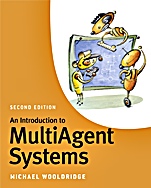
An Introduction to MultiAgent Systems
ISBN 9780470519462
Autor: Michael Wooldridge
Wydawca: Wiley
Dostępność: 3-6 tygodni
Cena: 319,20 zł
Przed złożeniem zamówienia prosimy o kontakt mailowy celem potwierdzenia ceny.
ISBN13: |
9780470519462 |
ISBN10: |
0470519460 |
Autor: |
Michael Wooldridge |
Oprawa: |
Paperback |
Rok Wydania: |
2009-05-15 |
Numer Wydania: |
2nd Edition |
Ilość stron: |
484 |
Wymiary: |
237x192 |
Tematy: |
UA |
“A thoroughly revised and updated book, written by one of the leading researchers in the field. This excellent book provides a wonderful introduction and a comprehensive exposition of the increasingly important field of multi–agent systems.” ––Professor Nick Jennings FREng
Intelligence, Agents, Multimedia Group, Electronics and Computer Science, University of Southampton
Multiagent systems are a new paradigm for understanding and building distributed systems, where it is assumed that the computational components are autonomous: able to control their own behaviour in the furtherance of their own goals. The first edition of An Introduction to Multiagent Systems was the first contemporary textbook in the area, and became the standard undergraduate reference work for the field. This second edition has been extended with substantial new material on recent developments in the field, and has been revised and updated throughout. It provides a comprehensive, coherent, and readable introduction to the theory and practice of multiagent systems, while presenting a wealth of discussion topics and pointers into more advanced issues for those wanting to dig deeper.
Key new features include:
dedicated new chapters on ontologies, voting, auctions, bargaining, coalition formation, and argumentation, reflecting recent research directions and new results;"mind maps" to illustrate key concepts and ideas – an essential study and revision aid;590 literature references, revised, updated, and extended to reflect the state of the art in agent research and development.
Designed and written specifically for computing undergraduates, the book comes with a rich repository of online teaching materials, including a complete set of lecture slides.
Spis treści:
Preface.
Acknowledgements.
Part I Setting the Scene.
1 Introduction.<
br>1.1 The Vision Thing.
1.2 Some Views of the Field.
1.3 Frequently Asked Questions (FAQ).
Part II Intelligent Autonomous Agents.
2 Intelligent Agents.
2.1 Intelligent Agents.
2.2 Agents and Objects.
2.3 Agents and Expert Systems.
2.4 Agents as Intentional Systems.
2.5 Abstract Architectures for Intelligent Agents.
2.6 How to Tell an Agent What to Do.
3 Deductive Reasoning Agents.
3.1 Agents as Theorem Provers.
3.2 Agent–Oriented Programming.
3.3 Concurrent MetateM.
4 Practical Reasoning Agents.
4.1 Practical Reasoning=Deliberation+Means–Ends Reasoning.
4.2 Means–Ends Reasoning.
4.3 Implementing a Practical Reasoning Agent.
4.4 The Procedural Reasoning System.
5 Reactive and Hybrid Agents.
5.1 Reactive Agents.
5.2 Hybrid Agents.
Part III Communication and Cooperation.
6 Understanding Each Other.
6.1 Ontology Fundamentals.
6.2 Ontology Languages.
6.3 RDF.
6.4 Constructing an Ontology.
6.5 Software Tools for Ontologies.
7 Communicating.
7.1 Speech Acts.
7.2 Agent Communication Languages.
8 Working Together.
8.1 Cooperative Distributed Problem Solving.
8.2 Task Sharing and Result Sharing.
8.3 Result Sharing.
8.4 Combining Task and Result Sharing.
8.5 Handling Inconsistency.
8.6 Coordination.
8.7 Multiagent Planning and Synchronization.
9 Methodologies.
9.1 When is an Agent–Based Solution Appropriate?
9.2 Agent–Oriented Analysis and Design.
9.3 Pitfalls of Agent Development.
9.4 Mobile Agents.
10 Applications.
10.1 Agents for Workflow and Business Process Management.
10.2 Agents for Distributed Sensing.
10.3 Agents for Information Retrieval and Management.
10.4 Agents for Electronic Commerce.
10.5 Agents for Human–Computer Interfaces.
10.6 Agents for Virtual Environments.
10.7 Agents for Social Simula
tion.
10.8 Agents for X.
Part IV Multiagent Decision Making.
11 Multiagent Interactions.
11.1 Utilities and Preferences.
11.2 Setting the Scene.
11.3 Solution Concepts and Solution Properties.
11.4 Competitive and Zero–Sum Interactions.
11.5 The Prisoner’s Dilemma.
11.6 Other Symmetric 2 x 2 Interactions.
11.7 Representing Multiagent Scenarios.
11.8 Dependence Relations in Multiagent Systems.
12 Making Group Decisions.
12.1 Social Welfare Functions and Social Choice Functions.
12.2 Voting Procedures.
12.3 Desirable Properties for Voting Procedures.
12.4 Strategic Manipulation.
13 Forming Coalitions.
13.1 Cooperative Games.
13.2 Computational and Representational Issues.
13.3 Modular Representations.
13.4 Representations for Simple Games.
13.5 Coalitional Games with Goals.
13.6 Coalition Structure Formation.
14 Allocating Scarce Resources.
14.1 Classifying Auctions.
14.2 Auctions for Single Items.
14.3 Combinatorial Auctions.
14.4 Auctions in Practice.
15 Bargaining.
15.1 Negotiation Parameters.
15.2 Bargaining for Resource Division.
15.3 Bargaining for Task Allocation.
15.4 Bargaining for Resource Allocation.
16 Arguing.
16.1 Types of Argument.
16.2 Abstract Argumentation.
16.3 Deductive Argumentation Systems.
16.4 Dialogue Systems.
16.5 Implemented Argumentation Systems.
17 Logical Foundations.
17.1 Logics for Knowledge and Belief.
17.2 Logics for Mental States.
17.3 Logics for Cooperation.
17.4 Putting Logic to Work.
Part V Coda.
A. A History Lesson.
B. Afterword.
Glossary of Key Terms.
References.
Index.
Nota biograficzna:
Michael Wooldridge is a Professor of Computer Science at the University of Liverpool, UK. He obtained his PhD in 1992 for work in the theory of multiagent systems and has, since then, been active in
multiagent systems research.
Okładka tylna:
“A thoroughly revised and updated book, written by one of the leading researchers in the field. This excellent book provides a wonderful introduction and a comprehensive exposition of the increasingly important field of multi–agent systems.” ––Professor Nick Jennings FREng
Intelligence, Agents, Multimedia Group, Electronics and Computer Science, University of Southampton
Multiagent systems are a new paradigm for understanding and building distributed systems, where it is assumed that the computational components are autonomous: able to control their own behaviour in the furtherance of their own goals. The first edition of An Introduction to Multiagent Systems was the first contemporary textbook in the area, and became the standard undergraduate reference work for the field. This second edition has been extended with substantial new material on recent developments in the field, and has been revised and updated throughout. It provides a comprehensive, coherent, and readable introduction to the theory and practice of multiagent systems, while presenting a wealth of discussion topics and pointers into more advanced issues for those wanting to dig deeper.
Key new features include:
dedicated new chapters on ontologies, voting, auctions, bargaining, coalition formation, and argumentation, reflecting recent research directions and new results;"mind maps" to illustrate key concepts and ideas – an essential study and revision aid;590 literature references, revised, updated, and extended to reflect the state of the art in agent research and development.
Designed and written specifically for computing undergraduates, the book comes with a rich repository of online teaching materials, including a complete set of lecture slides.
Koszyk
Książek w koszyku: 0 szt.
Wartość zakupów: 0,00 zł
Informacje


Kontakt
Gambit
Centrum Oprogramowania
i Szkoleń Sp. z o.o.
Al. Pokoju 29b/22-24
31-564 Kraków
Siedziba Księgarni
ul. Kordylewskiego 1
31-542 Kraków
+48 12 410 5991
+48 12 410 5987
+48 12 410 5989
Subskrypcje
Administratorem danych osobowych jest firma Gambit COiS Sp. z o.o. Na podany adres będzie wysyłany wyłącznie biuletyn informacyjny.
Autoryzacja płatności

Informacje na temat autoryzacji płatności poprzez PayU.

© Copyright 2012: GAMBIT COiS Sp. z o.o. Wszelkie prawa zastrzeżone.
Projekt i wykonanie: Alchemia Studio Reklamy