


Wydawcy
Katalog tematyczny
- Archeologia (109)
- Ekonomia, finanse, business (13704)
- Filozofia (1445)
- Historia (3040)
- Języki i językoznawstwo (2356)
- Lifestyle, hobby i rozrywka (475)
- Medycyna (9704)
- Nauki humanistyczne (4)
- Nauki o Ziemi i środowisku (2638)
- Nauki ścisłe (20412)
- Nauki społeczne (8486)
- Nauki techniczne (13450)
- Prawo (1696)
- Publikacje informacyjne i interdyscyplinarne (1288)
- Religia i wierzenia (917)
- Technika komputerowa (4067)
- Bazy danych (75)
- Bezpieczeństwo komputerowe (454)
- Certyfikacja komputerowa (1)
- Grafika i media cyfrowe (32)
- Informatyka (779)
- Komputery, ogólnie (74)
- Programowanie (351)
- Programy komercyjne (49)
- Sieci komputerowe (350)
- Sprzęt komputerowy (4)
- Systemy operacyjne (32)
- Technika cyfrowa na co dzień (7)
- Zdrowie, relacje międzyludzkie i rozwój osobisty (657)





Informacje szczegółowe o książce
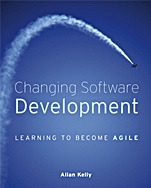
Changing Software Development: Learning to Become Agile
ISBN 9780470515044
Autor: Allan Kelly
Wydawca: Wiley
Dostępność: 3-6 tygodni
Cena: 205,80 zł
Przed złożeniem zamówienia prosimy o kontakt mailowy celem potwierdzenia ceny.
ISBN13: |
9780470515044 |
ISBN10: |
047051504X |
Autor: |
Allan Kelly |
Oprawa: |
Paperback |
Rok Wydania: |
2008-01-11 |
Ilość stron: |
258 |
Wymiary: |
240x192 |
Tematy: |
uz |
“Successful companies have known the importance of continuous change and learning for a long time; this is the first book that describes these concepts in an organic way in the context of software development. A must read for everybody involved in this business.”
Giovanni Asproni, Director, Asprotunity Limited
“Do you want to improve software development in your organization? Do you believe in agile methodologies but struggle to introduce them? You will find help in this book. Allan has done an excellent job of combining modern business management principles with modern software methodology so you can draw on the knowledge of both business and software experts.”
Lise B. Hvatum, Software Development Manager, Schlumberger
Changing Software Development links the software world of technology and processes to the business world of knowledge, learning and change. This book explains why software development is an exercise in change management and organizational intelligence. Using knowledge management theory, the author gives developers and managers the tools to enhance learning and adopt new innovative approaches such as Agile and Lean software development.
This book is peppered with practical advice and case studies to explain how and why knowledge, learning and change are important in the development process. In addition, Allan offers direct actions that can be undertaken to enhance and build a learning environment.
Chapter highlights include:
Understanding Agile Development
Information Technology – Bringer of Change
Change Model
Making Change Happen
Changing Software Development provides the necessary skills in change management to enable developers to use new approaches to deliver successful projects.
Spis treści:
Preface.
Acknowledgements.
1 Introduction.
1.1 Why read this book?
1.2 Who a
re software developers?
1.3 Software developers are knowledge workers.
1.4 Drucker’s challenge.
1.5 Prototype of future knowledge workers.
1.6 Software: embedded knowledge.
1.7 Authority and leadership.
1.8 Practical theory.
1.9 Begin with yourself.
1.10 Book organisation.
2 Understanding Agile.
2.1 Roots of Agile thinking.
2.2 Positioning Agile.
2.3 Common practices of Agile teams.
2.4 Applicability outside of software development.
2.5 Conclusion.
3 Knowledge.
3.1 The difference between Knowledge and Information.
3.2 Knowledge into action.
3.3 Explicit and Tacit knowledge.
3.4 Sticky knowledge.
3.5 Problems with knowledge.
3.6 Where is knowledge in software development?
3.7 Knowledge creations.
3.8 Conclusion.
4 Learning.
4.1 Three knowledge domains.
4.2 Developing software is learning.
4.3 Learning benefits your business.
4.4 Learning theories.
4.5 Learning, change, innovation, problem solving.
4.6 The role of leaders.
4.7 Seed learning.
4.8 Conclusion.
5 The learning organisation.
5.1 Defining the learning organisation.
5.2 The infinite and the finite game.
5.3 Layers of the organisations.
5.4 Learning in practice: Senge’s view.
5.5 Blocks to learning.
5.6 Conclusion.
6 Information Technology – the bringer of change.
6.1 Change.
6.2 Benefits of technology change.
6.3 Change is what IT people do to other people.
6.4 Software projects fail: why are we surprised?
6.5 Change starts with business requirements.
6.6 Conclusion.
7 Understanding change.
7.1 Defining change.
7.2 Change spectrum.
7.3 Radical change.
7.4 Routine change in software development.
7.5 Continuous improvement.
7.6 Charting a course.
7.7 Internal and External forces for change.
7.8 Conclusion.
8 Change models.
8.1 Learning and Change.
8.2 Lewin’s change theory.
8.3 Satir’s theory of change.
8.4 Kotter.
8.5 Theory E and Theory O of change.
8.6 Appreciative inquiry.
8.7 Models, models, models.
8.8 Motivating change.
8.9 When not to change.
8.10 Conclusion.
9 Making change happen.
9.1 Build a case for change.
9.2 Slack in action: make time and space for learning and change.
9.3 Leading the change.
9.4 Create feedback loops.
9.5 Remove barriers.
9.6 Conclusion.
10. Individuals and empowerment.
10.1 Involve people.
10.2 Coaching.
10.3 Empowerment.
10.4 That difficult individual.
10.5 Developing the next leaders.
10.6 Time to go.
10.7 Conclusion.
11. Rehearsing tomorrow.
11.1 Future memories.
11.2 Planning.
11.3 Change events.
11.4 Outsiders.
11.5 Conclusion.
12 New beginnings.
12.1 The change problem.
12.2 Bottom–up over top–down.
12.3 Begin with yourself.
12.4 Making learning happen.
12.5 Create a vision, draw up a plan.
12.6 Three interlocking ideas.
12.7 Change never ends.
12.8 Conclusion.
Further reading.
Agile and Lean software development.
Business.
Knowledge.
Learning and Change.
Futher Reading.
References.
Index.
Nota biograficzna:
Allan Kelly worked as a developer for over 10 years, and now helps software teams and companies improve their ability to deliver software. Patterns, other writing and more information can be found on his website: http://www.allankelly.net
Okładka tylna:
“Successful companies have known the importance of continuous change and learning for a long time; this is the first book that describes these concepts in an organic way in the context of software development. A must read for everybody involved in this business.”
Giovanni Asproni, Director, Asprotunity Limited
“Do you want to improve software development in your organization? Do you believe in agile methodologies but struggle to introduce them? You
will find help in this book. Allan has done an excellent job of combining modern business management principles with modern software methodology so you can draw on the knowledge of both business and software experts.”
Lise B. Hvatum, Software Development Manager, Schlumberger
Changing Software Development links the software world of technology and processes to the business world of knowledge, learning and change. This book explains why software development is an exercise in change management and organizational intelligence. Using knowledge management theory, the author gives developers and managers the tools to enhance learning and adopt new innovative approaches such as Agile and Lean software development.
This book is peppered with practical advice and case studies to explain how and why knowledge, learning and change are important in the development process. In addition, Allan offers direct actions that can be undertaken to enhance and build a learning environment.
Chapter highlights include:
Understanding Agile Development
Information Technology – Bringer of Change
Change Model
Making Change Happen
Changing Software Development provides the necessary skills in change management to enable developers to use new approaches to deliver successful projects.
Koszyk
Książek w koszyku: 0 szt.
Wartość zakupów: 0,00 zł
Informacje


Kontakt
Gambit
Centrum Oprogramowania
i Szkoleń Sp. z o.o.
Al. Pokoju 29b/22-24
31-564 Kraków
Siedziba Księgarni
ul. Kordylewskiego 1
31-542 Kraków
+48 12 410 5991
+48 12 410 5987
+48 12 410 5989
Subskrypcje
Administratorem danych osobowych jest firma Gambit COiS Sp. z o.o. Na podany adres będzie wysyłany wyłącznie biuletyn informacyjny.
Autoryzacja płatności

Informacje na temat autoryzacji płatności poprzez PayU.

© Copyright 2012: GAMBIT COiS Sp. z o.o. Wszelkie prawa zastrzeżone.
Projekt i wykonanie: Alchemia Studio Reklamy