


Wydawcy
Katalog tematyczny
- Archeologia (109)
- Ekonomia, finanse, business (13704)
- Filozofia (1445)
- Historia (3040)
- Języki i językoznawstwo (2356)
- Lifestyle, hobby i rozrywka (475)
- Medycyna (9704)
- Nauki humanistyczne (4)
- Nauki o Ziemi i środowisku (2638)
- Nauki ścisłe (20412)
- Nauki społeczne (8486)
- Nauki techniczne (13450)
- Prawo (1696)
- Publikacje informacyjne i interdyscyplinarne (1288)
- Religia i wierzenia (917)
- Technika komputerowa (4067)
- Bazy danych (75)
- Bezpieczeństwo komputerowe (454)
- Certyfikacja komputerowa (1)
- Grafika i media cyfrowe (32)
- Informatyka (779)
- Komputery, ogólnie (74)
- Programowanie (351)
- Programy komercyjne (49)
- Sieci komputerowe (350)
- Sprzęt komputerowy (4)
- Systemy operacyjne (32)
- Technika cyfrowa na co dzień (7)
- Zdrowie, relacje międzyludzkie i rozwój osobisty (657)





Informacje szczegółowe o książce
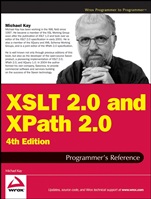
XSLT 2.0 and XPath 2.0 Programmers Reference
ISBN 9780470192740
Autor: Michael Kay
Wydawca: Wiley
Dostępność: 3-6 tygodni
Cena: 260,40 zł
Przed złożeniem zamówienia prosimy o kontakt mailowy celem potwierdzenia ceny.
ISBN13: |
9780470192740 |
ISBN10: |
0470192747 |
Autor: |
Michael Kay |
Oprawa: |
Hardback |
Rok Wydania: |
2008-06-03 |
Numer Wydania: |
4th Edition |
Ilość stron: |
1376 |
Wymiary: |
236x194 |
Tematy: |
UP |
Combining coverage of XSLT 2.0 and XPath 2.0 into one book, this authoritative reference provides equal weight to the powerful new features of XSLT 2.0 and XPath 2.0 and the established capabilities of the 1.0 versions. Author Michael Kay has created his own implementation of XSLT 2.0 (Saxon), and he puts his unique knowledge to work in this detailed reference to the elements of the XSLT 2.0 language and the fundamentals of XPath, complete with syntax, practical usage advice, and examples.
The book begins by teaching the essential concepts behind the language, knowledge you need if you are going to write good code rather than just working code. You will discover how XSLT and XPath differ from other languages, and how you use them to create effective web–based applications. The central chapters provide meticulous coverage of the language features of XSLT 2.0 and XPath 2.0. You will return to this reference whenever you encounter new programming challenges. You finish with detailed case studies highlighting real applications to give you insights you would otherwise gain only from months of practical experience.
What you will learn from this book
All the XSLT elements you can use in a stylesheet and the detailed rules for the syntax and semantics of each
How Path expressions enable you to navigate around the structure of an XML document
How you can improve your stylesheets by taking advantage of the XML Schema definitions of input and output documents
How to take advantage of vendor extensions without losing portability
Techniques for taking advantage of XSLT to write real applications
Who this book is for
This book is for experienced programmers who are looking to become proficient with XSLT 2.0. Previous experience with XSLT or XPath is not necessary. However, a working knowledge of XML, HTML, and web architecture is beneficial.
Wrox Programmer′s References are designed to gi
ve the experienced developer straight facts on a new technology, without hype or unnecessary explanations. They deliver hard information with plenty of practical examples to help you apply new tools to your development projects today.
Spis treści:
Introduction.
List of Examples.
Part I: Foundations.
Chapter 1: XSLT in Context.
Chapter 2: The XSLT Processing Model.
Chapter 3: Stylesheet Structure.
Chapter 4: Stylesheets and Schemas.
Chapter 5: Types.
Part II: XSLT and XPath Reference.
Chapter 6: XSLT Elements.
Chapter 7: XPath Fundamentals.
Chapter 8: XPath: Operators on Items.
Chapter 9: XPath: Path Expressions.
Chapter 10: XPath: Sequence Expressions.
Chapter 11: XPath: Type Expressions.
Chapter 12: XSLT Patterns.
Chapter 13: The Function Library.
Chapter 14: Regular Expressions.
Chapter 15: Serialization.
Part III: Exploitation.
Chapter 16: Extensibility.
Chapter 17: Stylesheet Design Patterns.
Chapter 18: Case Study: XMLSpec.
Chapter 19: Case Study: A Family Tree.
Chapter 20: Case Study: Knight’s Tour.
Part IV: Appendices.
Appendix A: XPath 2.0 Syntax Summary.
Appendix B: Error Codes.
Appendix C: Backward Compatibility.
Appendix D: Microsoft XSLT Processors.
Appendix E: JAXP: The Java API for Transformation.
Appendix F: Saxon.
Appendix G: Altova.
Appendix H: Glossary.
Index.
Nota biograficzna:
Michael Kay has been working in the XML field since 1997; he became a member of the XSL Working Group soon after the publication of XSLT 1.0, and took over as editor of the XSLT 2.0 specification in early 2001. He is also a member of the XQuery and XML Schema Working Groups, and is a joint editor of the XPath 2.0 specification. He is well known not only through previous editions of this book but also as the developer of the open source Saxon product, a pioneering implementation of
XSLT 2.0, XPath 2.0, and XQuery 1.0.
In 2004 the author formed his own company, Saxonica, to provide commercial software and services building on the success of the Saxon technology. Previously, he spent three years with Software AG, working with the developers of the Tamino XML server, an early XQuery implementation. His background is in database technology: after leaving the University of Cambridge with a Ph.D., he worked for many years with the (then) computer manufacturer ICL, developing network, relational, and objectoriented database software products as well as a text search engine, and held the position of ICL Fellow.
Okładka tylna:
Combining coverage of XSLT 2.0 and XPath 2.0 into one book, this authoritative reference provides equal weight to the powerful new features of XSLT 2.0 and XPath 2.0 and the established capabilities of the 1.0 versions. Author Michael Kay has created his own implementation of XSLT 2.0 (Saxon), and he puts his unique knowledge to work in this detailed reference to the elements of the XSLT 2.0 language and the fundamentals of XPath, complete with syntax, practical usage advice, and examples.
The book begins by teaching the essential concepts behind the language, knowledge you need if you are going to write good code rather than just working code. You will discover how XSLT and XPath differ from other languages, and how you use them to create effective web–based applications. The central chapters provide meticulous coverage of the language features of XSLT 2.0 and XPath 2.0. You will return to this reference whenever you encounter new programming challenges. You finish with detailed case studies highlighting real applications to give you insights you would otherwise gain only from months of practical experience.
What you will learn from this book
All the XSLT elements you can use in a stylesheet and the detailed rules for the syntax and semantics of each
How Path expres
sions enable you to navigate around the structure of an XML document
How you can improve your stylesheets by taking advantage of the XML Schema definitions of input and output documents
How to take advantage of vendor extensions without losing portability
Techniques for taking advantage of XSLT to write real applications
Who this book is for
This book is for experienced programmers who are looking to become proficient with XSLT 2.0. Previous experience with XSLT or XPath is not necessary. However, a working knowledge of XML, HTML, and web architecture is beneficial.
Wrox Programmer′s References are designed to give the experienced developer straight facts on a new technology, without hype or unnecessary explanations. They deliver hard information with plenty of practical examples to help you apply new tools to your development projects today.
Koszyk
Książek w koszyku: 0 szt.
Wartość zakupów: 0,00 zł
Informacje


Kontakt
Gambit
Centrum Oprogramowania
i Szkoleń Sp. z o.o.
Al. Pokoju 29b/22-24
31-564 Kraków
Siedziba Księgarni
ul. Kordylewskiego 1
31-542 Kraków
+48 12 410 5991
+48 12 410 5987
+48 12 410 5989
Subskrypcje
Administratorem danych osobowych jest firma Gambit COiS Sp. z o.o. Na podany adres będzie wysyłany wyłącznie biuletyn informacyjny.
Autoryzacja płatności

Informacje na temat autoryzacji płatności poprzez PayU.

© Copyright 2012: GAMBIT COiS Sp. z o.o. Wszelkie prawa zastrzeżone.
Projekt i wykonanie: Alchemia Studio Reklamy