


Wydawcy
Katalog tematyczny
- Archeologia (109)
- Ekonomia, finanse, business (13704)
- Filozofia (1445)
- Historia (3040)
- Języki i językoznawstwo (2356)
- Lifestyle, hobby i rozrywka (475)
- Medycyna (9704)
- Nauki humanistyczne (4)
- Nauki o Ziemi i środowisku (2638)
- Nauki ścisłe (20412)
- Nauki społeczne (8486)
- Nauki techniczne (13450)
- Prawo (1696)
- Publikacje informacyjne i interdyscyplinarne (1288)
- Religia i wierzenia (917)
- Technika komputerowa (4067)
- Bazy danych (75)
- Bezpieczeństwo komputerowe (454)
- Certyfikacja komputerowa (1)
- Grafika i media cyfrowe (32)
- Informatyka (779)
- Komputery, ogólnie (74)
- Programowanie (351)
- Programy komercyjne (49)
- Sieci komputerowe (350)
- Sprzęt komputerowy (4)
- Systemy operacyjne (32)
- Technika cyfrowa na co dzień (7)
- Zdrowie, relacje międzyludzkie i rozwój osobisty (657)





Informacje szczegółowe o książce
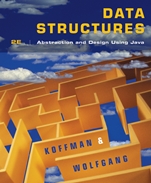
Data Structures: Abstraction and Design Using Java
ISBN 9780470128701
Autor: Elliot B. Koffman, Paul A. T. Wolfgang
Wydawca: Wiley
Dostępność: 3-6 tygodni
Cena: 1 344,00 zł
Przed złożeniem zamówienia prosimy o kontakt mailowy celem potwierdzenia ceny.
ISBN13: |
9780470128701 |
ISBN10: |
0470128704 |
Autor: |
Elliot B. Koffman, Paul A. T. Wolfgang |
Oprawa: |
Paperback |
Rok Wydania: |
2010-02-12 |
Numer Wydania: |
2nd Edition |
Ilość stron: |
832 |
Wymiary: |
233x190 |
Tematy: |
UP |
This book lays the foundation for programmers to build their skills. The focus is placed on how to implement effective programs using the JCL instead of producing mathematical proofs. The coverage is updated and streamlined to provide a more accessible approach to programming. They’ll be able to develop a thorough understanding of basic data structures and algorithms through an objects–first approach. Data structures are discussed in the context of software engineering principles. Updated case studies also show programmers how to apply essential design skills and concepts.
Spis treści:
Preface.
Chapter 1 Object–Oriented Programming and Class Hierarchies.
1.1 ADTs, Interfaces, and the Java API.
1.2 Introduction to Object–Oriented Programming.
1.3 Method Overriding, Method Overloading, and Polymorphism.
1.4 Abstract Classes.
1.5 Class Object and Casting.
1.6 A Java Inheritance Example—The Exception Class Hierarchy.
1.7 Packages and Visibility.
1.8 A Shape Class Hierarchy.
Chapter 2 Lists and the Collections Framework.
2.1 The List Interface and ArrayList Class.
2.2 Applications of ArrayList.
2.3 Implementation of an ArrayList Class.
2.4 Algorithm Efficiency and Big–O.
2.5 Single–Linked Lists.
2.6 Double–Linked Lists and Circular Lists.
2.7 The LinkedList Class and the Iterator, ListIterator, and Iterable Interfaces.
2.8 Implementation of a Double–Linked List Class.
2.9 Application of the LinkedList Class.
2.10 Testing.
2.11 The Collections Framework Design.
Chapter 3 Stacks.
3.1 Stack Abstract Data Type.
3.2 Stack Applications.
3.3 Implementing a Stack.
3.4 Additional Stack Applications.
Chapter 4 Queues.
4.1 Queue Abstract Data Type.
4.2 Maintaining a Queue of Customers.
4.3 Implementing the Queue Interface.
4.4 The Deque Interface.
4.5 Simulating Waiting Lines Using Qu
eues.
Chapter 5 Recursion.
5.1 Recursive Thinking.
5.2 Recursive Definitions of Mathematical Formulas.
5.3 Recursive Array Search.
5.4 Recursive Data Structures.
5.5 Problem Solving with Recursion.
5.6 Backtracking.
Chapter 6 Trees.
6.1 Tree Terminology and Applications.
6.2 Tree Traversals.
6.3 Implementing a BinaryTree Class.
6.4 Binary Search Trees.
6.5 Heaps and Priority Queues.
6.6 Huffman Trees.
Chapter 7 Sets and Maps.
7.1 Sets and the Set Interface.
7.2 Maps and the Map Interface.
7.3 Hash Tables.
7.4 Implementing the Hash Table.
7.5 Implementation Considerations for Maps and Sets.
7.6 Additional Applications of Maps.
7.7 Navigable Sets and Maps.
Chapter 8 Sorting.
8.1 Using Java Sorting Methods.
8.2 Selection Sort.
8.3 Bubble Sort.
8.4 Insertion Sort.
8.5 Comparison of Quadratic Sorts.
8.6 Shell Sort: A Better Insertion Sort.
8.7 Merge Sort.
8.8 Heapsort.
8.9 Quicksort.
8.10 Testing the Sort Algorithms.
8.11 The Dutch National Flag Problem (Optional Topic).
Chapter 9 Self–Balancing Search Trees.
9.1 Tree Balance and Rotation.
9.2 AVL Trees.
9.3 Red–Black Trees.
9.4 2–3 Trees.
9.5 B–Trees and 2–3–4 Trees.
9.6 Skip–Lists.
Chapter 10 Graphs.
10.1 Graph Terminology.
10.2 The Graph ADT and Edge Class.
10.3 Implementing the Graph ADT.
10.4 Traversals of Graphs.
10.5 Applications of Graph Traversals.
10.6 Algorithms Using Weighted Graphs.
Appendix A Introduction to Java.
A.1 The Java Environment and Classes.
A.2 Primitive Data Types and Reference Variables.
A.3 Java Control Statements.
A.4 Methods and Class Math.
A.5 The String, StringBuilder, and StringBuffer Classes.
A.6 Wrapper Classes for Primitive Types.
A.7 Defining Your Own Classes.
A.8 Arrays.
A.9 Input/Output Using Class JOptionPane.
A.10 In
put/Output Using Streams and the Scanner Class.
A.11 Catching Exceptions.
A.12 Throwing Exceptions.
Appendix B Overview of UML.
B.1 The Class Diagram.
B.2 Sequence Diagrams.
Appendix C Event–Oriented Programming.
C.1 Elements of an Event–Oriented Application.
C.2 Overview of the AWT and Swing Hierarchy.
C.3 Layout Managers.
C.4 Components for Data Entry.
C.5 Using Data Entry Components in a GUI.
C.6 Menus and Toolbars.
C.7 Processing Mouse Events.
Appendix D Testing and Debugging.
D.1 Testing Using the JUnit Framework.
D.2 Debugging a Program.
D.3 Visualizing Data Structures.
Glossary.
Index.
Koszyk
Książek w koszyku: 0 szt.
Wartość zakupów: 0,00 zł
Informacje


Kontakt
Gambit
Centrum Oprogramowania
i Szkoleń Sp. z o.o.
Al. Pokoju 29b/22-24
31-564 Kraków
Siedziba Księgarni
ul. Kordylewskiego 1
31-542 Kraków
+48 12 410 5991
+48 12 410 5987
+48 12 410 5989
Subskrypcje
Administratorem danych osobowych jest firma Gambit COiS Sp. z o.o. Na podany adres będzie wysyłany wyłącznie biuletyn informacyjny.
Autoryzacja płatności

Informacje na temat autoryzacji płatności poprzez PayU.

© Copyright 2012: GAMBIT COiS Sp. z o.o. Wszelkie prawa zastrzeżone.
Projekt i wykonanie: Alchemia Studio Reklamy