


Wydawcy
Katalog tematyczny
- Archeologia (109)
- Ekonomia, finanse, business (13704)
- Filozofia (1445)
- Historia (3040)
- Języki i językoznawstwo (2356)
- Lifestyle, hobby i rozrywka (475)
- Medycyna (9704)
- Nauki humanistyczne (4)
- Nauki o Ziemi i środowisku (2638)
- Nauki ścisłe (20412)
- Astronomia (294)
- Biologia (5119)
- Chemia (6540)
- Fizyka (3309)
- Matematyka (4574)
- Algebra (171)
- Analiza matematyczna (902)
- Filozofia matematyki (1)
- Geometria (237)
- Historia matematyki (57)
- Kombinatoryka, teoria grafów (67)
- Matematyka dyskretna (35)
- Matematyka stosowana (555)
- Optymalizacja (104)
- Podstawy matematyki (129)
- Statystyka, prawdopodobieństwo (296)
- Teoria grup (63)
- Teoria liczb (77)
- Topologia (66)
- Nauki ścisłe, ogólnie (503)
- Nauki społeczne (8486)
- Nauki techniczne (13450)
- Prawo (1696)
- Publikacje informacyjne i interdyscyplinarne (1288)
- Religia i wierzenia (917)
- Technika komputerowa (4067)
- Zdrowie, relacje międzyludzkie i rozwój osobisty (657)





Informacje szczegółowe o książce
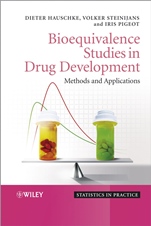
Bioequivalence Studies in Drug Development: Methods and Applications
ISBN 9780470094754
Autor: Dieter Hauschke, Volker Steinijans, Iris Pigeot
Wydawca: Wiley
Dostępność: 3-6 tygodni
Cena: 491,40 zł
Przed złożeniem zamówienia prosimy o kontakt mailowy celem potwierdzenia ceny.
ISBN13: |
9780470094754 |
ISBN10: |
0470094753 |
Autor: |
Dieter Hauschke, Volker Steinijans, Iris Pigeot |
Oprawa: |
Hardback |
Rok Wydania: |
2007-01-19 |
Ilość stron: |
328 |
Wymiary: |
255x175 |
Tematy: |
PB |
Studies in bioequivalence are the commonly accepted method to demonstrate therapeutic equivalence between two medicinal products. Savings in time and cost are substantial when using bioequivalence as an established surrogate marker of therapeutic equivalence. For this reason the design, performance and evaluation of bioequivalence studies have received major attention from academia, the pharmaceutical industry and health authorities.
Bioequivalence Studies in Drug Development focuses on the planning, conducting, analysing and reporting of bioequivalence studies, covering all aspects required by regulatory authorities. This text presents the required statistical methods, and with an outstanding practical emphasis, demonstrates their applications through numerous examples using real data from drug development.
Includes all the necessary pharmacokinetic background information. Presents parametric and nonparametric statistical techniques. Describes adequate methods for power and sample size determination. Includes appropriate presentation of results from bioequivalence studies. Provides a practical overview of the design and analysis of bioequivalence studies. Presents the recent developments in methodology, including population and individual bioequivalence. Reviews the regulatory guidelines for such studies, and the existing global discrepancies. Discusses the designs and analyses of drug–drug and food–drug interaction studies.
Bioequivalence Studies in Drug Development is written in an accessible style that makes it ideal for pharmaceutical scientists, clinical pharmacologists, and medical practitioners, as well as biometricians working in the pharmaceutical industry. It will also be of great value for professionals from regulatory bodies assessing bioequivalence studies.
Spis treści:
Preface.
1
Introduction.
1.1 Definitions.
1.2 When are bioequivalence studies performed.
1.3 Design and conduct of bioequivalence studies.
1.4 Aims and structure of the book.
References.
2 Metrics to characterize concentration–time profiles in single– and multiple–dose bioequivalence studies.
2.1 Introduction.
2.2 Pharmacokinetic characteristics (metrics) for single–dose studies.
2.3 Pharmacokinetic rate and extent characteristics (metrics) for multiple–dose studies.
2.4 Conclusions.
References.
3 Basic statistical considerations.
3.1 Introduction.
3.2 Additive and multiplicative model.
3.3 Hypotheses testing.
3.4 The RT/TR crossover design assuming an additive model.
References.
4 Assessment of average bioequivalence in the RT/TR design.
4.1 Introduction.
4.2 The RT/TR crossover design assuming a multiplicative model.
4.3 Test procedures for bioequivalence assessment.
4.4 Conclusions.
References.
5 Power and sample size determination for testing average bioequivalence in the RT/TR design.
5.1 Introduction.
5.2 Challenging the classical approach.
5.3 Exact power and sample size calculation.
5.4 Modified acceptance ranges.
5.5 Approximate formulas for sample size calculation.
5.6 Exact power and sample size calculation by nQuery®.
References.
Appendix.
6 Presentation of bioequivalence studies.
6.1 Introduction.
6.2 Results from a single–dose study.
6.3 Results from a multiple–dose study.
6.4 Conclusions.
References.
7 Designs with more than two formulations.
7.1 Introduction.
7.2 Williams designs.
7.3 Example: Dose linearity study.
7.4 Multiplicity.
7.5 Conclusions.
References.
8 Analysis of pharmacokinetic interactions.
8.1 Introduction.
8.2 Pharmacokinetic drug–drug interaction studies.
8.3 P
harmacokinetic food–drug interactions.
8.4 Goal posts for drug interaction studies including no effect boundaries.
8.5 Labeling.
8.6 Conclusions.
References.
9 Population and individual bioequivalence.
9.1 Introduction.
9.2 Brief history.
9.3 Study designs and statistical models.
9.4 Population bioequivalence.
9.5 Individual bioequivalence.
9.6 Disaggregate criteria.
9.7 Other approaches.
9.8 Average bioequivalence in replicate designs.
9.9 Example: The anti–hypertensive patch dataset.
9.10 Conclusions.
References.
10 Equivalence assessment in case of clinical endpoints.
10.1 Introduction.
10.2 Design and testing procedure.
10.3 Power and sample size calculation.
10.4 Conclusions.
Apendix.
References.
Index.
Nota biograficzna:
Dieter Hauschke, ALTANA Pharma, Konstanz, Germany. Well–respected statistician working in the pharmaceutical industry, specializing in bioequivalence studies, with over 60 publications in leading journals.
Volker Steinijans, ALTANA Pharma, Konstanz, Germany. Head of the Department of Biometry and Clinical Data Management at ALTANA.
Iris Pigeot, Institute for Statistics, University of Bremen, Germany. Has over 50 published papers, and also written a number of books in German.
Okładka tylna:
Studies in bioequivalence are the commonly accepted method to demonstrate therapeutic equivalence between two medicinal products. Savings in time and cost are substantial when using bioequivalence as an established surrogate marker of therapeutic equivalence. For this reason the design, performance and evaluation of bioequivalence studies have received major attention from academia, the pharmaceutical industry and health authorities.
Bioequivalence Studies in Drug Development focuses on the planning, conducting, analysing and reporting of bioequivalence studies, covering all aspec
ts required by regulatory authorities. This text presents the required statistical methods, and with an outstanding practical emphasis, demonstrates their applications through numerous examples using real data from drug development.
Includes all the necessary pharmacokinetic background information. Presents parametric and nonparametric statistical techniques. Describes adequate methods for power and sample size determination. Includes appropriate presentation of results from bioequivalence studies. Provides a practical overview of the design and analysis of bioequivalence studies. Presents the recent developments in methodology, including population and individual bioequivalence. Reviews the regulatory guidelines for such studies, and the existing global discrepancies. Discusses the designs and analyses of drug–drug and food–drug interaction studies.
Bioequivalence Studies in Drug Development is written in an accessible style that makes it ideal for pharmaceutical scientists, clinical pharmacologists, and medical practitioners, as well as biometricians working in the pharmaceutical industry. It will also be of great value for professionals from regulatory bodies assessing bioequivalence studies.
Koszyk
Książek w koszyku: 0 szt.
Wartość zakupów: 0,00 zł
Informacje


Kontakt
Gambit
Centrum Oprogramowania
i Szkoleń Sp. z o.o.
Al. Pokoju 29b/22-24
31-564 Kraków
Siedziba Księgarni
ul. Kordylewskiego 1
31-542 Kraków
+48 12 410 5991
+48 12 410 5987
+48 12 410 5989
Subskrypcje
Administratorem danych osobowych jest firma Gambit COiS Sp. z o.o. Na podany adres będzie wysyłany wyłącznie biuletyn informacyjny.
Autoryzacja płatności

Informacje na temat autoryzacji płatności poprzez PayU.

© Copyright 2012: GAMBIT COiS Sp. z o.o. Wszelkie prawa zastrzeżone.
Projekt i wykonanie: Alchemia Studio Reklamy