


Wydawcy
Katalog tematyczny
- Archeologia (109)
- Ekonomia, finanse, business (13704)
- Filozofia (1445)
- Historia (3040)
- Języki i językoznawstwo (2356)
- Lifestyle, hobby i rozrywka (475)
- Medycyna (9704)
- Nauki humanistyczne (4)
- Nauki o Ziemi i środowisku (2638)
- Nauki ścisłe (20412)
- Astronomia (294)
- Biologia (5119)
- Chemia (6540)
- Fizyka (3309)
- Matematyka (4574)
- Algebra (171)
- Analiza matematyczna (902)
- Filozofia matematyki (1)
- Geometria (237)
- Historia matematyki (57)
- Kombinatoryka, teoria grafów (67)
- Matematyka dyskretna (35)
- Matematyka stosowana (555)
- Optymalizacja (104)
- Podstawy matematyki (129)
- Statystyka, prawdopodobieństwo (296)
- Teoria grup (63)
- Teoria liczb (77)
- Topologia (66)
- Nauki ścisłe, ogólnie (503)
- Nauki społeczne (8486)
- Nauki techniczne (13450)
- Prawo (1696)
- Publikacje informacyjne i interdyscyplinarne (1288)
- Religia i wierzenia (917)
- Technika komputerowa (4067)
- Zdrowie, relacje międzyludzkie i rozwój osobisty (657)





Informacje szczegółowe o książce
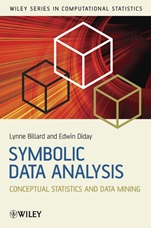
Symbolic Data Analysis: Conceptual Statistics and Data Mining
ISBN 9780470090169
Autor: Lynne Billard, Edwin Diday
Wydawca: Wiley
Dostępność: 3-6 tygodni
Cena: 491,40 zł
Przed złożeniem zamówienia prosimy o kontakt mailowy celem potwierdzenia ceny.
ISBN13: |
9780470090169 |
ISBN10: |
0470090162 |
Autor: |
Lynne Billard, Edwin Diday |
Oprawa: |
Hardback |
Rok Wydania: |
2006-12-01 |
Ilość stron: |
330 |
Wymiary: |
229x152 |
Tematy: |
PB |
With the advent of computers, very large datasets have become routine. Standard statistical methods don’t have the power or flexibility to analyse these efficiently, and extract the required knowledge. An alternative approach is to summarize a large dataset in such a way that the resulting summary dataset is of a manageable size and yet retains as much of the knowledge in the original dataset as possible. One consequence of this is that the data may no longer be formatted as single values, but be represented by lists, intervals, distributions, etc. The summarized data have their own internal structure, which must be taken into account in any analysis.
This text presents a unified account of symbolic data, how they arise, and how they are structured. The reader is introduced to symbolic analytic methods described in the consistent statistical framework required to carry out such a summary and subsequent analysis.
Presents a detailed overview of the methods and applications of symbolic data analysis. Includes numerous real examples, taken from a variety of application areas, ranging from health and social sciences, to economics and computing. Features exercises at the end of each chapter, enabling the reader to develop their understanding of the theory. Provides a supplementary website featuring links to download the SODAS software developed exclusively for symbolic data analysis, data sets, and further material.
Primarily aimed at statisticians and data analysts, Symbolic Data Analysis is also ideal for scientists working on problems involving large volumes of data from a range of disciplines, including computer science, health and the social sciences. There is also much of use to graduate students of statistical data analysis courses.
Spis treści:
1. Introduction.
References.
2. Symbolic Data.
2.1 Symbolic and Classical Data.
2.2 Categories, Concepts and Symbolic Objec
ts.
2.3 Comparison of Symbolic and Classical Analysis.
3. Basic Descriptive Statistics: One Variate.
3.1 Some Preliminaries.
3.2 Multi–valued Variables.
3.3 Interval–valued Variables.
3.4 Multi–valued Modal variables.
3.5 Interval–valued Modal Variables.
4. Descriptive Statistics: Two or More Variates.
4.1 Multi–valued Variables.
4.2 Interval–valued Variables.
4.3 Modal Multi–valued Variables.
4.4 Modal Interval–valued Variables.
4.5 Baseball Interval–valued Dataset.
4.6 Measures of Dependence.
5. Principal Component Analysis.
5.1 Vertices Method.
5.2 Centers Method.
5.3 Comparison of the Methods.
6. Regression Analysis.
6.1 Classical Multiple Regression Model.
6.2 Multi–valued Variables.
6.3 Interval–valued Variables.
6.4 Histogram–valued Variables.
6.5 Taxonomy Variables.
6.6 Hierarchical Variables.
7. Cluster Analysis.
7.1 Dissimilarity and Distance Measures.
7.2 Clustering Structures.
7.3 Partitions.
7.4 Hierarchy–Divisive Clustering.
7.5 Hierarchy–Pyramid Clusters.
Data Index.
Author Index.
Subject Index.
Nota biograficzna:
Lynne Billard is a multi award winning University Professor of Statistics at the University of Georgia, USA. Her areas of interest include epidemic theory, AIDS, time series, sequential analysis, and symbolic data. A former President of the American Statistical Association as well as the ENAR Regional President and International President of the International Biometric Society, Professor Billard has co–edited 6 books, published over150 papers and been actively involved in many statistical societies and national committees.
Edwin Diday is a Professor in Computer Science and Mathematics, at the Université Paris Dauphine, France. He is the author or editor of 14 previous books.
He is also the founder of the symbolic data analysis field, and has led numerous international research teams in the area.
Okładka tylna:
With the advent of computers, very large datasets have become routine. Standard statistical methods don’t have the power or flexibility to analyse these efficiently, and extract the required knowledge. An alternative approach is to summarize a large dataset in such a way that the resulting summary dataset is of a manageable size and yet retains as much of the knowledge in the original dataset as possible. One consequence of this is that the data may no longer be formatted as single values, but be represented by lists, intervals, distributions, etc. The summarized data have their own internal structure, which must be taken into account in any analysis.
This text presents a unified account of symbolic data, how they arise, and how they are structured. The reader is introduced to symbolic analytic methods described in the consistent statistical framework required to carry out such a summary and subsequent analysis.
Presents a detailed overview of the methods and applications of symbolic data analysis. Includes numerous real examples, taken from a variety of application areas, ranging from health and social sciences, to economics and computing. Features exercises at the end of each chapter, enabling the reader to develop their understanding of the theory. Provides a supplementary website featuring links to download the SODAS software developed exclusively for symbolic data analysis, data sets, and further material.
Primarily aimed at statisticians and data analysts, Symbolic Data Analysis is also ideal for scientists working on problems involving large volumes of data from a range of disciplines, including computer science, health and the social sciences. There is also much of use to graduate students of statistical data analysis courses.
Koszyk
Książek w koszyku: 0 szt.
Wartość zakupów: 0,00 zł
Informacje


Kontakt
Gambit
Centrum Oprogramowania
i Szkoleń Sp. z o.o.
Al. Pokoju 29b/22-24
31-564 Kraków
Siedziba Księgarni
ul. Kordylewskiego 1
31-542 Kraków
+48 12 410 5991
+48 12 410 5987
+48 12 410 5989
Subskrypcje
Administratorem danych osobowych jest firma Gambit COiS Sp. z o.o. Na podany adres będzie wysyłany wyłącznie biuletyn informacyjny.
Autoryzacja płatności

Informacje na temat autoryzacji płatności poprzez PayU.

© Copyright 2012: GAMBIT COiS Sp. z o.o. Wszelkie prawa zastrzeżone.
Projekt i wykonanie: Alchemia Studio Reklamy