


Wydawcy
Katalog tematyczny
- Archeologia (109)
- Ekonomia, finanse, business (13704)
- Filozofia (1445)
- Historia (3040)
- Języki i językoznawstwo (2356)
- Lifestyle, hobby i rozrywka (475)
- Medycyna (9704)
- Nauki humanistyczne (4)
- Nauki o Ziemi i środowisku (2638)
- Nauki ścisłe (20412)
- Nauki społeczne (8486)
- Nauki techniczne (13450)
- Prawo (1696)
- Publikacje informacyjne i interdyscyplinarne (1288)
- Religia i wierzenia (917)
- Technika komputerowa (4067)
- Bazy danych (75)
- Bezpieczeństwo komputerowe (454)
- Certyfikacja komputerowa (1)
- Grafika i media cyfrowe (32)
- Informatyka (779)
- Komputery, ogólnie (74)
- Programowanie (351)
- Programy komercyjne (49)
- Sieci komputerowe (350)
- Sprzęt komputerowy (4)
- Systemy operacyjne (32)
- Technika cyfrowa na co dzień (7)
- Zdrowie, relacje międzyludzkie i rozwój osobisty (657)





Informacje szczegółowe o książce
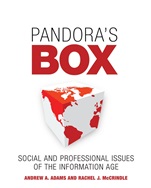
Pandoras Box: Social and Professional Issues of the Information Age
ISBN 9780470065532
Autor: Andrew A. Adams, Rachel J. McCrindle
Wydawca: Wiley
Dostępność: 3-6 tygodni
Cena: 303,45 zł
Przed złożeniem zamówienia prosimy o kontakt mailowy celem potwierdzenia ceny.
ISBN13: |
9780470065532 |
ISBN10: |
0470065532 |
Autor: |
Andrew A. Adams, Rachel J. McCrindle |
Oprawa: |
Paperback |
Rok Wydania: |
2007-12-14 |
Ilość stron: |
666 |
Wymiary: |
229x193 |
Tematy: |
UA |
Computing technology is constantly evolving and changing, developing and consolidating its position as a vital component of our lives. It no longer plays a minor part in society – it is embedded in, and affects, all aspects of life, from education to healthcare to war. Dealing with the implications of this is a major challenge, and one that can impact upon us, both personally and professionally. As a consequence, it is vital that all in the computing industry make wise decisions regarding their conduct.
Using case studies and discussion topics drawn from entertaining real world examples, Pandora’s Box examines the background of a wide range of vital contemporary issues, encouraging readers to examine the social, legal and ethical challenges they will face in their own careers.
Written in an engaging style and packed with international examples, this book addresses topics which have come to the forefront of public consciousness in recent years, such as online crime, piracy and peer to peer file sharing. Comprehensive coverage is provided of digital entertainment, censorship and privacy issues, presenting a rich source of context in which to consider ethical matters.
Suitable for students on computer science degree programmes, as well as those taking IT related modules on other courses which consider the impact of technology on 21st century living, Pandora’s Box is an essential read and a unique and timely textbook.
Spis treści:
Preface.
1. Introduction.
Lessig′s Four Modalities Analysis.
Prophet and Loss: Failing to Foresee the Future.
Information System Partition.
The Law is an Ass.
Globalization.
The Digital Divide.
Servant or Master: Computers Making Decisions
Discussion Topics:.
Can Laws be Immoral?
Genetically Modified Food, Technologically Modified Humans.
The Haves and the Have–nots.
Related Reading
2. Emergence and C
onvergence of Technologies.
Introduction.
Emergence.
The Rise of Print Media.
The Rise of the Telegraph and Telephone.
The Rise of Broadcast Media.
The Rise of The Computing Industry.
The Rise of the Content Industry.
The Rise of the Internet.
Convergence.
Content Producers and Distributors.
Platform Producers and Content Producers or Publishers.
Corporate Production vs Individual Creativity.
Market Sector Integration
Digitization.
The Big Challenges Ahead.
Discussion Topics.
Fit for Purpose?
E–Tax.
Competing with Free Beer.
Related Reading.
3. Digital Entertainment.
Introduction.
The Effects of Digital Entertainment Technology.
Digital Entertainment – Friend or Foe?
The Toy Town Divide.
Boys and Girls Come Out to Play: Stereotyping.
Health Related Issues.
Curse of the Couch Potato Children.
Physical Problems.
Digital Equipment – Part of the Modern Family.
Does Television Cause Adverse Social Behaviour?
Creating Monsters – Do Computer Games Make People Violent?
Do Computer Games Fuel Addiction and Gambling.
Power to the Player – Benefits of Computer Games.
Harnessing the Power of the Brain.
Education and Learning.
The Silver Gamers.
Game Development Grows Up – The Hidden Agenda.
Discussion Points.
Should Computer Games be Regulated? Rated? Censored?
Couch Potato Syndrome.
Online Gambling: Menace or Natural Progression?
Related Reading.
4. Censorship and Freedom of Speech.
Introduction.
Reasons for Censorship.
Censorship By States.
Censorship of Speakers by Governments.
Censorship of Listeners by Governments.
Censorship by Private Actors.
Censorship of Speakers by Private Actors.
Censorship of Listeners by Private Actors.
Technology for Expression.
Technological Developments with Expressive Power.
Censoring Inter
net Content.
Client–Server and Peer–to–Peer.
Discussion Topics.
Yahoo! France Nazi Memorabilia.
ISP Liability for Content.
BT and the IWF.
Related Reading.
5. Sex and Technology.
Introduction.
The Nature of Sexual Material.
One Man′s Art....
The Medium and the Message.
Use of Technology to (Re)Produce Sexual Material.
Techno–Sex.
Anonymity: Reality and Illusion.
Anon Servers.
Online Sex and Real Relationships.
The Future of Online Sex: TeleDildonics?
Regulating Sex in Cyberspace.
Not in Front of the Children; Protecting Children from Sex Online.
Surfing to a Naked Beach.
′Satisfy Her in Bed′: Sex Spam to Minors.
Online Friendships.
Child Pornography.
Types of Material.
Prohibition, Harm, Possession and Distribution.
Jurisdictional Anomalies and Conflicts.
Discovery, Defence and Mitigation.
Discussion Topics.
Freedom of Speech v Censorship of Sexual Material.
The Toby Studabaker Case.
Related Reading.
6. Governance of the Internet.
Introduction.
The Internet Protocols.
The Origins of the Internet.
Early Arguments.
The Root of All Evil.
Commercialization.
Alternative Root Servers.
Commercialization, Ownership and Corporate Identity.
Trademarks.
Trademarks in Domain Names.
The Uniform Dispute Resolution Process.
The Nominet Dispute Resolution Process.
Criticisms of Dispute Resolution.
Do Trademarks Matter in Domain Names? In URLs?
The Future of Internet Governance.
ICANN, DoC, EU and ccTLDs.
Wiring the World: Who Really Owns ′The Internet′?
Discussion Topics.
Should trademarks be valid in domain names?
What governance should ICANN have? UN–based, US–based, EU–based, anarchy?
What and how many top–level domains should there be? .
Related Reading.
7. Privacy and Surveillance.
Introduction.
Cry
ptography and Steganography.
Definition of Privacy.
Communication Technology and Eavesdropping.
Identity of Eavesdropper and Legality of Eavesdropping.
Data Protection.
Data Protection Issues in EU Law.
Data Protection Issues in US Regulation.
International Movement of Data.
Data Protection Not Impediment to Life.
Big Brother is Watching You: CCTV.
Big Brother in the Making? Automated CCTV Processing.
Privacy Post–9/11.
Technological Privacy and Surveillance.
Discussion Topics.
Leaving Little Trace: Anonymity in the Digital World?
Availability of Cryptography and Steganography.
Data Retention by ISPs.
Related Reading.
8. Information Age Warfare.
Introduction.
History of Warfare.
The Technology of War.
War News.
Cyber Wars.
Satellites – The View from Space.
Star Wars Technology.
Network–centric warfare.
The Battlefield.
Robo – Soldier.
Man or Machine.
The Unseen Enemy.
Mobile Phones as Weapons.
War Games.
Information dominance.
Intelligence Gathering and Surveillance.
Discussion Topics.
Working for Arms Manufacturers.
Cyberterrorism: Real Threat or Virtual Bogeyman?
Overall Benefit or Drain on Resources?
Related reading.
9. Technology and the Human Body.
Introduction.
Health Information Systems.
Treatment.
Electronic Patient Records.
E–booking.
E–prescribing.
Intranets, Internet, and Call Centres.
Factors for Success.
Power to the Patient.
Internet, CD and Games.
Television Programmes.
Digital Television.
Self–diagnosis Kits.
Online Pharmacies.
Online Body Trafficking.
Techno–Medicine.
Telemedicine.
Training and Supporting Nurses & Doctors.
Virtual Therapy.
Robots in Hospitals.
Smart Monitoring.
Computer Modelling.
Assistive Technology and Rehabilitation.
New Medical Technologies.
Imp
Koszyk
Książek w koszyku: 0 szt.
Wartość zakupów: 0,00 zł
Informacje


Kontakt
Gambit
Centrum Oprogramowania
i Szkoleń Sp. z o.o.
Al. Pokoju 29b/22-24
31-564 Kraków
Siedziba Księgarni
ul. Kordylewskiego 1
31-542 Kraków
+48 12 410 5991
+48 12 410 5987
+48 12 410 5989
Subskrypcje
Administratorem danych osobowych jest firma Gambit COiS Sp. z o.o. Na podany adres będzie wysyłany wyłącznie biuletyn informacyjny.
Autoryzacja płatności

Informacje na temat autoryzacji płatności poprzez PayU.

© Copyright 2012: GAMBIT COiS Sp. z o.o. Wszelkie prawa zastrzeżone.
Projekt i wykonanie: Alchemia Studio Reklamy