


Wydawcy
Katalog tematyczny
- Archeologia (109)
- Ekonomia, finanse, business (13704)
- Filozofia (1445)
- Historia (3040)
- Języki i językoznawstwo (2356)
- Lifestyle, hobby i rozrywka (475)
- Medycyna (9704)
- Nauki humanistyczne (4)
- Nauki o Ziemi i środowisku (2638)
- Nauki ścisłe (20412)
- Astronomia (294)
- Biologia (5119)
- Chemia (6540)
- Fizyka (3309)
- Matematyka (4574)
- Algebra (171)
- Analiza matematyczna (902)
- Filozofia matematyki (1)
- Geometria (237)
- Historia matematyki (57)
- Kombinatoryka, teoria grafów (67)
- Matematyka dyskretna (35)
- Matematyka stosowana (555)
- Optymalizacja (104)
- Podstawy matematyki (129)
- Statystyka, prawdopodobieństwo (296)
- Teoria grup (63)
- Teoria liczb (77)
- Topologia (66)
- Nauki ścisłe, ogólnie (503)
- Nauki społeczne (8486)
- Nauki techniczne (13450)
- Prawo (1696)
- Publikacje informacyjne i interdyscyplinarne (1288)
- Religia i wierzenia (917)
- Technika komputerowa (4067)
- Zdrowie, relacje międzyludzkie i rozwój osobisty (657)





Informacje szczegółowe o książce
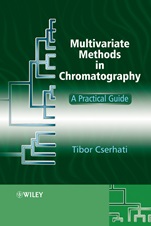
Multivariate Methods in Chromatography: A Practical Guide
ISBN 9780470058206
Autor: Tibor Cserhati
Wydawca: Wiley
Dostępność: 3-6 tygodni
Cena: 796,95 zł
Przed złożeniem zamówienia prosimy o kontakt mailowy celem potwierdzenia ceny.
ISBN13: |
9780470058206 |
ISBN10: |
047005820X |
Autor: |
Tibor Cserhati |
Oprawa: |
Hardback |
Rok Wydania: |
2008-07-18 |
Ilość stron: |
352 |
Wymiary: |
254x176 |
Tematy: |
PBK |
Chromatography is a recognized analytical process for the separation of components within mixtures and is regularly used coupled to mass spectrometry for component identification. All analytical techniques generate large amounts of data that can be numerically processed using multivariate techniques. Multivariate analysis, which includes a large number of detailed data processing methods, when applied to chromatography allows users to find the relationship between the molecular structures within a compound and the different systems used in the analysis.
Multivariate Methods in Chromatography: A Practical Guide is intended to show how to use chemometrics for the solution of problems hardly soluble otherwise without the exact knowledge of the underlying, sometimes complicated, mathematical apparatus. The objectives of this book are to present a concise description and evaluation of the various multivariate mathematical–statistical methods applied for the assessment of retention data sets.
The opening chapter presents a discussion of the various multivariate methods available in the ′toolkit′ of a chromatographer. The subsequent chapters present a broad range of the use of these methods in GC, LC and electrically–driven chromatography, with an emphasis on their application to pharmaceuticals, food, the environment, biological compounds and medicine.
This essential text is aimed at analysts working in processing plants and quality control environments using chromatographic analysis for any types of solutes, as well as experts in research institutes and those teaching separation science, technology and analytical chemistry. It is relevant to those utilising chromatography in bioinformatics, life sciences and drug discovery as well as chemical engineering, pharmacology, biology, medicine and forensic science. In addition the book will be of interest to students and postgraduate students working in separation science.
Multivariat
e Methods in Chromatography: A Practical Gide has been written by a practising chromatographer for practitioners, and is intended as a bridge between everyday chromatographic practice and theoretical mathematics.
Spis treści:
Preface.
Introduction.
List of Abbreviations, Acronyms and Symbols.
Chapter 1. Fundamentals.
1.1. Multilinear and nonlinear regression analyses.
1.2. Stepwise regression analysis and partial least squares method.
1.3. Two and three–dimensional principal component analysis, various factor analytical techniques.
1.4. Canonical correlation analysis.
1.5. Discriminance analysis.
1.6. Spectral mapping.
1.7 Nonlinear mapping.
1.8. Cluster analysis.
1.9. Other multivariate techniques (fixed–size window movement, rank annihilation, etc).
1.10. Measured and calculated physicochemical parameters of chromatographis systems and analytes.
Chapter 2. Gas Chromatography (GC).
2.1. Theory and practice of gas chromatography.
2.2. Comparison of GC stationary phases using homogenous and non–homogenous set of analytes.
2.3. Elucidation of similarities and dissimilarities among samples.
2.3.1. Human health and pharmaceuticals.
2.3.2. Forensic analyses.
2.3.3. Biology and agrobiology.
2.3.4. Food and food products.
2.3.4.1. Wines.
2.3.4.2. Oils.
2.3.4.3. Foods of plant origin.
2.3.4.4. Miscellaneous food products.
2.3.5. Environmental analyses.
2.3.5.1. Volatile organic compounds (VOC), polycyclic aromatic hydrocarbons (PAH), and polychlorinated biphenyls (PCB).
2.3.5.2. Miscellaneous environmental pollutants.
2.3.5.3. Gasoline.
2.3.6. Other synthetic compounds.
2.3.7. Miscellaneous applications.
Chapter 3. Liquid Chromatography (LC).
3.1. Thin–layer chromatography (TLC).
3.1.1. Theory and practice of thin–layer chromatography.
3.1.2. Multidimensional classification of TLC stationary and/or
mobile phases.
3.1.3. Relationships between molecular parameters and TLC retention of analytes.
3.1.3.1. Pharmaceuticals and natural organic compounds.
3.1.3.2. Fatty acids and bile acids.
3.1.3.3. Pesticides and pesticide adjuvants.
3.1.4. Relationship between TLC retention parameters and biological activity of analytes..
3.1.5. Miscellaneous applications.
3.2. High performance liquid chromatography (HPLC).
3.2.1. Theory and practice of HPLC.
3.2.2. Multidivariate classification of HPLC stationary and/or mobile phases.
3.2.2.1. Classification of stationary or mobile phases.
3.2.2.1.1. Principal component analysis (PCA).
3.2.2.1.2. Other multivariate techniques.
3.2.2.4. Classification of chromatographic systems.
3.2.2.4.1. Multilinear and multi nonlinear regression analyses (MLR and MNLR).
3.2.2.4.2. Principal component analysis (PCA), cluster analysis (CA) and other multivariate techniques.
3.2.3. Differentiation between homologous and non–homologoues sets of analytes.
3.2.3.1. Human health.
3.2.3.2. Biological applications.
3.2.3.3. Agrobiochemistry.
3.2.3.4. Microbiology.
3.2.3.5. Natural (herbal) medicines.
3.2.3.6. Synthetic pharmaceuticals.
3.2.3.7. Wines.
3.2.3.8. Cheeses.
3.2.3.9. Miscellaneous foods and food products.
3.2.3.10. Polycyclic aromatic hydrocarbons.
3.2.3.11. Pesticides and homologous series of pollutants.
3.2.3.12. Non homologous series of pollutants.
3.2.3.13. Other environmental pollutants.
3.2.3.14. Miscellaneous HPLC applications.
Chapter 4. Electrically Driven Systems.
4.1. Theory and practice of electrically driven systems.
4.2. Gel electrophoretic techniques.
4.2.1. Theory and human health aspects.
4.2.2. Microorganisms.
4.2.3. Microbial communities.
4.2.4. Plant tissues.
4.3. Capillary zone electrophoresis (CZE).
4.3.1. New advances in CZE theory.
4.3.2. Human health and pharmacology.
4.3.3. Other ap
plications.
4.4. Micellar electrokinetic chromatography (MEKC) and related technologies.
Index.
Okładka tylna:
Chromatography is a recognized analytical process for the separation of components within mixtures and is regularly used coupled to mass spectrometry for component identification. All analytical techniques generate large amounts of data that can be numerically processed using multivariate techniques. Multivariate analysis, which includes a large number of detailed data processing methods, when applied to chromatography allows users to find the relationship between the molecular structures within a compound and the different systems used in the analysis.
Multivariate Methods in Chromatography: A Practical Guide is intended to show how to use chemometrics for the solution of problems hardly soluble otherwise without the exact knowledge of the underlying, sometimes complicated, mathematical apparatus. The objectives of this book are to present a concise description and evaluation of the various multivariate mathematical–statistical methods applied for the assessment of retention data sets.
The opening chapter presents a discussion of the various multivariate methods available in the ′toolkit′ of a chromatographer. The subsequent chapters present a broad range of the use of these methods in GC, LC and electrically–driven chromatography, with an emphasis on their application to pharmaceuticals, food, the environment, biological compounds and medicine.
This essential text is aimed at analysts working in processing plants and quality control environments using chromatographic analysis for any types of solutes, as well as experts in research institutes and those teaching separation science, technology and analytical chemistry. It is relevant to those utilising chromatography in bioinformatics, life sciences and drug discovery as well as chemical engineering, pharmacology, biology, medicine and for
Koszyk
Książek w koszyku: 0 szt.
Wartość zakupów: 0,00 zł
Informacje


Kontakt
Gambit
Centrum Oprogramowania
i Szkoleń Sp. z o.o.
Al. Pokoju 29b/22-24
31-564 Kraków
Siedziba Księgarni
ul. Kordylewskiego 1
31-542 Kraków
+48 12 410 5991
+48 12 410 5987
+48 12 410 5989
Subskrypcje
Administratorem danych osobowych jest firma Gambit COiS Sp. z o.o. Na podany adres będzie wysyłany wyłącznie biuletyn informacyjny.
Autoryzacja płatności

Informacje na temat autoryzacji płatności poprzez PayU.

© Copyright 2012: GAMBIT COiS Sp. z o.o. Wszelkie prawa zastrzeżone.
Projekt i wykonanie: Alchemia Studio Reklamy