


Wydawcy
Katalog tematyczny
- Archeologia (109)
- Ekonomia, finanse, business (13704)
- Filozofia (1445)
- Historia (3040)
- Języki i językoznawstwo (2356)
- Lifestyle, hobby i rozrywka (475)
- Medycyna (9704)
- Nauki humanistyczne (4)
- Nauki o Ziemi i środowisku (2638)
- Nauki ścisłe (20412)
- Nauki społeczne (8486)
- Nauki techniczne (13450)
- Prawo (1696)
- Publikacje informacyjne i interdyscyplinarne (1288)
- Religia i wierzenia (917)
- Technika komputerowa (4067)
- Bazy danych (75)
- Bezpieczeństwo komputerowe (454)
- Certyfikacja komputerowa (1)
- Grafika i media cyfrowe (32)
- Informatyka (779)
- Komputery, ogólnie (74)
- Programowanie (351)
- Programy komercyjne (49)
- Sieci komputerowe (350)
- Sprzęt komputerowy (4)
- Systemy operacyjne (32)
- Technika cyfrowa na co dzień (7)
- Zdrowie, relacje międzyludzkie i rozwój osobisty (657)





Informacje szczegółowe o książce
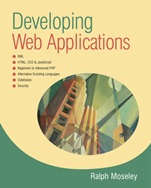
Developing Web Applications
ISBN 9780470017197
Autor: Ralph Moseley
Wydawca: Wiley
Dostępność: 3-6 tygodni
Cena: 281,40 zł
Przed złożeniem zamówienia prosimy o kontakt mailowy celem potwierdzenia ceny.
ISBN13: |
9780470017197 |
ISBN10: |
0470017198 |
Autor: |
Ralph Moseley |
Oprawa: |
Paperback |
Rok Wydania: |
2006-12-08 |
Ilość stron: |
410 |
Wymiary: |
233x193 |
Tematy: |
UV |
Building applications for the Internet is a complex and fast–movingfield which utilizes a variety of continually evolvingtechnologies. Whether your perspective is from the client or serverside, there are many languages to master X(HTML),JavaScript, PHP, XML and CSS to name but a few. These languageshave to work together cleanly, logically and in harmony with thesystems they run on, and be compatible with any browsers with whichthey interact.
Developing Web Applications presents script writing andgood programming practice but also allows students to see how theindividual technologies fit together. It includes recent technicaldevelopments to provide a practical and modern introduction tobuilding web applications.
Assuming no prior programming experience, this concise,accessible book ensures that essential concepts on the client sideare quickly grasped, and goes on to examine the server environmentand available languages, including discussion of dynamic, modernscripting languages such as PHP. Network and security issues arealso discussed. The aim of this book is to deliver exactly what isneeded to start producing working applications as soon as possible and have fun along the way.
Ideal for course use or self–study, this book includes practicalsuggestions for mini–projects which encourage the reader to explorehis or her own imaginative solutions, as well as more theoreticalend–of–chapter questions. It can also easily be used as a referencework as each section is self–contained, amplifying the key aspectsof its particular topic. Most software covered is freely availablein the public domain and no particular development environments arerequired. It is a direct, contemporary and extremely usefulresource for anyone interested in learning how to programapplications for the World Wide Web.
Preface.
Introduction.
Features.
Additional Materials.
Trademarks.
Acknowledgments.
CHAPTER 1: THE WAY THE WEB WORKS.
A basic introduction to how the WWW works within the context ofthe Internet with supporting protocols and applications.
CHAPTER 2: THE CLIENT SIDE: HTML.
This chapter starts to look at the client side and static Webpage development using HTML. You will learn how to develop simpleWeb pages and formatting, together with tables, images andframes.
CHAPTER 3: FROM HTML TO XHTML.
Here we continue the exploration of HTML into XHTML. You will learnabout the various standards that have been developed for HTML. Moreadvanced HTML will also be studied, and the ability to controlsearch engines, cache refresh and meta information.
CHAPTER 4: GETTING SOME STYLE: CSS.
In this chapter you will learn how to present and control theformat of Web pages using CSS. This includes the ability toprecisely control the positioning and attributes of content whilemaintaining the structure of the document itself.
CHAPTER 5: JAVASCRIPT: INTRODUCTION TO CLIENT SIDESCRIPTING.
This chapter will prepare you for developing with this popularscripting language, showing you the syntax and possibilities ofuse. The aims here are to show you how it is placed within a page,variables, strings, arrays and loops. Program flow is alsodiscussed and how conditional operators and commands are used.
CHAPTER 6: JAVASCRIPT: DEVELOPING MORE ADVANCEDSCRIPTS.
In this chapter you will learn about using objects inJavaScript, both the built–in types and creating your own. Youwill also learn about the Document Object Model (DOM), which allowsHTML documents to be manipulated and accessed. Forms and ways ofvalidating information submitted are explored here too.
CHAPTER 7: DHTML.
The aim of this chapter is to bring dynamic aspects of sitedesign together. You will learn about animation, caching, eventdriven scripting and browser compatibility. It s in thischapter you will also find out more about compatibility and theneed to provide alternatives for different browsers.
CHAPTER 8: XML: EXTENSIBLE MARKUP LANGUAGE.
In this chapter you will learn about the basics of XML and howit can be used to store information away from the mechanism ofprocessing or formatting of such data. You will learn how to buildsimple XML files, and be able to manipulate and refer to them.
CHAPTER 9: XML, XSL AND XSLT: TRANSFORMING XML.
The aim of this chapter is to learn about and explore thepossibilities of using XML as the starting point for data to betransformed into other target formats using XSLT. Style sheets areused and linked to documents. It is shown here that it is possibleto process XML with a browser or a programing language on theclient side.
CHAPTER 10: WEB SERVICES, FEEDS AND BLOGS.
Here you will learn about three important areas of Webactivity: how it is possible to create language– andplatform–independent services that utilize common Web protocols andXML; how information can be disseminated automatically tointerested people; and finally, the phenomenon of the blog!
CHAPTER 11: THE SERVER SIDE.
This chapter aims to give you your first contact with theserver side and introduces you to the server; the various possiblepackages and platforms; how to set up and the options involved;testing your server; logging users and dealing with dynamicIPs.
CHAPTER 12: PHP 1: STARTING TO SCRIPT ON THE SERVERSIDE.
This chapter gives a basic introduction to PHP and dynamicprograming on the server side. You will learn how to develop simplePHP, how to structure your programs and embed script withinHTML.
CHAPTER 13: PHP 2: ARRAYS, FUNCTIONS AND FORMS.
Here, you learn how to further manipulate data within PHP andin the process get to grips with new functions, loop structures andthe verification of data input through forms. Simple arrays todynamic structures are discussed, along with the ability tomanipulate strings through special functions. Attention isparticularly given to how to enlist specific features of PHP whenprocessing data and how these can be used to add security.
CHAPTER 14: MORE ADVANCED PHP.
The aim here is to provide a glimpse of the further possibilitieswithin PHP, including cookies, sessions, objects and more advancedfile handling.
CHAPTER 15: NETWORK AND WEB SECURITY.
The aim of this chapter is to make you aware of threats to onlinesecurity that you and your users must guard against. The mostcommon forms of attack are studied, such as viruses and worms,cross site scripting, email problems, Trojan horses, phishing andmany other mechanisms. Possible solutions are also looked into,including firewalls and anti–virus software.
CHAPTER 16: DATABASES.
The aim of this chapter is to help you understand databases so thatthey can easily be utilized in your Web applications and sites. Thebasic idea of the database is explored, together with how well itcan be linked in with server side scripting. All the basicfunctions are studied, together with how these can be communicateddirectly to the database server.
CHAPTER 17: ALTERNATIVE SCRIPTING LANGUAGES.
The aim of this chapter is to have a look at the varioustechnologies available for developing Web applications. This can beuseful to familiarize you with legacy code that may be met whilemaintaining older applications and Web sites.
CHAPTER 18: FUTURE: GAINING A PERSPECTIVE.
This chapter s main focus is to acquaint the reader withthe leading edge of Internet and Web technology, to give some ideaof the currently active research areas and inspire interest forfuture study.
Glossary.
Sources.
Index.
The book is a product of Ralph Moseley s experience of developing the course Developing Web Applications as module leader at Middlesex University. His research interest is developing adaptive systems which use the internet to reconfigure their hardware remotely.
Koszyk
Książek w koszyku: 0 szt.
Wartość zakupów: 0,00 zł
Informacje


Kontakt
Gambit
Centrum Oprogramowania
i Szkoleń Sp. z o.o.
Al. Pokoju 29b/22-24
31-564 Kraków
Siedziba Księgarni
ul. Kordylewskiego 1
31-542 Kraków
+48 12 410 5991
+48 12 410 5987
+48 12 410 5989
Subskrypcje
Administratorem danych osobowych jest firma Gambit COiS Sp. z o.o. Na podany adres będzie wysyłany wyłącznie biuletyn informacyjny.
Autoryzacja płatności

Informacje na temat autoryzacji płatności poprzez PayU.

© Copyright 2012: GAMBIT COiS Sp. z o.o. Wszelkie prawa zastrzeżone.
Projekt i wykonanie: Alchemia Studio Reklamy