


Wydawcy
Katalog tematyczny
- Archeologia (109)
- Ekonomia, finanse, business (13704)
- Filozofia (1445)
- Historia (3040)
- Języki i językoznawstwo (2356)
- Lifestyle, hobby i rozrywka (475)
- Medycyna (9704)
- Nauki humanistyczne (4)
- Nauki o Ziemi i środowisku (2638)
- Nauki ścisłe (20412)
- Nauki społeczne (8486)
- Nauki techniczne (13450)
- Prawo (1696)
- Publikacje informacyjne i interdyscyplinarne (1288)
- Religia i wierzenia (917)
- Technika komputerowa (4067)
- Bazy danych (75)
- Bezpieczeństwo komputerowe (454)
- Certyfikacja komputerowa (1)
- Grafika i media cyfrowe (32)
- Informatyka (779)
- Architektura komputerów (78)
- Interakcja człowiek-komputer (115)
- Komputer, teoria matematyczna (29)
- Przetwarzanie obrazów (32)
- Przetwarzanie sygnałów (145)
- Rzeczywistość wirtualna (3)
- Systemy komputerowe, analiza (2)
- Sztuczna inteligencja (297)
- Komputery, ogólnie (74)
- Programowanie (351)
- Programy komercyjne (49)
- Sieci komputerowe (350)
- Sprzęt komputerowy (4)
- Systemy operacyjne (32)
- Technika cyfrowa na co dzień (7)
- Zdrowie, relacje międzyludzkie i rozwój osobisty (657)





Informacje szczegółowe o książce
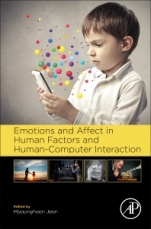
Emotions and Affect in Human Factors and Human-Computer Interaction
ISBN 9780128018514
Autor: Jeon, Myounghoon
Wydawca: Elsevier
Dostępność: 3-6 tygodni
Cena: 460,95 zł
Przed złożeniem zamówienia prosimy o kontakt mailowy celem potwierdzenia ceny.
ISBN13: |
9780128018514 |
Autor: |
Jeon, Myounghoon |
Oprawa: |
Hardback |
Rok Wydania: |
2017-04-05 |
Tematy: |
UYZ |
Emotions and Affect in Human Factors and Human–Computer Interaction is a complete guide for conducting affect-related research and design projects in H/F and HCI domains. Introducing necessary concepts, methods, approaches, and applications, the book highlights how critical emotions and affect are to everyday life and interaction with cognitive artifacts.
The text covers the basis of neural mechanisms of affective phenomena, as well as representative approaches to Affective Computing, Kansei Engineering, Hedonomics, and Emotional Design. The methodologies section includes affect induction techniques, measurement techniques, detection and recognition techniques, and regulation models and strategies. The application chapters discuss various H/F and HCI domains: product design, human–robot interaction, behavioral health and game design, and transportation. Engineers and designers can learn and apply psychological theories and mechanisms to account for their affect-related research and can develop their own domain-specific theory. The approach outlined in this handbook works to close the existing gap between the traditional affect research and the emerging field of affective design and affective computing.
Provides a theoretical background of affective sciencesDemonstrates diverse affect induction methods in actual research settingsDescribes sensing technologies, such as brain–computer interfaces, facial expression detection, and moreCovers emotion modeling and its application to regulation processesIncludes case studies and applied examples in a variety of H/F and HCI application areasAddresses emerging interdisciplinary areas including Positive Technology, Subliminal Perception, Physiological Computing, and Aesthetic Computing
Part I: Foundations of affective sciences 1. Emotions and Affect in Human Factors and Human–Computer Interaction: Taxonomy, Theories, Approaches, and Methods 2. Neural Mechanisms of Emotions and Affect 3. Mood Effects on Cognition: Affective Influences on the Content and Process of Information Processing and Behavior 4. Cross-Cultural Similarities and Differences in Affective Processing and Expression 5. On the Moral Implications and Restrictions Surrounding Affective Computing
Part II: Frameworks of affective sciences in human factors and human-computer interaction 6. Design and Emotional Experience 7. From Ergonomics to Hedonomics: Trends in Human Factors and Technology—The Role of Hedonomics Revisited 8. An Approach Through Kansei Science 9. Affective Computing: Historical Foundations, Current Applications, and Future Trends
Part III: Methodologies: introduction and evaluation of techniques 10. Affect/Emotion Induction Methods 11. Affect Measurement: A Roadmap Through Approaches, Technologies, and Data Analysis 12. The Role of Registration and Representation in Facial Affect Analysis 13. On Computational Models of Emotion Regulation and Their Applications Within HCI
Part IV: Applications: case studies and applied examples 14. Evolution of Emotion Driven Design 15. Affective Human–Robot Interaction 16. Computational Modeling of Cognition–Emotion Interactions: Theoretical and Practical Relevance for Behavioral Healthcare 17. Emotions in Driving
Part V: Emerging areas 18. Positive Technology, Computing, and Design: Shaping a Future in Which Technology Promotes Psychological Well-Being 19. Subliminal Perception or "Can We Perceive and Be Influenced by Stimuli That Do Not Reach Us on a Conscious Level?" 20. Physiological Computing and Intelligent Adaptation 21. Aesthetic Computing
Koszyk
Książek w koszyku: 0 szt.
Wartość zakupów: 0,00 zł
Informacje


Kontakt
Gambit
Centrum Oprogramowania
i Szkoleń Sp. z o.o.
Al. Pokoju 29b/22-24
31-564 Kraków
Siedziba Księgarni
ul. Kordylewskiego 1
31-542 Kraków
+48 12 410 5991
+48 12 410 5987
+48 12 410 5989
Subskrypcje
Administratorem danych osobowych jest firma Gambit COiS Sp. z o.o. Na podany adres będzie wysyłany wyłącznie biuletyn informacyjny.
Autoryzacja płatności

Informacje na temat autoryzacji płatności poprzez PayU.

© Copyright 2012: GAMBIT COiS Sp. z o.o. Wszelkie prawa zastrzeżone.
Projekt i wykonanie: Alchemia Studio Reklamy