


Wydawcy
Katalog tematyczny
- Archeologia (109)
- Ekonomia, finanse, business (13704)
- Filozofia (1445)
- Historia (3040)
- Języki i językoznawstwo (2356)
- Lifestyle, hobby i rozrywka (475)
- Medycyna (9704)
- Nauki humanistyczne (4)
- Nauki o Ziemi i środowisku (2638)
- Nauki ścisłe (20412)
- Nauki społeczne (8486)
- Nauki techniczne (13450)
- Budownictwo lądowe (1045)
- Chemia przemysłowa (2258)
- Elektronika i telekomunikacja (3287)
- Energetyka (1122)
- Inne nauki stosowane (363)
- Inżynieria biochemiczna (507)
- Inżynieria transportu (232)
- Mechanika i materiały (3316)
- Nauka o środowisku (321)
- Rolnictwo (507)
- Technika, ogólnie (475)
- Prawo (1696)
- Publikacje informacyjne i interdyscyplinarne (1288)
- Religia i wierzenia (917)
- Technika komputerowa (4067)
- Zdrowie, relacje międzyludzkie i rozwój osobisty (657)





Informacje szczegółowe o książce
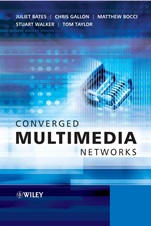
Converged Multimedia Networks
ISBN 9780470025536
Autor: Juliet Bates, Chris Gallon, Matthew Bocci, Stuart Walker, Tom Taylor
Wydawca: Wiley
Dostępność: 3-6 tygodni
Cena: 605,85 zł
Przed złożeniem zamówienia prosimy o kontakt mailowy celem potwierdzenia ceny.
ISBN13: |
9780470025536 |
ISBN10: |
0470025530 |
Autor: |
Juliet Bates, Chris Gallon, Matthew Bocci, Stuart Walker, Tom Taylor |
Oprawa: |
Hardback |
Rok Wydania: |
2006-08-11 |
Ilość stron: |
364 |
Wymiary: |
252x186 |
Tematy: |
TJ |
Learn how to construct the converged networks of the future!
New technologies are re–writing the business cases and cost models upon which telephony has been based for years. The fast "always on" Broadband Internet is a key driver, pushing forward and enabling the delivery of multimedia applications in all types of networks.
Service Providers want to reduce costs by converging new IP Services, existing data services and traditional telephony services onto the same core network, placing expectations on network performance. Converged Multimedia Networks focuses on enabling the synergistic combination of voice, data and video on to one network and the new challenges this will present in telecommunications.
Converged Multimedia Networks:Demonstrates how to deploy converged networks to support mobile telephony, fixed telephony, data, and broadband multimedia services.Describes how call control enables peer–to–peer voice and multimedia communication.Overviews the security solutions available to the network operators.Covers the architectural and protocol developments needed to permit the NGN to interoperate with the PSTN, reviewing transmission, and signalling in depth.Introduces the IMS architecture, for all types of access.Illustrates how value Added Services are delivered and describes how the Session Initiation Protocol (SIP) has launched a new breed of native SIP applications.Explains Multi Protocol Label Switching (MPLS), showing its capabilities in the core and describes how IP traffic engineering can support end user QoS guarantees.Discusses how differentiated QoS can be implemented allowing multiple service offerings, avoiding over–provisioning, and maximising the operator′s return on investment.
This text will be an invaluable resource for network planners, and network architects in the telecommunications industry. Advanced students and network engineers worki
ng for telecommunication operators and vendors will also find this to be an excellent technical guide to the topic.
Spis treści:
Foreword.
Preface.
1 Introduction.
1.1 Motivation for Network Convergence.
1.2 The Core Network.
1.3 Legacy Service Requirements.
1.4 New Service Requirements.
1.5 Architectures.
1.6 Moving to SIP.
1.7 Growing Revenue.
1.8 Network Operators – Dealing with Convergence.
1.9 Enabling Technologies for Converged Networks.
2 Call Control in the NGN.
2.1 NGN Network Architectures.
2.2 The Operation of Call Control.
2.3 Call Processing in the Legacy PSTN.
2.4 Call Processing in an NGN Call Agent.
2.5 The Basic Call State Machine.
2.6 Call Signalling in the NGN and the Role of SIP.
2.7 The SDP Protocol.
2.8 Media Transport Using RTP and RTCP.
2.9 Addressing Issues.
2.10 Summary.
References.
3 Securing the Network and the Role of Session Border Gateways.
3.1 General Principles of Security and the NGN.
3.2 The Problem of Secrets.
3.3 IPSec.
3.4 Session Border Controllers and Session Border Gateways.
3.5 Protecting the PSTN Call Control Platforms in the NGN.
3.6 Summary.
References.
Contents.
4 The NGN and the PSTN.
4.1 Circuits and What they Carry.
4.2 Signalling and Supervision.
4.3 The Birth of the Call Agent.
4.4 Media Gateways.
4.5 A Look at Media Gateway Control Protocols.
4.7 Summary.
References.
5 Evolution of Mobile Networks and Wireless LANs.
5.1 Introduction.
5.2 1G and 2G Mobile Networks.
5.3 Development of 3G.
5.4 Release 99 UMTS Architecture.
5.5 General Packet Radio Service (GPRS).
5.6 Enhanced Data Rates for GSM Evolution (EDGE).
5.7 Release 4 UMTS Architecture.
5.8 Wideband Code Division Multiple Access (W–CDMA).
5.9 Introduction to IMS.
5.10 GPRS Access to IMS.
5.11 Broadband Dat
a Wireless Access.
5.12 Wireless LAN Interworking.
5.13 Mobile TV and Video.
5.14 Related Work in other Standards Bodies.
Summary.
Appendix.
References.
6 Value–added Services.
6.1 Introduction.
6.2 Service Creation and Delivery Technologies.
6.3 Service Orchestration.
6.4 Service Orchestration Examples.
6.5 Service Delivery Platforms.
Summary.
References.
7 Core Network Architecture.
7.1 The Convergence Layer: Multiprotocol Label Switching.
7.2 Virtual Private Networks.
7.3 Summary.
References.
8 Guaranteeing Quality of Service in the NGN.
8.1 Introduction.
8.2 Defining QoS.
8.3 QoS in IP Networks.
8.4 Traffic Engineering in the MPLS Core.
Contents.
8.5 Video Services.
8.6 Business VPN Services.
8.7 Extending QoS for VPN Services across Multiple Providers.
8.8 QoS and the PSTN.
8.9 QoS Architectures for PSTN Services.
8.10 The MSF Architecture for Bandwidth Management.
8.11 Protecting the Network from Application Layer Overload.
8.12 Summary.
References.
Index.
Nota biograficzna:
Dr. Juliet Bates is a Principal Consultant within the Professional Services Division of Alcatel Networks, providing design advice on the engineering and traffic management of Broadband Networks. Juliet′s specialist areas include fixed and mobile voice access for transmission over ATM, IP and MPLS.
Juliet has been MSF Technical Committee Vice Chair since April 2004.Chris Gallon is a Senior Network Architect at Fujitsu Telecommunications Europe, working in areas including end–to–end network design for triple play services, UK PSTN interconnect protocols, DSL and Fibre Access Solutions, PSTN evolution and Bandwidth Management. He has been MSF Protocol and Control Working Group Chair since February 2002.
Okładka tylna:
Learn how to construct the converged networks of t
he future!
New technologies are re–writing the business cases and cost models upon which telephony has been based for years. The fast "always on" Broadband Internet is a key driver, pushing forward and enabling the delivery of multimedia applications in all types of networks.
Service Providers want to reduce costs by converging new IP Services, existing data services and traditional telephony services onto the same core network, placing expectations on network performance. Converged Multimedia Networks focuses on enabling the synergistic combination of voice, data and video on to one network and the new challenges this will present in telecommunications.
Converged Multimedia Networks:Demonstrates how to deploy converged networks to support mobile telephony, fixed telephony, data, and broadband multimedia services.Describes how call control enables peer–to–peer voice and multimedia communication.Overviews the security solutions available to the network operators.Covers the architectural and protocol developments needed to permit the NGN to interoperate with the PSTN, reviewing transmission, and signalling in depth.Introduces the IMS architecture, for all types of access.Illustrates how value Added Services are delivered and describes how the Session Initiation Protocol (SIP) has launched a new breed of native SIP applications.Explains Multi Protocol Label Switching (MPLS), showing its capabilities in the core and describes how IP traffic engineering can support end user QoS guarantees.Discusses how differentiated QoS can be implemented allowing multiple service offerings, avoiding over–provisioning, and maximising the operator′s return on investment.
This text will be an invaluable resource for network planners, and network architects in the telecommunications industry. Advanced students and network engineers working for telecommunication operators and vendors will a
Koszyk
Książek w koszyku: 0 szt.
Wartość zakupów: 0,00 zł
Informacje


Kontakt
Gambit
Centrum Oprogramowania
i Szkoleń Sp. z o.o.
Al. Pokoju 29b/22-24
31-564 Kraków
Siedziba Księgarni
ul. Kordylewskiego 1
31-542 Kraków
+48 12 410 5991
+48 12 410 5987
+48 12 410 5989
Subskrypcje
Administratorem danych osobowych jest firma Gambit COiS Sp. z o.o. Na podany adres będzie wysyłany wyłącznie biuletyn informacyjny.
Autoryzacja płatności

Informacje na temat autoryzacji płatności poprzez PayU.

© Copyright 2012: GAMBIT COiS Sp. z o.o. Wszelkie prawa zastrzeżone.
Projekt i wykonanie: Alchemia Studio Reklamy