


Wydawcy
Katalog tematyczny
- Archeologia (109)
- Ekonomia, finanse, business (13704)
- Filozofia (1445)
- Historia (3040)
- Języki i językoznawstwo (2356)
- Lifestyle, hobby i rozrywka (475)
- Medycyna (9704)
- Nauki humanistyczne (4)
- Nauki o Ziemi i środowisku (2638)
- Nauki ścisłe (20412)
- Nauki społeczne (8486)
- Nauki techniczne (13450)
- Budownictwo lądowe (1045)
- Chemia przemysłowa (2258)
- Elektronika i telekomunikacja (3287)
- Energetyka (1122)
- Inne nauki stosowane (363)
- Inżynieria biochemiczna (507)
- Inżynieria transportu (232)
- Mechanika i materiały (3316)
- Nauka o środowisku (321)
- Rolnictwo (507)
- Technika, ogólnie (475)
- Prawo (1696)
- Publikacje informacyjne i interdyscyplinarne (1288)
- Religia i wierzenia (917)
- Technika komputerowa (4067)
- Zdrowie, relacje międzyludzkie i rozwój osobisty (657)





Informacje szczegółowe o książce
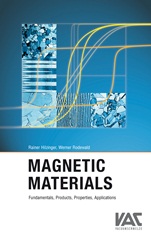
Magnetic Materials: Fundamentals, Products, Properties, Applications
ISBN 9783895783524
Autor: Rainer Hilzinger, Werner Rodewald
Wydawca: Wiley
Dostępność: 3-6 tygodni
Cena: 313,95 zł
Przed złożeniem zamówienia prosimy o kontakt mailowy celem potwierdzenia ceny.
ISBN13: |
9783895783524 |
ISBN10: |
3895783528 |
Autor: |
Rainer Hilzinger, Werner Rodewald |
Oprawa: |
Hardback |
Rok Wydania: |
2012-12-05 |
Ilość stron: |
608 |
Wymiary: |
227x148 |
Tematy: |
TG |
At a practical level, this book reviews the basics of soft and hard magnetic materials, discusses the advantages of the different processing routes for the development of their magnetic properties, and hence assists in their optimized and economic application. Essential guidelines and formulae are compiled for the calculation of magnetic and electrical properties. Selected examples and case studies illustrate the large diversity of technical applications. Materials scientists will benefit from the description of the different processing routes and their impact on the magnetic properties. Application engineers will appreciate the comprehensive and detailed properties and characteristic curves of modern soft and hard magnetic materials. Student will profit from the survey of the basics of magnetism through to the application areas of inductive components, magnetic shielding and magnet assemblies.
Part 1 Introduction to Magnetic Materials 1 Fundamentals of Magnetism 14 1.1 Discovery of magnetism14 1.2 Magnetic fields 15 2 Magnetic Domains and the Process of Magnetization 45 2.1 Magnetic energy terms 45 2.2 Magnetic domain structure 53 2.3 Magnetization processes 58 3 Basic Materials Properties 73 3.1 Introduction 73 3.2 Requirements for soft and hard magnetic materials 73 3.3 Relevant groups of magnetic materials 76 4 The magnetic Circuit – Basic Relationship between Magnetic and Electrical Terms 103 4.1 DC Magnetization 103 4.2 AC Magnetization 114 4.3 Relationships for inductive components 128 4.4 Magnetic quantities and units 132 5 Magnetic Terms and Definitions 138 6 Magnetic Measurements 159 6.1 Generation of magnetic fields 159 6.2 magnetization conditions and their effect on the characteristic curves 163 6.3 Methods of measurement 188 Part 2 VAC Magnetic Materials 7 Crystalline Soft Magnetic materials and Ductile Permanent Magnets 207 7.1 Production process 207 7.2 Nickel–iron alloys 212 7.3 Cobalt–iron alloys 226 7.4 Ultra–pure iron and SiFe alloys 232 7.5 Ductile permanent magnets and magnetically semi–hard materials 233 7.6 Other materials with special mechanical and electrical properties 7.7 Forms of supply 246 8 Rapidly Solidified Amorphous and Nanocrystalline Materials 252 8.1 Introduction to amorphous metallic alloys 252 8.2 Magnetic properties of armorphous alloys 264 8.3 Nanocrystalline soft magnetic materials 280 8.4 Amorphous brazing filler alloys 296 8.5 Forms of Supply 302 9 Properties and Characteristic Curves of Soft Magnetic Materials and Ductile Permanent magnets 305 9.1 Introduction 305 9.2 Table of materials properties 305 9.3 Static (DC) magnetic properties 317 9.4 AC (50 Hz) magnetic properties 325 9.5 Frequency dependence of permeability 339 9.6 Magnetic power losses 346 9.7 Special magnetization conditions 360 9.8 Special core types 371 9.9 Temperature dependence of magnetic properties 381 9.10 Ductile permanent magnets and magnetically semi–hard materials 389 9.11 Further properties 395 10 Production of Rare Earth–Transition Metal (RE–TM) Magnetic by Powder Metallurgy and their typical Magnetic Properties 400 10.1 Cold Isostatic Pressing of magnetic blocks (CIP) 403 10.2 Net–shape magnets by Transverse field die–Pressing (TP) 408 10.3 Net–shape magnets by Axial field die–Pressing (AP) 413 10.4 Alternative processing routes 420 11 Temperature Stability of Sintered RE–TM Magnets 426 11.1 Temperature coefficients of the remanent polarization J r and the coercive field strength Hc j 428 11.2 Irreversible polarization losses due to the temperature dependence of the coercivity Hc j and the thermal after–effect 432 11.3 Irreversible polarization losses due to microstructural changes 435 11.4 Long–term stability of sintered RE–TM–B magnets 437 11.5 Stability of RE–TM magnetic against radiation 437 12 Corrosion Behaviour and Mechanical Properties of Sintered RE–TM Magnetics 443 12.1 Basic corrosion processes 443 12.2 Typical corrosion tests 446 12.3 Coating of VACODYM and VACOMAX magnets 449 12.4 Mechanical properties of sintered RE–TM magnets 456 Part 3 Applications of VAC Advanced Magnetic Materials 13 Magnetic Shielding 467 13.1 Introduction 467 13.2 Application and materials 470 13.3 Magnetically Shielded Room (MSR) 472 14 Residual Current Devices 475 14.1 Cores for differential current transformers 476 14.2 Tripping relay 479 15 Current Transformers for Electronic Electricity Meters 481 15.1 Operating principle of a current transformer 483 15.2 Requirements and features 485 15.3 Selection criteria for magnetic cores 491 16 Current Sensors with a magnetic Probe 494 16.1 Operation and design 494 16.2 Types of VAC closed–loop current sensors 497 16.3 Main application areas of current sensors with a CITROVAC field probe 499 17 Common Mode Chokes 501 17.1 Methods for RFI control 501 17.2 Material properties 504 17.3 Core stack assemblies 509 17.4 Design advantages of VITROPERM cores 510 18 Power Transformers 513 18.1 Operating principle of a power transformer 513 18.2 Power transformers at mains frequencies 516 18.3 Switched–Mode Power Supply (SMPS) 517 19 RE–TM Magnets for Automotive Applications and Wind Turbines 521 19.1 Automotive applications 522 19.2 Wind turbines 523 20 Permanent magnet (PM) Motors 526 20.1 Kinds of motors 527 20.2 Improvement of the operating temperature 533 20.3 Reduction of the cogging torque 535 21 Wiggles and Undulators 538 21.1 Requirements on permanent magnets for undulators 541 21.2 Assembly of undulators 542 List of Acronyms 545 Lsit of Symbols 547 References 553 Index 596
DR. RAINER HILZINGER former Chief Technology Officer and Development Director at VACUUMSCHMELZE, is a Member of the American Physical Society and the German Physical Society. He has published more than 65 scientific publications and is the holder of a number of patents. He was awarded the Georg–Sachs–Prize by the German Society for Materials Science (DGM) in 1983. Under his direction, many new materials have been developed and brought into commercial application. DR. WERNER RODEWALD former Head of Fundamental Research and Development of Rare–Earth permanent magnet materials at VACUUMSCHMELZE, is also a Member of the German Physical Society. Until 2005, he was member of the IEC Technical Committee TC68–WG5, which compiles standards and measuring methods for permanent magnets. In addition, he has managed national and international projects with partners from universities and industry and has published many technical articles.
“It will be a very handy reference book when solving magnetic circuit design problems. Materials scientists will also appreciate the detailed information on the effects of processing techniques on magnetic properties.” ( IEEE Electrical Insulation Magazine , 1 September 2013)
Koszyk
Książek w koszyku: 0 szt.
Wartość zakupów: 0,00 zł
Informacje


Kontakt
Gambit
Centrum Oprogramowania
i Szkoleń Sp. z o.o.
Al. Pokoju 29b/22-24
31-564 Kraków
Siedziba Księgarni
ul. Kordylewskiego 1
31-542 Kraków
+48 12 410 5991
+48 12 410 5987
+48 12 410 5989
Subskrypcje
Administratorem danych osobowych jest firma Gambit COiS Sp. z o.o. Na podany adres będzie wysyłany wyłącznie biuletyn informacyjny.
Autoryzacja płatności

Informacje na temat autoryzacji płatności poprzez PayU.

© Copyright 2012: GAMBIT COiS Sp. z o.o. Wszelkie prawa zastrzeżone.
Projekt i wykonanie: Alchemia Studio Reklamy