


Wydawcy
Katalog tematyczny
- Archeologia (109)
- Ekonomia, finanse, business (13704)
- Filozofia (1445)
- Historia (3040)
- Języki i językoznawstwo (2356)
- Lifestyle, hobby i rozrywka (475)
- Medycyna (9704)
- Nauki humanistyczne (4)
- Nauki o Ziemi i środowisku (2638)
- Nauki ścisłe (20412)
- Astronomia (294)
- Biologia (5119)
- Chemia (6540)
- Fizyka (3309)
- Elektryczność i magnetyzm (90)
- Fizyka atomowa i molekularna (110)
- Fizyka cząstek elementarnych (36)
- Fizyka jądra atomowego (36)
- Fizyka kwantowa (210)
- Fizyka matematyczna (121)
- Fizyka relatywistyczna (36)
- Fizyka statystyczna (51)
- Fizyka stosowana (498)
- Mechanika klasyczna (186)
- Optyka i światło (133)
- Stany materii (202)
- Matematyka (4574)
- Nauki ścisłe, ogólnie (503)
- Nauki społeczne (8486)
- Nauki techniczne (13450)
- Prawo (1696)
- Publikacje informacyjne i interdyscyplinarne (1288)
- Religia i wierzenia (917)
- Technika komputerowa (4067)
- Zdrowie, relacje międzyludzkie i rozwój osobisty (657)





Informacje szczegółowe o książce
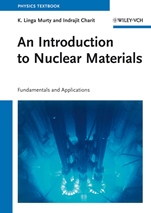
An Introduction to Nuclear Materials: Fundamentals and Applications
ISBN 9783527412013
Autor: K. Linga Murty, Indrajit Charit
Wydawca: Wiley
Dostępność: 3-6 tygodni
Cena: 746,55 zł
Przed złożeniem zamówienia prosimy o kontakt mailowy celem potwierdzenia ceny.
ISBN13: |
9783527412013 |
ISBN10: |
3527412018 |
Autor: |
K. Linga Murty, Indrajit Charit |
Oprawa: |
Hardback |
Rok Wydania: |
2012-12-19 |
Ilość stron: |
398 |
Wymiary: |
251x187 |
Tematy: |
PH |
Covering both fundamental and advanced aspects in an accessible way, this textbook begins with an overview of nuclear reactor systems, helping readers to familiarize themselves with the varied designs. Then the readers are introduced to different possibilities for materials applications in the various sections of nuclear energy systems. Materials selection and life prediction methodologies for nuclear reactors are also presented in relation to creep, corrosion and other degradation mechanisms. An appendix compiles useful property data relevant for nuclear reactor applications. Throughout the book, there is a thorough coverage of various materials science principles, such as physical and mechanical metallurgy, defects and diffusion and radiation effects on materials, with serious efforts made to establish structure–property correlations wherever possible. With its emphasis on the latest developments and outstanding problems in the field, this is both a valuable introduction and a ready reference for beginners and experienced practitioners alike.
Preface XV 1 Overview of Nuclear Reactor Systems and Fundamentals 1 1.1 Introduction 1 1.2 Types of Nuclear Energy 2 1.2.1 Nuclear Fission Energy 2 1.2.2 Nuclear Fusion Energy 2 1.2.3 Radioisotopic Energy 3 1.3 Neutron Classification 3 1.4 Neutron Sources 3 1.5 Interactions of Neutrons with Matter 3 1.5.1 Fission Chain Reaction 5 1.6 Definition of Neutron Flux and Fluence 6 1.7 Neutron Cross Section 7 1.7.1 Reactor Flux Spectrum 10 1.8 Types of Reactors 11 1.8.1 A Simple Reactor Design 11 1.8.2 Examples of Nuclear Reactors 12 1.9 Materials Selection Criteria 28 1.9.1 General Considerations 31 1.9.2 Special Considerations 33 1.9.3 Application of Materials Selection Criteria to Reactor Components 35 1.10 Summary 37 Appendix 1.A 37 Additional Reading Materials 40 2 Fundamental Nature of Materials 43 2.1 Crystal Structure 43 2.1.1 Unit Cell 45 2.1.2 Crystal Structures in Metals 47 2.1.3 Close Packing Geometry 52 2.1.4 Polymorphism 53 2.1.5 Miller Indices for Denoting Crystallographic Planes and Directions 54 2.1.6 Interstitial Sites in Common Crystal Structures 59 2.1.7 Crystal Structure of Carbon: Diamond and Graphite 60 2.1.8 Crystal Structure in Ceramics 62 2.1.9 Summary 69 2.2 Crystal Defects 69 2.2.1 Point Defects 70 2.2.2 Line Defects 79 2.2.3 Surface Defects 84 2.2.4 Volume Defects 88 2.2.5 Summary 88 2.3 Diffusion 89 2.3.1 Phenomenological Theories of Diffusion 90 2.3.2 Atomic Theories of Diffusion 95 2.3.3 Atomic Diffusion Mechanisms 97 2.3.4 Diffusion as a Thermally Activated Process 101 2.3.5 Diffusion in Multicomponent Systems 105 2.3.6 Diffusion in Different Microstructural Paths 106 2.3.7 Summary 108 Bibliography 110 3 Fundamentals of Radiation Damage 111 3.1 Displacement Threshold 114 3.2 Radiation Damage Models 118 3.3 Summary 125 Bibliography and Suggestions for Further Reading 126 Additional Reading 126 4 Dislocation Theory 127 4.1 Deformation by Slip in Single Crystals 127 4.1.1 Critical Resolved Shear Stress 130 4.1.2 Peierls–Nabarro (P–N) Stress 133 4.1.3 Slip in Crystals: Accumulation of Plastic Strain 134 4.1.4 Determination of Burgers Vector Magnitude 136 4.1.5 Dislocation Velocity 137 4.2 Other Dislocation Characteristics 140 4.2.1 Types of Dislocation Loops 140 4.2.2 Stress Field of Dislocations 142 4.2.3 Strain Energy of a Dislocation 144 4.2.4 Force on a Dislocation 147 4.2.5 Forces between Dislocations 151 4.2.6 Intersection of Dislocations 154 4.2.7 Origin and Multiplication of Dislocations 157 4.3 Dislocations in Different Crystal Structures 160 4.3.1 Dislocation Reactions in FCC Lattices 160 4.3.2 Dislocation Reactions in BCC Lattices 165 4.3.3 Dislocation Reactions in HCP Lattices 166 4.3.4 Dislocation Reactions in Ionic Crystals 166 4.4 Strengthening (Hardening) Mechanisms 167 4.4.1 Strain Hardening 168 4.4.2 Grain Size Strengthening 170 4.4.3 Solid Solution Strengthening 172 4.4.4 Strengthening from Fine Particles 174 4.5 Summary 178 Bibliography 180 Additional Reading 180 5 Properties of Materials 181 5.1 Mechanical Properties 181 5.1.1 Tensile Properties 184 5.1.2 Hardness Properties 196 5.1.3 Fracture 200 5.1.4 Impact Properties 203 5.1.5 Fracture Toughness 207 5.1.6 Creep Properties 211 5.1.7 Fatigue Properties 227 5.1.8 Creep–Fatigue Interaction 239 5.2 Thermophysical Properties 240 5.2.1 Specific Heat 240 5.2.2 Thermal Expansion 244 5.2.3 Thermal Conductivity 246 5.2.4 Summary 249 5.3 Corrosion 249 5.3.1 Corrosion Basics 249 5.3.2 Types of Corrosion Couples 253 5.3.3 Summary 259 Appendix 5.A 260 Appendix 5.B 260 Bibliography and Suggestions for Further Reading 265 Additional Reading 266 6 Radiation Effects on Materials 267 6.1 Microstructural Changes 267 6.1.1 Cluster Formation 271 6.1.2 Extended Defects 274 6.1.3 Radiation–Induced Segregation 286 6.1.4 Radiation–Induced Precipitation or Dissolution 287 6.2 Mechanical Properties 287 6.2.1 Radiation Hardening 287 6.2.2 Radiation Embrittlement 295 6.2.3 Helium Embrittlement 300 6.2.4 Irradiation Creep 302 6.2.5 Radiation Effect on Fatigue Properties 305 6.3 Radiation Effects on Physical Properties 306 6.3.1 Density 307 6.3.2 Elastic Constants 307 6.3.3 Thermal Conductivity 307 6.3.4 Thermal Expansion Coefficient 308 6.4 Radiation Effects on Corrosion Properties 308 6.4.1 Metal/Alloy 308 6.4.2 Protective Layer 308 6.4.3 Corrodent 309 6.4.4 Irradiation–Assisted Stress Corrosion Cracking (IASCC) 313 6.5 Summary 314 Bibliography 316 7 Nuclear Fuels 319 7.1 Introduction 319 7.2 Metallic Fuels 321 7.2.1 Metallic Uranium 321 7.2.2 Metallic Plutonium 335 7.2.3 Metallic Thorium Fuel 341 7.3 Ceramic Fuels 347 7.3.1 Ceramic Uranium Fuels 347 7.3.2 Uranium Carbide 352 7.3.3 Uranium Nitride 353 7.3.4 Plutonium–Bearing Ceramic Fuels 354 7.3.5 Thorium–Bearing Ceramic Fuels 354 7.4 Summary 356 Bibliography 357 Additional Reading 358 Appendix A Stress and Strain Tensors 359 Appendix B 367 Index 375
K. Linga Murty has been on the faculty of the Nuclear Engineering department at North Carolina State University since 1981 and has been teaching courses in Nuclear Materials. Dr. Murty received his Ph.D. degree in Applied Physics (Materials) from Cornell University (USA) in 1970. He has been awarded numerous awards including the American Nuclear Society Mishima Award (1993), and is the author or coauthor of more than 260 technical papers. Indrajit Charit has been a member of the research staff of the Nuclear Engineering department at North Carolina State University since 2005. He received his Ph.D. degree in Metallurgical Engineering from the University of Missouri–Rolla (USA) in 2004. Dr. Charit has spent about 8 years working on various research programs involving structural materials. He has published and/or presented more than 30 papers.
Koszyk
Książek w koszyku: 0 szt.
Wartość zakupów: 0,00 zł
Informacje


Kontakt
Gambit
Centrum Oprogramowania
i Szkoleń Sp. z o.o.
Al. Pokoju 29b/22-24
31-564 Kraków
Siedziba Księgarni
ul. Kordylewskiego 1
31-542 Kraków
+48 12 410 5991
+48 12 410 5987
+48 12 410 5989
Subskrypcje
Administratorem danych osobowych jest firma Gambit COiS Sp. z o.o. Na podany adres będzie wysyłany wyłącznie biuletyn informacyjny.
Autoryzacja płatności

Informacje na temat autoryzacji płatności poprzez PayU.

© Copyright 2012: GAMBIT COiS Sp. z o.o. Wszelkie prawa zastrzeżone.
Projekt i wykonanie: Alchemia Studio Reklamy