


Wydawcy
Katalog tematyczny
- Archeologia (109)
- Ekonomia, finanse, business (13704)
- Filozofia (1445)
- Historia (3040)
- Języki i językoznawstwo (2356)
- Lifestyle, hobby i rozrywka (475)
- Medycyna (9704)
- Nauki humanistyczne (4)
- Nauki o Ziemi i środowisku (2638)
- Nauki ścisłe (20412)
- Astronomia (294)
- Biologia (5119)
- Chemia (6540)
- Fizyka (3309)
- Elektryczność i magnetyzm (90)
- Fizyka atomowa i molekularna (110)
- Fizyka cząstek elementarnych (36)
- Fizyka jądra atomowego (36)
- Fizyka kwantowa (210)
- Fizyka matematyczna (121)
- Fizyka relatywistyczna (36)
- Fizyka statystyczna (51)
- Fizyka stosowana (498)
- Mechanika klasyczna (186)
- Optyka i światło (133)
- Stany materii (202)
- Matematyka (4574)
- Nauki ścisłe, ogólnie (503)
- Nauki społeczne (8486)
- Nauki techniczne (13450)
- Prawo (1696)
- Publikacje informacyjne i interdyscyplinarne (1288)
- Religia i wierzenia (917)
- Technika komputerowa (4067)
- Zdrowie, relacje międzyludzkie i rozwój osobisty (657)





Informacje szczegółowe o książce
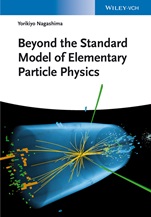
Beyond the Standard Model of Elementary Particle Physics
ISBN 9783527411771
Autor: Yorikiyo Nagashima
Wydawca: Wiley
Dostępność: 3-6 tygodni
Cena: 719,25 zł
Przed złożeniem zamówienia prosimy o kontakt mailowy celem potwierdzenia ceny.
ISBN13: |
9783527411771 |
ISBN10: |
3527411771 |
Autor: |
Yorikiyo Nagashima |
Oprawa: |
Hardback |
Rok Wydania: |
2014-04-16 |
Ilość stron: |
656 |
Wymiary: |
252x174 |
Tematy: |
PH |
A unique and comprehensive presentation of modern particle physics which stores the background knowledge on the big open questions beyond the standard model, as the implications of the evidence of the Higgs–boson, of neutrino physics, or the nature of Dark Matter and Dark Energy. In each topic, key ideas are introduced and basic formulas to understand phenomenological outcomes are derived. Experimental techniques to detect them are also explained. Finally, most recent data and future prospects are reviewed. The book can be used to give a quick view of specialized topics to high energy and theoretical physicists as well as to astronomers and graduate students. From the contents: ? Higgs ? Neutrino ? Grand Unifi ed Theories ? Supersymmetry I: Basics ? Supersymmetry II: Phenomenology ? Extra Dimension ? Axion ? Cosmology I: Big Bang Universe ? Cosmology II: Structure Formation ? Dark Matter ? Dark Energy Yorikiyo Nagashima is Professor Emeritus at the Department of Physics of Osaka University, Japan. An organizer of international conferences, he is also a member of the most important collaboration groups in his field of expertise, including those related to neutrino research. Professor Nagashima was the spokesman of the VENUS group, one of the major detectors of the Japanese first collider accelerator TORISTAN, where he served the first and second term at the start of the project. Professor Nagashima has authored or co–authored almost 300 papers, some of them cited up to 250 times.
Preface XIII Acknowledgments XVII Glossary XIX 1 Higgs 1 1.1 Introduction 1 1.2 Higgs Interactions 2 1.2.1 Standard Model 2 1.2.2 Lagrangian After Symmetry Breaking 5 1.2.3 Decay Modes 6 1.3 Mass 9 1.3.1 Predictions from EW Data 9 1.3.2 Vacuum stability 10 1.3.3 Theoretical Upper Limit 12 1.4 Little and Big Hierarchy Problem 16 1.5 Higgs in the Supersymmetry 19 1.5.1 Two Higgs Doublets 19 1.5.2 Coupling Strengths of MSSM Higgs 22 1.5.3 Mass Spectrum of MSSM Higgs 24 1.6 Is the Higgs Elementary? 28 1.6.1 Technicolor Model 29 1.6.2 Little Higgs Model 31 1.7 Production and Detection of Higgs 38 1.7.1 Higgsstrahlung e−e+ → hZ 39 1.7.2 W Boson Fusion 39 1.7.3 Productions at the Hadron Collider 43 1.7.4 Signals at LHC 46 1.7.5 Higgs Detection Methods 48 1.7.6 Discovery of Higgs 51 1.7.7 SM Higgs? 52 1.7.8 MSSM Higgs and Future Prospect 55 1.8 Summary 58 2 Neutrino 61 2.1 Introduction 61 2.2 Neutrino Mass 62 2.2.1 Mass Matrix 65 2.2.2 Left–Right Symmetric Model 69 2.3 Electromagnetic Interaction 70 2.4 Neutrino Mixing 73 2.5 Neutrino Oscillation 76 2.5.1 Two–Flavor Oscillation 76 2.5.2 Atmospheric Neutrino 79 2.5.3 Accelerator Experiments 82 2.6 Underground Detectors 87 2.7 Solar Neutrino 93 2.7.1 The Solar Puzzle 93 2.7.2 Matter Oscillation 100 2.7.3 Reactor Experiment 111 2.8 Three–Flavor Oscillation 114 2.8.1 PMNS Matrix 114 2.8.2 Summary of Experimental Data 120 2.8.3 CP Violation and Mass Hierarchy 121 2.8.4 Future Prospects 124 2.9 Double Beta Decay 126 2.9.1 The Effective Majorana Mass 128 2.9.2 Current Status 129 2.9.3 To Design an Experiment 131 2.9.4 Experimental Apparatus 133 2.10 Supernova Neutrino 136 2.10.1 Stellar Evolution 138 2.10.2 Feedback to Particle Physics 150 3 Grand Unified Theories 155 3.1 Introduction 155 3.2 Why GUTs? 155 3.2.1 Weinberg Angle in GUTs 157 3.2.2 Quantization of the Electric Charge 157 3.2.3 Triangle Anomaly 158 3.3 SU(5) 160 3.3.1 Fermion Representation 161 3.3.2 Representation of the Gauge Particle 164 3.3.3 Symmetry Breakdown 168 3.3.4 Predictions 170 3.4 SO(10) 174 3.4.1 Left–Right Symmetric World 174 3.4.2 New Gauge Bosons Z′ and W′ 175 3.5 Hierarchy Problem 182 3.6 SUSY GUT 185 4 Supersymmetry I: Basics 189 4.1 Introduction 189 4.1.1 Toy Model 190 4.1.2 Field Theoretical Operators 191 4.2 Two–Component Formalism 193 4.2.1 Majorana Fields 193 4.2.2 SUSY Operators 198 4.2.3 Superspace 200 4.3 Chiral Superfield 203 4.3.1 Products of Chiral Superfields 206 4.4 Vector Superfields 206 4.4.1 Field Strength 209 4.5 Action 210 4.5.1 SUSY Invariant Action 210 4.5.2 Kinetic Energy of Chiral Superfield 212 4.5.3 Superpotential 213 4.5.4 Lagrangian of the Chiral Fields 215 4.5.5 Kinetic Energy of Vector Field 216 4.6 Gauge Interaction 217 4.6.1 Global U(1) Transformation 217 4.6.2 Local U(1) Transformation 217 4.6.3 Non–Abelian Interaction 219 4.7 Summary of SUSY Lagrangian 220 4.8 Spontaneous Symmetry Breaking 221 4.8.1 D–Term Breaking 222 4.8.2 F–Term Breaking 223 5 Supersymmetry II: Phenomenology 225 5.1 Introduction 225 5.2 Minimum Supersymmetric Standard Model 226 5.2.1 Particle Spectrum 226 5.2.2 Interactions 229 5.2.3 Constraints 230 5.2.4 SUSY Breaking 231 5.2.5 Higgs Potential 232 5.3 Minimum SUGRA 235 5.3.1 Soft– SUSY Breaking 235 5.3.2 Mass Formula 237 5.3.3 𝜇 Problem 241 5.4 GMSB 241 5.4.1 Messenger Particles 242 5.4.2 Mass Formula 242 5.4.3 Features of GMSB 244 5.5 AMSB and Extra Dimension 245 5.6 Summary of Mass Spectra 247 5.7 Searches for Sparticles 248 5.7.1 Production Mechanism 249 5.7.2 Sleptons 250 5.7.3 Charginos and Neutralinos 253 5.7.4 LSP 255 5.7.5 Gluino and Squarks 255 5.7.6 Stop 260 5.7.7 R–hadrons 261 5.7.8 Gravitino 262 5.8 Current Status 263 6 Extra Dimension 267 6.1 Introduction 267 6.2 KK Tower 270 6.2.1 Effective Coupling Strength in 4D 272 6.3 Chiral Fermions 273 6.3.1 Orbifold S1¨MZ2 275 6.3.2 Mass Generation and Localization 278 6.3.3 Hierarchy 282 6.3.4 Split Fermion Scenario 285 6.4 Gauge Field in ED 287 6.4.1 Action in 4D 287 6.4.2 Coupling Strength 288 6.4.3 Gauge–Higgs Unification 289 6.5 Gravitational Field 292 6.5.1 Decomposition of the Gravitational Fields 294 6.6 Warped Extra Dimension 296 6.6.1 Anti–de Sitter Space AdS5 296 6.6.2 RS1 Scenario 299 6.6.3 RS2 scenario 300 6.6.4 Gravitons in the RS Model 302 6.6.5 Signals for Warped ED 305 6.7 Universal Extra Dimension (UED) 308 6.7.1 General Features 308 6.7.2 Selection Rules 308 6.7.3 Constraints 311 6.7.4 Signals for UED 312 6.8 Searches for Generic ED 313 6.8.1 Astrophysical Constraints on ADD Models 314 6.8.2 Collider Experiments on ADD Models 316 6.8.3 TeV−1 Extra Dimension Model: 322 6.9 Black hole production 325 7 Axion 329 7.1 Soliton 329 7.1.1 Kink 329 7.1.2 Vortex 334 7.1.3 Winding Number 337 7.1.4 Spacetime Where the Soliton Lives 339 7.1.5 Instanton 340 7.1.6 𝜃 Vacuum 347 7.1.7 Electroweak Vacua 348 7.2 Strong CP Problem 350 7.2.1 Anomaly 350 7.2.2 Chiral Transformation and the Mass Term 353 7.2.3 U(1) problem 355 7.3 Why Do We Need the Axion? 356 7.3.1 PQ Symmetry and the Standard Axion 357 7.3.2 Invisible Axion 360 7.4 Constraints on Invisible Axions 363 7.4.1 Coolant of the Stellar Evolution 363 7.4.2 Axion as the Dark Matter 367 7.4.3 Misalignment axion 367 7.5 Laboratory Axion Searches 370 8 Cosmology I: Big Bang Universe 377 8.1 Why Do We Study Cosmology? 377 8.2 Cosmic Equation 378 8.2.1 Robertson–Walker Metric 379 8.2.2 Friedmann Equation 382 8.3 Expanding Universe 385 8.3.1 Redshift of Light 385 8.3.2 Redshift of Particles 386 8.3.3 Cosmic Parameters 386 8.4 Thermal Universe 389 8.4.1 Thermodynamics 389 8.4.2 Radiation and Matter Dominance 392 8.4.3 Time versus Temperature 393 8.4.4 Overview of Thermal History 394 8.5 Cosmic Distance, Horizon 396 8.5.1 Distance 396 8.5.2 Horizon 399 8.6 Genesis 400 8.6.1 Matter Universe 400 8.6.2 Baryogenesis 401 8.6.3 Leptogenesis 404 8.6.4 Neutrino Decoupling 408 8.6.5 Big Bang Nucleosynthesis 410 8.7 Last Scattering 414 8.7.1 Radiation–Matter Equality 414 8.7.2 Recombination 415 8.7.3 Dark Age 417 8.8 Inflation 418 8.8.1 Slow Rolling and Reheating 418 8.8.2 Horizon Problem 421 8.8.3 Flatness Problem 423 8.8.4 Monopole Problem 424 9 Cosmology II: Structure Formation 425 9.1 Galaxy Distribution 425 9.1.1 Introduction 425 9.1.2 Boltzmann Equation 429 9.1.3 Growth of the Fluctuation 434 9.1.4 Dark Matter 435 9.1.5 Jeans Wavelength of the Neutrino 436 9.1.6 Power Spectrum 437 9.1.7 Initial fluctuation 444 9.1.8 Effects of Neutrino Mass 448 9.1.9 Primordial Fluctuation 448 9.2 CMB Anisotropy 454 9.2.1 Overview 454 9.2.2 Sachs–Wolfe Effect 458 9.2.3 Acoustic Oscillations 459 9.2.4 Doppler Effect 462 9.2.5 Silk Damping 462 9.2.6 Outcome of CMB Measurements 464 9.2.7 Polarization 467 10 Dark Matter 475 10.1 Cosmic Budget 475 10.2 Evidences of Dark Matter 475 10.2.1 Rotation Curves of Spiral Galaxies 476 10.2.2 Virial Mass of the Clusters 477 10.2.3 X–ray Emitting Clusters 478 10.2.4 Gravitational Lens 479 10.3 Relics of the Big Bang 489 10.3.1 Freeze–Out 489 10.3.2 Hot Dark Matter 490 10.3.3 Cold Dark Matter 491 10.3.4 Candidates for the Dark Matter 493 10.4 How to Detect? 495 10.4.1 Indirect methods 495 10.4.2 Production by Accelerators 497 10.4.3 WIMPS Wind 498 10.5 Searches for DMs in the Halo 505 10.5.1 General 505 10.5.2 Bolometer 507 10.5.3 Xe Detector 508 10.5.4 Current Status 512 11 Dark Energy 513 11.1 Dark Energy 513 11.1.1 Accelerating Universe 513 11.1.2 Cosmic Age 515 11.1.3 ΛCDM Model 519 11.2 Cosmological Constant 520 11.3 Quintessence model 523 11.4 Other Dark Energy Models 532 11.5 How to Investigate the Dark Energy? 533 Appendix A Virial Theorem 543 Appendix B Chandrasekhar Mass 545 Appendix C Production of KK Gravitons 549 Appendix D Homotopy 551 Appendix E General Relativity 559 E.1 Geodesic Equation 559 E.2 Ricci Tensor and Scalar 561 E.3 Gauge Degrees of Freedom 561 E.4 Gravitational Waves 563 Appendix F Tensor Spherical Harmonic Function 565 Appendix G Destiny of the Cosmos 567 Appendix H Answers to Some Problems 571 References 575 Color Plates 597 Index 617
Yorikiyo Nagashima is Professor Emeritus at the Department of Physics of Osaka University, Japan. An organizer of international conferences, he is also a member of the most important collaboration groups in his field of expertise, including those related to neutrino research. Professor Nagashima was the spokesman of the VENUS group, one of the major detectors of the Japanese first collider accelerator TORISTAN, where he served the first and second term at the start of the project. Professor Nagashima has authored or co–authored almost 300 papers, some of them cited up to 250 times.
Koszyk
Książek w koszyku: 0 szt.
Wartość zakupów: 0,00 zł
Informacje


Kontakt
Gambit
Centrum Oprogramowania
i Szkoleń Sp. z o.o.
Al. Pokoju 29b/22-24
31-564 Kraków
Siedziba Księgarni
ul. Kordylewskiego 1
31-542 Kraków
+48 12 410 5991
+48 12 410 5987
+48 12 410 5989
Subskrypcje
Administratorem danych osobowych jest firma Gambit COiS Sp. z o.o. Na podany adres będzie wysyłany wyłącznie biuletyn informacyjny.
Autoryzacja płatności

Informacje na temat autoryzacji płatności poprzez PayU.

© Copyright 2012: GAMBIT COiS Sp. z o.o. Wszelkie prawa zastrzeżone.
Projekt i wykonanie: Alchemia Studio Reklamy