


Wydawcy
Katalog tematyczny
- Archeologia (109)
- Ekonomia, finanse, business (13704)
- Filozofia (1445)
- Historia (3040)
- Języki i językoznawstwo (2356)
- Lifestyle, hobby i rozrywka (475)
- Medycyna (9704)
- Nauki humanistyczne (4)
- Nauki o Ziemi i środowisku (2638)
- Nauki ścisłe (20412)
- Nauki społeczne (8486)
- Nauki techniczne (13450)
- Budownictwo lądowe (1045)
- Chemia przemysłowa (2258)
- Elektronika i telekomunikacja (3287)
- Energetyka (1122)
- Inne nauki stosowane (363)
- Inżynieria biochemiczna (507)
- Inżynieria transportu (232)
- Mechanika i materiały (3316)
- Nauka o środowisku (321)
- Rolnictwo (507)
- Technika, ogólnie (475)
- Prawo (1696)
- Publikacje informacyjne i interdyscyplinarne (1288)
- Religia i wierzenia (917)
- Technika komputerowa (4067)
- Zdrowie, relacje międzyludzkie i rozwój osobisty (657)





Informacje szczegółowe o książce
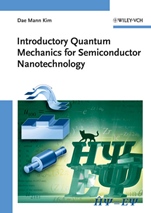
Introductory Quantum Mechanics for Semiconductor Nanotechnology
ISBN 9783527409754
Autor: Dae Mann Kim
Wydawca: Wiley
Dostępność: 3-6 tygodni
Cena: 882,00 zł
Przed złożeniem zamówienia prosimy o kontakt mailowy celem potwierdzenia ceny.
ISBN13: |
9783527409754 |
ISBN10: |
3527409750 |
Autor: |
Dae Mann Kim |
Oprawa: |
Hardback |
Rok Wydania: |
2010-03-24 |
Ilość stron: |
464 |
Wymiary: |
246x179 |
Tematy: |
TG |
The result of the nano education project run by the Korean Nano Technology Initiative, this has been recommended for use as official textbook by the Korean Nanotechnology Research Society. The author is highly experienced in teaching both physics and engineering in academia and industry, and naturally adopts an interdisciplinary approach here. He is short on formulations but long on applications, allowing students to understand the essential workings of quantum mechanics without spending too much time covering the wide realms of physics.
He takes care to provide sufficient technical background and motivation for students to pursue further studies of advanced quantum mechanics and stresses the importance of translating quantum insights into useful and tangible innovations and inventions.
As such, this is the only work to cover semiconductor nanotechnology from the perspective of introductory quantum mechanics, with applications including mainstream semiconductor technologies as well as (nano)devices, ranging from photodetectors, laser diodes, and solar cells to transistors and Schottky contacts.
Problems are also provided to test the reader′s understanding and supplementary material available includes working presentation files, solutions and instructors manuals.
Spis treści:
BRIEF REVIEW OF CLASSICAL THEORIES
Harmonic Oscillator
Boltzmann Transport Equation
Maxwell′s Equations
MILESTONE DISCOVERIES AND OLD QUANTUM THEORY
Blackbody Radiation and Quantum of Energy
Specific Heat of Solids
Photoelectric Effects
Compton Scattering
Duality of Matter
Bohr?s H–Atom Theory
SCHRODINGER EQUATION AND OPERATOR ALGEBRA
Schrodinger Equation
Momentum Eigenfunction and Fourier Series
Hermitian Operator and Bra Ket Notations
Orthgonality and Completeness of Eigenfunctions
Basic Postulates of Quantum Mechanics
Commutation Relations
Conjugate Variables and Uncertainty Relati
on
Operator Equation of Motion and Ehrenfest Theorem
PARTICLE IN POTENTIAL WELL
Infinite Square Well Potential
Particle in 3–D Box
Density of States: 1–D, 2–D and 3–D
Particle in Quantum Well
Particle in Delta Function Potential Well
Quantum Well and Wire
SCATTERING OF A PARTICLE AT 1–D POTENTIALS
Scattering at Step Potential
Scattering at Quantum Well
TUNNELING AND ITS APPLICATIONS
Tunneling across Square Potential Barrier
Fowler–Nordheim and Direct Tunneling
Resonant Tunneling
The Applications of Tunneling
PERIODIC POTENTIALS AND ENERGY BANDS
1–D Crystal and Kronig–Penny Model
E–k Dispersion and Energy Bands
Energy Bands and Resonant Tunneling
THE HARMONIC OSCILLATOR
Energy Eigenequation
The Properties of Energy Eigenfunction
The Operator Treatment
THE ANGULAR MOMENTUM
Angualr Momentum Operators
Eigenfunctions and Spherical Harmonics
THE HYDROGEN ATOM: THE SCHRODINGER TREATMENT
Two–Body Central Force Problem
The Hydrogen Atom
The Atomic Orbital
Virial Theorm and Doppler Shift
SYSTEM OF IDENTICAL PARTICLES AND MANY–ELECTRON ATOMS
Two Electron System
Two Spin 1/2 System
The Helium Atom
The Periodic Table and the Structure of Atoms
MOLECULES AND CHEMICAL BONDS
The Ionized Hydrogen Molecule
The Hydrogen Molecule
Ionic Bond and Van der Waals Attraction
THE PERTURBATION THEORY
Time Independent Perturbation in Non–Degenerate Systems
Time Dependent Perturbation Theory
ATOM –
FIELD INTERACTION
Field Quantization
Atom –
Field Interaction
Driven, Damped Two Level Atom
INTERACTION BETWEEN EM WAVES AND OPTICAL MEDIA
Attenuation and Dispersion of Waves
Density Matrix and Ensemble Averaging
Laser Devices
QUANTUM STATISTICS
General Background and Three Kinds of Particles
Statistics for Distinguishable particles
Stati
stics for Fermions and Fermi Distribution Function
Statistics for Boson and Bose Einstein Distribution
SEMICONDUCTOR STATISTICS
Carrier Densities in Intrinsic Semiconductors
Carrier Densities in Extrinsic Semiconductors
Fermi Level in Extrinsic Semiconductors
CHARGE TRANSPORT IN SEMICONDUCTORS
Drift and Diffusion Currents
Transport Coefficients
Equilibrium and Non–Equilibrium
Recombination and Generation Currents
P–N JUNCTION DIODE
The Junction Interface in Equilibrium
The Junction Interface Under Bias
The Diode I–V
Applications of P–N Junction Diodes
THE BIPOLAR JUNCTION TRANSISTOR: DEVICE PHYSICS AND TECHNOLOGY
Bipolar Junction Transistor: Overview
The Physics of Transistor Action
Ebers Moll Equations
Base Transit Time and Charge Control Model
METAL OXIDE SILICON FIELD EFFECT TRANSISTORS (MOSFET) I: OVERVIEW OF DEVICE BEHAVIOR AND APPLICATIONS
MOSFET: Overview
Charge Control and Metal–Oxide–Silicon System
NMOS I–V
Applications of MOSFET
METAL OXIDE SILICON FIELD EFFECT TRANSISTORS (MOSFET) II: DEVICE SCALING AND SCHOTTKY CONTACT
Device Scaling: Physical issues and Limitations
Metal –
Semiconductor Contacts
The I–V Behavior in Metal –
Semiconductor Contacts
Nota biograficzna:
Dae Mann Kim is Professor of Computational Sciences, Korea Institute for Advanced Study. A physicist by training (PhD in physics, Yale University) but an engineer by profession, Kim started his teaching career at Rice University before moving to Oregon Graduate Institute of Science and Technology and later to POSTECH (S. Korea). He has over 25 years experience teaching quantum mechanics to senior students from engineering, materials science and physics departments. In the last three 3 years he has been teaching quantum mechanics for nanotechnology to entering graduate students at the Advanced Institute for Nano Technology,
Sungkyunkwan University, Korea. Collaborating extensively with industrial labs over the years, Kim offered short courses to working engineers at Samsung and LG while on sabbatical there. Professor Kim has served as the chair of the curriculum committee of the Korean Nano Technology Research Society, which is entrusted with writing textbooks on quantum mechanics, and nanoscience and technology. Kim has over 100 publications on the quantum theory of lasers, quantum electronics and micro and nano electronics. He is a Fellow of the Korean Academy of Science and Technology and has also served as Associate Editor of IEEE Transactions on Circuits and Systems Video Technology.
Koszyk
Książek w koszyku: 0 szt.
Wartość zakupów: 0,00 zł
Informacje


Kontakt
Gambit
Centrum Oprogramowania
i Szkoleń Sp. z o.o.
Al. Pokoju 29b/22-24
31-564 Kraków
Siedziba Księgarni
ul. Kordylewskiego 1
31-542 Kraków
+48 12 410 5991
+48 12 410 5987
+48 12 410 5989
Subskrypcje
Administratorem danych osobowych jest firma Gambit COiS Sp. z o.o. Na podany adres będzie wysyłany wyłącznie biuletyn informacyjny.
Autoryzacja płatności

Informacje na temat autoryzacji płatności poprzez PayU.

© Copyright 2012: GAMBIT COiS Sp. z o.o. Wszelkie prawa zastrzeżone.
Projekt i wykonanie: Alchemia Studio Reklamy