


Wydawcy
Katalog tematyczny
- Archeologia (109)
- Ekonomia, finanse, business (13704)
- Filozofia (1445)
- Historia (3040)
- Języki i językoznawstwo (2356)
- Lifestyle, hobby i rozrywka (475)
- Medycyna (9704)
- Nauki humanistyczne (4)
- Nauki o Ziemi i środowisku (2638)
- Nauki ścisłe (20412)
- Astronomia (294)
- Biologia (5119)
- Chemia (6540)
- Fizyka (3309)
- Elektryczność i magnetyzm (90)
- Fizyka atomowa i molekularna (110)
- Fizyka cząstek elementarnych (36)
- Fizyka jądra atomowego (36)
- Fizyka kwantowa (210)
- Fizyka matematyczna (121)
- Fizyka relatywistyczna (36)
- Fizyka statystyczna (51)
- Fizyka stosowana (498)
- Mechanika klasyczna (186)
- Optyka i światło (133)
- Stany materii (202)
- Matematyka (4574)
- Nauki ścisłe, ogólnie (503)
- Nauki społeczne (8486)
- Nauki techniczne (13450)
- Prawo (1696)
- Publikacje informacyjne i interdyscyplinarne (1288)
- Religia i wierzenia (917)
- Technika komputerowa (4067)
- Zdrowie, relacje międzyludzkie i rozwój osobisty (657)





Informacje szczegółowe o książce
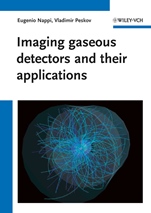
Imaging gaseous detectors and their applications
ISBN 9783527408986
Autor: Eugenio Nappi, Vladimir Peskov
Wydawca: Wiley
Dostępność: 3-6 tygodni
Cena: 757,05 zł
Przed złożeniem zamówienia prosimy o kontakt mailowy celem potwierdzenia ceny.
ISBN13: |
9783527408986 |
ISBN10: |
3527408983 |
Autor: |
Eugenio Nappi, Vladimir Peskov |
Oprawa: |
Hardback |
Rok Wydania: |
2013-01-16 |
Ilość stron: |
356 |
Wymiary: |
249x176 |
Tematy: |
PH |
This authored title gives a comprehensive description of moderngaseous
detectors of photons and charged particles, a technology anddevices
widely used in physics experiments and industrial applications. Inthe
last decade, a new generation of position–sensitive gaseousdetectors
has appeared: the micropattern gaseous detectors, which areinspiring
and stimulating new directions in all the fields where imagingtechniques
are exploited.
From the contents:
?? Imaging of photons and charged particles
?? Basic physics processes occurring in gaseous detectors
?? Traditional position–sensitive gaseous detectors and theirhistorical development
?? MWPC era
?? Parallel Plate Avalanche Chambers and Resistive PlateChambers
?? Micropattern gaseous detectors
?? Applications of imaging gaseous detectors
I. Introduction
I.1. Why is it necessary to detect photons and charged particles?
(from the structure of the matter and universe to practical applications)
I.2. Principle of radiation interaction with gases
I.3. History of developments and traditional position–sensitive gaseous detectors:
a) Spark chambers
b) Multi–wire proportional chambers. Why multi–wire proportional chambers revolutionized the detector developments?
c) Parallel–plate chambers
d) Resistive plate chambers (RPCs)
e) Time–projection chambers
f) Gas scintillation detectors and light emission chambers
II. Operational Physics of Gaseous Detectors
1. Townsend avalanches
2. Proportional mode of operation
3. Physics of photon and ion feedbacks
4. Geiger mode of operation
5. Streamers and breakdowns
6. Maximum achievable gas gains and the Raether limit
7. Operation at very high counting rates and the cathode excitement effect
8. Optimization of gas mixtures for the needs of particular measurements or requirements.
III. Recent Developments
III.1.Photosensitive gaseous detectors
1. Multi–wire chambers filled with photosensitive gases
2. Multi–wire and parallel–plate chambers combined with solid photocathodes
III.2. Micropattern gaseous detectors–a new revolution in the detector developments
1. Microstrip gas chambers
2. Microdot gas chambers
3. Microgap parallel–plate chambers and MICROMEGAS
4. Capillary plates, GEMs, GEMs with resistive electrodes
5. LEAK detector and other new designs of micropattern gaseous detectors
6. Operational physics of micropattern gaseous detectors
a) What determines the maximum achievable gain in the micropattern gaseous detectors?
b) Raether limit in the case of the micropattern detectors
c) Cathode excitement effect
7. New possibilities in measurements offered by micropattern gaseous detectors
a) Very high position resolution detectors
b) Micropattern photo–detectors
IV. Applications of Position–Sensitive Gaseous Detectors
1. High energy physics (latest applications of position gaseous detectors in high energy physics experiments for tracking, muon detection and Cherenkov light detection)
2. Astrophysics and search of dark matter (flight and ground experiments)
3. Plasma diagnostics
4. Medicine and biology (full body x–ray scanners, heart diagnostics, mammographic scanners, portal imaging devices for advanced radiotherapy, biological imaging devices, PETs (RPC and high pressure capillary tubes)
5. Industrial and homeland security (crystallographic industrial imaging devices, airport x–ray scanners, muon tomography, UV visualization; recent developments: Rn and Po monitors, detectors of flames and dangerous gases)
V. Conclusions
The role of gaseous detectors in the greatest scientific discoveries, important applications, their possible future and their place with respect to other position–sensitive detectors (solid state, vacuum, liquid?).
Dr. Eugenio Nappi is Director of Research at the INFN (Italian Institute for Research in Nuclear Physics). Since the beginning of his career, he has had a keen interest in the experimental aspects of CERN′s physics program of ultra–relativistic collisions of heavy ions at the SPS and subsequently, in the conception and development of the ALICE experiment at the LHC. He is the author and co–author of more than 200 papers published in international journals as well as member of the International Scientific Advisory and Organizing Committees in several conferences and workshops on nuclear physics instrumentation.
Prof. Vladimir Peskov is a chief scientist at the Institute for Chemical Physics Russian Academy of Sciences (RAS). He worked in the Physics Laboratory RAS led by P. L. Kapitza where he discovered and studied a new type of plasma instability. In 1986 he obtained an Associate Scientist position at CERN in G. Charpak′s group and later spent most of his career working at various Scientific Institutions (CERN, Fermi National Laboratory, NASA and the Royal Institute of Technology, Sweden) on the instrumentation for high energy physics, astrophysics and medicine. He is the author and co–author of more than one hundred publications and twelve International Patents, member of the International Scientific Advisory and Organizing Committees in several conferences and workshops on instrumentation for high energy physics.
"Each of us will find in this book some corner of our ownmemory, the significance of our own gaseous detector in recent andcurrent experiments, together with a touch of the new in exploringthe many possible applications of gas counters in medicine, biologyor homeland security and when closing the book thecompelling need to stay in the lab. Chapeau!." (CERN Courier, 26 April 2013)
Koszyk
Książek w koszyku: 0 szt.
Wartość zakupów: 0,00 zł
Informacje


Kontakt
Gambit
Centrum Oprogramowania
i Szkoleń Sp. z o.o.
Al. Pokoju 29b/22-24
31-564 Kraków
Siedziba Księgarni
ul. Kordylewskiego 1
31-542 Kraków
+48 12 410 5991
+48 12 410 5987
+48 12 410 5989
Subskrypcje
Administratorem danych osobowych jest firma Gambit COiS Sp. z o.o. Na podany adres będzie wysyłany wyłącznie biuletyn informacyjny.
Autoryzacja płatności

Informacje na temat autoryzacji płatności poprzez PayU.

© Copyright 2012: GAMBIT COiS Sp. z o.o. Wszelkie prawa zastrzeżone.
Projekt i wykonanie: Alchemia Studio Reklamy