


Wydawcy
Katalog tematyczny
- Archeologia (109)
- Ekonomia, finanse, business (13704)
- Filozofia (1445)
- Historia (3040)
- Języki i językoznawstwo (2356)
- Lifestyle, hobby i rozrywka (475)
- Medycyna (9704)
- Nauki humanistyczne (4)
- Nauki o Ziemi i środowisku (2638)
- Nauki ścisłe (20412)
- Astronomia (294)
- Biologia (5119)
- Chemia (6540)
- Fizyka (3309)
- Elektryczność i magnetyzm (90)
- Fizyka atomowa i molekularna (110)
- Fizyka cząstek elementarnych (36)
- Fizyka jądra atomowego (36)
- Fizyka kwantowa (210)
- Fizyka matematyczna (121)
- Fizyka relatywistyczna (36)
- Fizyka statystyczna (51)
- Fizyka stosowana (498)
- Mechanika klasyczna (186)
- Optyka i światło (133)
- Stany materii (202)
- Matematyka (4574)
- Nauki ścisłe, ogólnie (503)
- Nauki społeczne (8486)
- Nauki techniczne (13450)
- Prawo (1696)
- Publikacje informacyjne i interdyscyplinarne (1288)
- Religia i wierzenia (917)
- Technika komputerowa (4067)
- Zdrowie, relacje międzyludzkie i rozwój osobisty (657)





Informacje szczegółowe o książce
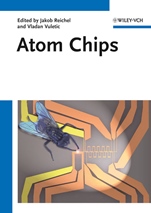
Atom Chips
ISBN 9783527407552
Autor: Jakob Reichel, Vladan Vuletic
Wydawca: Wiley
Dostępność: 3-6 tygodni
Cena: 715,05 zł
Przed złożeniem zamówienia prosimy o kontakt mailowy celem potwierdzenia ceny.
ISBN13: |
9783527407552 |
ISBN10: |
3527407553 |
Autor: |
Jakob Reichel, Vladan Vuletic |
Oprawa: |
Hardback |
Rok Wydania: |
2011-02-09 |
Ilość stron: |
445 |
Wymiary: |
245x181 |
Tematy: |
PH |
This book provides a stimulating and multifaceted picture of a rapidly developing field. The first part reviews fundamentals of atom chip research in tutorial style, while subsequent parts focus on the topics of atom–surface interaction, coherence on atom chips, and possible future directions of atom chip research. The articles are written by leading researchers in the field in their characteristic and individual styles.
Spis treści:
Preface.
List of Contributors.
Part One Fundamentals.
1 From Magnetic Mirrors to Atom Chips (Andrei Sidorov and Peter Hannaford).
1.1 Introduction.
1.2 Historical Background.
1.3 Magnetic Mirrors for Cold Atoms.
1.4 The Magnetic Film Atom Chip.
1.5 Permanent Magnetic Lattice on a Magnetic Film Atom Chip.
1.6 Summary and Conclusions.
References.
2 Trapping and Manipulating Atoms on Chips (Jakob Reichel).
2.1 Introduction.
2.2 Overview of Trapping Techniques.
2.3 Magnetic Traps for Neutral Atoms.
2.4 The Design of Wire Patterns for Magnetic Potentials.
2.5 Real Wires: Roughness and Maximum Current.
2.6 Loading Techniques.
2.7 Vacuum Cells.
2.8 Conclusion and Outlook.
References.
3 Atom Chip Fabrication (Ron Folman, Philipp Treutlein and Jörg Schmiedmayer).
3.1 Introduction.
3.2 Fabrication Challenges.
3.3 The Substrate.
3.4 Lithography.
3.5 Metallic Layers.
3.6 Additional Features.
3.7 Current Densities and Tests.
3.8 Photonics on Atom Chips.
3.9 Chip Dicing, Mounting, and Bonding.
3.10 Further Integration and Portability.
3.11 Conclusion and Outlook.
References.
Part Two Ultracold Atoms near a Surface.
4 Atoms at Micrometer Distances from a Macroscopic Body (Stefan Scheel and E.A. Hinds).
4.1 Introduction.
4.2 Principles of QED in Dielectrics.
4.3 Relaxation Rates near a Surface.
4.4 Casimir–Pol
der Forces.
4.5 Closing Remarks.
References.
5 Interaction of Atoms, Ions, and Molecules with Surfaces (Carsten Henkel).
5.1 Qualitative Overview.
5.2 Interaction Potentials.
5.3 Surface–Induced Atomic Transitions.
5.4 Perspectives.
References.
Part Three Coherence on Atom Chips.
6 Diffraction and Interference of a Bose–Einstein Condensate Scattered from an Atom Chip–Based Magnetic Lattice (A. Günther, T.E. Judd, J. Fortágh and C. Zimmermann).
6.1 Introduction.
6.2 Experimental Setup.
6.3 The Magnetic Lattice Potential.
6.4 Diffraction and Interference.
6.5 Ballistic Expansion and Phase Imprinting.
6.6 Experimental Results.
6.7 Effect of Atomic Interactions.
6.8 Conclusion.
References.
7 Interferometry with Bose–Einstein Condensates on Atom Chips (Thorsten Schumm, Stephanie Manz, Robert Bücker, David A. Smith and Jörg Schmiedmayer).
7.1 Introduction.
7.2 Atom Chip BEC Splitters Based on Static Fields.
7.3 Atom Chip BEC Splitters Based on Dressed Adiabatic Potentials.
7.4 Matter–Wave Interferometry with Bose–Einstein Condensates.
7.5 Interferometry with 1D quasi condensates.
7.6 Summary and Outlook.
References.
8 Microchip–Based Trapped–Atom Clocks (Vladan Vuletić, Ian D. Leroux and Monika H. Schleier–Smith).
8.1 Basic Principles.
8.2 Atomic–Fountain versus Trapped–Atom Clocks.
8.3 Optical–Transition Clocks versus Microwave Clocks.
8.4 Clocks with Magnetically Trapped Atoms: Fundamental Limits to Performance.
8.5 Clocks with Magnetically Trapped Atoms: Experimental Demonstrations.
8.6 Readout in Trapped–Atom Clocks.
8.7 Spin Squeezing.
References.
9 Quantum Information Processing with Atom Chips (Philipp Treutlein, Antonio Negretti and Tommaso Calarco).
9.1 Introduction.
9.2 Ingredients for QIP with Atom Chips.
9.3 Qubit States with Long Coherence Lifetime.
9.4 Qubit Rotations (Single–Qubit Gates) .
9.5 Single–Qubit Readout (Single–Atom Detection).
9.6 Single–Qubit Preparation (Single–Atom Preparation).
9.7 Conditional Dynamics (Two–Qubit Gates).
9.8 Hybrid Approaches to QIP on a Chip.
9.9 Conclusion and Outlook.
References.
Part Four New Directions.
10 Cryogenic Atom Chips (Gilles Nogues, Adrian Lupaşcu, Andreas Emmert, Michel Brune, Jean–Michel
Raimond and Serge Haroche).
10.1 Introduction.
10.2 Superconducting Atom Chip Setup: Similarities and Differences with Conventional Atom Chips.
10.3 Perspectives for Cryogenic Atom Chips: A New Realm of Investigations.
10.4 Conclusion.
References.
11 Atom Chips and One–Dimensional Bose Gases (I. Bouchoule, N.J. van Druten and C.I. Westbrook).
11.1 Introduction.
11.2 Regimes of One–Dimensional Gases.
11.3 1D Gases in the Real World.
11.4 Experiments.
11.5 Conclusion.
References.
12 Fermions on Atom Chips (Marcius H.T. Extavour, Lindsay J. LeBlanc, Jason McKeever, Alma B.
Bardon, Seth Aubin, Stefan Myrskog, Thorsten Schumm and Joseph H. Thywissen).
12.1 Introduction.
12.2 Theory of Ideal Fermi Gases.
12.3 The Atom Chip.
12.4 Loading the Microtrap.
12.5 Rapid Sympathetic Cooling of a K–Rb Mixture.
12.6 Species–Selective RF Manipulation.
12.7 Fermions in an Optical Dipole Trap near an Atom Chip.
12.8 Discussion and Future Outlook.
References.
13 Micro–Fabricated Chip Traps for Ions (J.M. Amini, J. Britton, D. Leibfried and D.J. Wineland).
13.1 Introduction.
13.2 Radio–Frequency Ion Traps.
13.3 Design Considerations for Paul Traps.
13.4 Measuring Heating Rates.
13.5 Multiple Trapping Zones.
13.6 Trap Model
ing.
13.7 Trap Examples.
13.8 Future.
References.
Index.
Nota biograficzna:
Jakob Reichel is a member of the Laboratoire Kastler Brossel of the Ecole Normale Supérieure (E.N.S.) and professor of physics at the Université Pierre et Marie Curie in Paris. After studies in Bonn and Munich, he entered the field of ultracold atoms with a PhD at the E.N.S. in Paris. He then joined the team of T. W. Hänsch in Munich and started developing what is now known as atom chips. Having obtained a European Young Investigator Award (EURYI) and a Chaire d′Excellence of the French Government, he crossed borders once again and took up his current position in Paris in 2004. His group currently explores the applications of atom chips in quantum information and precision metrology.
Vladan Vuletic received his Ph.D. degree in physics from the Ludwig–Maximilians–Universität Munich. While a postdoctoral researcher with the Max–Planck Institute for Quantum Optics in Garching, Germany, Professor Vuletic accepted a Lynen Fellowship at Stanford University in 1997. In 2000, he was appointed an Assistant Professor in the Department of Physics at Stanford and in 2003 accepted an Assistant Professorship in Physics at MIT. He was promoted to Associate Professor in 2004. Recent awards include a 2003 to 2004 Alfred P. Sloan Research Fellowship and the Lester Wolfe Career Development Chair at MIT.
Okładka tylna:
This book provides a stimulating and multifaceted picture of a rapidly developing field. The first part reviews fundamentals of atom chip research in tutorial style, while subsequent parts focus on the topics of atom–surface interaction, coherence on atom chips, and possible future directions of atom chip research. The articles are written by leading researchers in the field in their characteristic and individual styles.
Koszyk
Książek w koszyku: 0 szt.
Wartość zakupów: 0,00 zł
Informacje


Kontakt
Gambit
Centrum Oprogramowania
i Szkoleń Sp. z o.o.
Al. Pokoju 29b/22-24
31-564 Kraków
Siedziba Księgarni
ul. Kordylewskiego 1
31-542 Kraków
+48 12 410 5991
+48 12 410 5987
+48 12 410 5989
Subskrypcje
Administratorem danych osobowych jest firma Gambit COiS Sp. z o.o. Na podany adres będzie wysyłany wyłącznie biuletyn informacyjny.
Autoryzacja płatności

Informacje na temat autoryzacji płatności poprzez PayU.

© Copyright 2012: GAMBIT COiS Sp. z o.o. Wszelkie prawa zastrzeżone.
Projekt i wykonanie: Alchemia Studio Reklamy