


Wydawcy
Katalog tematyczny
- Archeologia (109)
- Ekonomia, finanse, business (13704)
- Filozofia (1445)
- Historia (3040)
- Języki i językoznawstwo (2356)
- Lifestyle, hobby i rozrywka (475)
- Medycyna (9704)
- Nauki humanistyczne (4)
- Nauki o Ziemi i środowisku (2638)
- Nauki ścisłe (20412)
- Astronomia (294)
- Biologia (5119)
- Chemia (6540)
- Fizyka (3309)
- Elektryczność i magnetyzm (90)
- Fizyka atomowa i molekularna (110)
- Fizyka cząstek elementarnych (36)
- Fizyka jądra atomowego (36)
- Fizyka kwantowa (210)
- Fizyka matematyczna (121)
- Fizyka relatywistyczna (36)
- Fizyka statystyczna (51)
- Fizyka stosowana (498)
- Mechanika klasyczna (186)
- Optyka i światło (133)
- Stany materii (202)
- Matematyka (4574)
- Nauki ścisłe, ogólnie (503)
- Nauki społeczne (8486)
- Nauki techniczne (13450)
- Prawo (1696)
- Publikacje informacyjne i interdyscyplinarne (1288)
- Religia i wierzenia (917)
- Technika komputerowa (4067)
- Zdrowie, relacje międzyludzkie i rozwój osobisty (657)





Informacje szczegółowe o książce
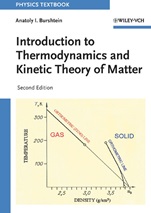
Introduction to Thermodynamics and Kinetic Theory of Matter
ISBN 9783527405985
Autor: Anatoly I. Burshtein
Wydawca: Wiley
Dostępność: 3-6 tygodni
Cena: 702,45 zł
Przed złożeniem zamówienia prosimy o kontakt mailowy celem potwierdzenia ceny.
ISBN13: |
9783527405985 |
ISBN10: |
3527405984 |
Autor: |
Anatoly I. Burshtein |
Oprawa: |
Paperback |
Rok Wydania: |
2005-03-04 |
Numer Wydania: |
2nd Edition |
Ilość stron: |
349 |
Wymiary: |
240x176 |
Tematy: |
PH |
An updated and expanded translation of the highly popular Russian textbook, Introduction to Thermodynamics and Kinetic Theory of Matter examines equilibrium and kinetic properties of matter – gas, liquid, and solid – using the general principles of thermodynamics and kinetic theory. Readable and accessible throughout, this book provides both thermodynamic and statistical points of view, covering thermodynamic potentials, such as entropy and free energy, whenever relevant.
The book takes a fresh approach to its subject matter, focusing equally on condensed matter and gases. It compares rarefied and condensed matter, classical and quantum systems, and real and ideal gases. Central to the book are intermolecular interactions, and the process by which they lead matter into a change of state. The author discusses the solid, crystalline phase, showing how it can be manipulated by lattice vibration as well as by thermal pressure. In addition, this is the only book in which the quasi–thermodynamic theory of gas/liquid interface is used for density profile calculation within the van der Waals theory of surface tension.
Another major theme investigated here is the irreversible transfer properties of matter, such as diffusion and viscosity, heat and electric conductivity. The book presents the hypothesis of "local equilibrium," which facilitates the calculation of the fluxes of matter, heat, or charge – comparing them and predicting the resultant density and temperature dependencies of transport coefficients. Examples from situations when local equilibrium is absent are also included.
Finally, the book covers all reversible processes subject to the principles of thermodynamics. This is especially useful in experimental applications –optimizing the work of heat engines and pumps; providing methods for the condensation of gases into liquids; and explaining various phenomena such as phase equilibrium and transitions, surface tension, a
nd thermal radiation.
Addressing a broad audience, and using inductive logic and many illustrations, Introduction to Thermodynamics and Kinetic Theory of Matter leads the reader from basic phenomena to advanced models, and provides from the outset opportunities for experimental work in related fields of physics and physical chemistry.
This highly original book about the kinetic properties of the microparticles constituting gases, liquids, and solids – as well as light – is an updated version of a very popular Russian text. Dealing with areas of molecular physics, this edition updates all information, covering elementary statistical mechanics and kinetic theory, and expanding the Russian text to include thermodynamics.
Particularly innovative are the methods – exclusive to this book – for calculating surface structure within quasi–thermodynamics. Also unique is the comparison between rarefied and condensed matter, which is not offered in any other text.
Addressing both students and advanced researchers, the book assumes only a general math and classical mechanics background, allowing the reader to progress quickly from the introductory material to complex topics. It provides:
Rigorous quantitative treatment of all phenomena, useful for starting experiments in related fields of physics and physical chemistryComprehensive coverage of molecular and photon gases, liquids and solids – for students and faculty in physicsA unique treatment of solid and liquid equations of state––for researchers in thermophysics and physical chemistry150 illustrations and references on experimental data for equations of state, orthometric curves, the knots of compressibility factor isotherms, as well as liquid–gas interfaceSeveral of the author′s own original resultsAn extensive list of suggested readings for both fundamental and in–depth study
Spis treści:
Preface.
1. Gases.
2. Radiation.
3. Crystals.
4. Liquids.
5. Thermodynamics.
Bibliography.
Index.
Nota biograficzna:
ANATOLY I. BURSHTEIN is Professor of Chemistry at the Weizmann Institute of Science in Israel. Formerly a professor of physics at Novosibirsk State University in the USSR, he also founded, then headed for two decades, the Theoretical Chemistry Lab in Siberia for the USSR′s Academy of Science. Professor Burshtein has published over 200 articles and eight books, most recently Spectroscopy of Molecular Rotation in Gases and Liquids (1994).
Okładka tylna:
An updated and expanded translation of the highly popular Russian textbook, Introduction to Thermodynamics and Kinetic Theory of Matter examines equilibrium and kinetic properties of matter – gas, liquid, and solid – using the general principles of thermodynamics and kinetic theory. Readable and accessible throughout, this book provides both thermodynamic and statistical points of view, covering thermodynamic potentials, such as entropy and free energy, whenever relevant.
The book takes a fresh approach to its subject matter, focusing equally on condensed matter and gases. It compares rarefied and condensed matter, classical and quantum systems, and real and ideal gases. Central to the book are intermolecular interactions, and the process by which they lead matter into a change of state. The author discusses the solid, crystalline phase, showing how it can be manipulated by lattice vibration as well as by thermal pressure. In addition, this is the only book in which the quasi–thermodynamic theory of gas/liquid interface is used for density profile calculation within the van der Waals theory of surface tension.
Another major theme investigated here is the irreversible transfer properties of matter, such as diffusion and viscosity, heat and electric conductivity. The book presents the hypothesis of "local equil
ibrium," which facilitates the calculation of the fluxes of matter, heat, or charge – comparing them and predicting the resultant density and temperature dependencies of transport coefficients. Examples from situations when local equilibrium is absent are also included.
Finally, the book covers all reversible processes subject to the principles of thermodynamics. This is especially useful in experimental applications –optimizing the work of heat engines and pumps; providing methods for the condensation of gases into liquids; and explaining various phenomena such as phase equilibrium and transitions, surface tension, and thermal radiation.
Addressing a broad audience, and using inductive logic and many illustrations, Introduction to Thermodynamics and Kinetic Theory of Matter leads the reader from basic phenomena to advanced models, and provides from the outset opportunities for experimental work in related fields of physics and physical chemistry.
This highly original book about the kinetic properties of the microparticles constituting gases, liquids, and solids – as well as light – is an updated version of a very popular Russian text. Dealing with areas of molecular physics, this edition updates all information, covering elementary statistical mechanics and kinetic theory, and expanding the Russian text to include thermodynamics.
Particularly innovative are the methods – exclusive to this book – for calculating surface structure within quasi–thermodynamics. Also unique is the comparison between rarefied and condensed matter, which is not offered in any other text.
Addressing both students and advanced researchers, the book assumes only a general math and classical mechanics background, allowing the reader to progress quickly from the introductory material to complex topics. It provides:
Rigorous quantitative treatment of all phenomena, useful for starting experiments in related fields of phys
Koszyk
Książek w koszyku: 0 szt.
Wartość zakupów: 0,00 zł
Informacje


Kontakt
Gambit
Centrum Oprogramowania
i Szkoleń Sp. z o.o.
Al. Pokoju 29b/22-24
31-564 Kraków
Siedziba Księgarni
ul. Kordylewskiego 1
31-542 Kraków
+48 12 410 5991
+48 12 410 5987
+48 12 410 5989
Subskrypcje
Administratorem danych osobowych jest firma Gambit COiS Sp. z o.o. Na podany adres będzie wysyłany wyłącznie biuletyn informacyjny.
Autoryzacja płatności

Informacje na temat autoryzacji płatności poprzez PayU.

© Copyright 2012: GAMBIT COiS Sp. z o.o. Wszelkie prawa zastrzeżone.
Projekt i wykonanie: Alchemia Studio Reklamy