


Wydawcy
Katalog tematyczny
- Archeologia (109)
- Ekonomia, finanse, business (13704)
- Filozofia (1445)
- Historia (3040)
- Języki i językoznawstwo (2356)
- Lifestyle, hobby i rozrywka (475)
- Medycyna (9704)
- Nauki humanistyczne (4)
- Nauki o Ziemi i środowisku (2638)
- Nauki ścisłe (20412)
- Astronomia (294)
- Biologia (5119)
- Chemia (6540)
- Fizyka (3309)
- Elektryczność i magnetyzm (90)
- Fizyka atomowa i molekularna (110)
- Fizyka cząstek elementarnych (36)
- Fizyka jądra atomowego (36)
- Fizyka kwantowa (210)
- Fizyka matematyczna (121)
- Fizyka relatywistyczna (36)
- Fizyka statystyczna (51)
- Fizyka stosowana (498)
- Mechanika klasyczna (186)
- Optyka i światło (133)
- Stany materii (202)
- Matematyka (4574)
- Nauki ścisłe, ogólnie (503)
- Nauki społeczne (8486)
- Nauki techniczne (13450)
- Prawo (1696)
- Publikacje informacyjne i interdyscyplinarne (1288)
- Religia i wierzenia (917)
- Technika komputerowa (4067)
- Zdrowie, relacje międzyludzkie i rozwój osobisty (657)





Informacje szczegółowe o książce
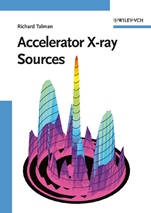
Accelerator X–Ray Sources
ISBN 9783527405909
Autor: Richard Talman
Wydawca: Wiley
Dostępność: 3-6 tygodni
Cena: 1 140,30 zł
Przed złożeniem zamówienia prosimy o kontakt mailowy celem potwierdzenia ceny.
ISBN13: |
9783527405909 |
ISBN10: |
3527405909 |
Autor: |
Richard Talman |
Oprawa: |
Hardback |
Rok Wydania: |
2006-07-21 |
Ilość stron: |
494 |
Wymiary: |
246x187 |
Tematy: |
PH |
This is the first monograph to cover in–depth the production of brilliant x–ray beams in accelerators, with emphasis on fourth generation designs, such as energy recovery linacs (ERL), fast cycling storage rings, and free electron lasers (FEL). Going beyond existing treatments of the influence of synchrotron radiation on accelerator operation, special emphasis is placed on the design of undulator–based beam lines, and the physics of undulator radiation.
Starting from the unified treatment of electron and photon beams both as bunches of particles and as waves, the author proceeds to analyse the main components, from electron gun, through linac and arc lattice, to the x–ray beam line. Designs are given for both an ERL and a more conventional storage ring complex, and their anticipated properties are compared in detail. Space charge effects are analysed with emphasis on coherent sychrotron radiation and emittance dilution. Beam diagnostics using synchrotron radiation or laser wire (Compton scattering) are also analysed in detail.
Written primarily for general, particle, and radiation physicists, the systematic treatment adopted by the work makes it equally suitable as an advanced textbook for young researchers.
Spis treści:
Preface.
1. Beams of Electrons or Photons.
1.1 Preview.
1.2 Coordinate Definitions.
1.3 One–dimensional Transverse Propagation Equations.
1.4 Transfer Matrices for Simple Elements.
1.4.1 Drift Space.
1.4.2 Thin Lens
1.4.3 Thick Lens.
1.4.4 Erect Quadrupole Lens.
1.5 Elliptical (in Phase Space) Beams.
1.6 beam Envelope E (s).
1.7 Gaussian beams: Their Variances and Covariances.
1.8 Pseudoharmonic Trajectory Description.
1.9 Transfer matrix Parametrization.
1.10 Reconciliation of Beam and lattice Parameters.
1.10.1 Beam Evolution Through a Drift Section.
1.10.2 Beam Evolution Through a Thin Lens.
References.
2. Beams Trea
ted as Waves.
2.1 Preview.
2.2 Scalar Wave Equation.
2.3 The Short Wavelength, Geometric Optics Limit.
2.3.1 Determination of Rays from Wavefronts.
2.3.2 The Ray Equation in Geometric Optics.
2.3.3 Obtaining Phase Information from Intensity Measurement.
2.4 Wave Description of Gaussian Beams.
2.4.1 Gaussian Beam in a Focusing Medium.
2.4.2 Spatial Dependence of a Wave near a Free Space Focus.
2.4.3 The ABCD Law.
2.4.4 Optics Using Mirrors.
2.4.5 Wave Particle Duality for Electrons.
2.5 Synchrotron Radiation: Waves or Particles?
2.6 X–ray Holography and Phase Contrast and Lens–free Imaging.
References.
3. Synchrotron Radiation from Accelerator Magnets.
3.1 Capsule History of Synchrotron Light Sources.
3.2 Generalities.
3.3 Potentials and Fields.
3.4 Relations Between Observation Time and Retarded Time.
3.5 Evaluation of Electric and magnetic Fields.
3.5.1 Radial Field Approximation.
3.6 Total Power Radiated and Its Angular Distribution.
3.7 Spectral Power Density of the Radiation.
3.7.1 Estimate of Frequency Spectrum from Pulse Duration.
3.7.2 Radial Approximation.
3.7.3 Accurate Formula for Spectral Power Density.
3.8 Radiation from Multiple Charges.
3.9 The Terminology of “Intensity” Measures.
3.10 Photon Beam Features “Inherited from” the Electron Beam.
3.11 Intensity Estimates for Bending Magnet Beams.
References.
4. Simple Storage Rings.
4.1 Preview.
4.2 The Uniform Field Ring.
4.3 Horizontal Stability.
4.4 Vertical Stability.
4.5 Simultaneous Horizontal and Vertical Stability.
4.6 Dispersion.
4.7 Momentum Compaction.
4.8 Chromaticity.
4.9 Strong Focusing.
5. The Influence of Synchrotron Radiation on a Storage Ring.
5.1 Preview.
5.2 Statistical Properties of Synchrotron Radiation.
5.2.1 Total Energy Radiated.
5.2.2 The Distribution of Photon Energies, “Regu
larized Treatment”.
5.2.3 Randomness of the Radiation.
5.3 The Damping Rate Sum Rule: Robinson’s Theorem.
5.3.1 Vertical Damping.
5.3.2 Longitudinal Damping.
5.3.3 Horizontal Damping and Partition Numbers.
5.4 Equilibrium Between Damping and Fluctuation.
5.5 Horizontal Equilibrium and Beam Width.
5.6 Longitudinal Bunch Distributions.
5.6.1 Energy Spread.
5.6.2 Bunch Length.
5.7 “Thermodynamics” of Wiggler–dominated Storage Rings.
5.7.1 Emittance of Pure Wiggler Lattice.
5.7.2 Thermodynamic Analogy.
References.
6. Elementary Theory of Linacs.
6.1 Acknowledgement and Preview.
6.2 The Nonrelativistic Linac.
6.2.1 Transit Time factor.
6.2.2 Shunt Impendence.
6.2.3 Cavity Q, R/Q, and Decay Time.
6.2.4 Phase Stability and Adiabatic Damping.
6.2.5 Transverse Defocusing.
6.3 The Relativistic Electron Linac.
6.3.1 Introduction.
6.3.2 Particle Acceleration by a Wave.
6.3.3 Wave Confined by Parallel Planes.
6.3.4 Circular Waveguide.
6.3.5 Cylindrical “Pill–box” Resonator.
6.3.6 Lumped Constant Model for One cavity Resonance.
6.3.7 Cavity Excitation.
6.3.8 Wave Propagation in Coupled Resonator Chain.
6.3.9 Periodically Loaded Structures.
6.3.10 Space Harmonics.
7. Undulator Radiation.
7.1 Preview.
7.2 Introduction.
7.3 Electron Orbit in a Wiggler or Undulator.
7.4 Energy Radiated From One Wiggler Pole.
7.5 Spectral Analysis for Arbitrary Longitudinal Field Profile.
7.6 Spectrum of the Radiation from a Single Pole.
7.6.1 Orbit Treated as Arc of Circle.
7.6.2 Radiation from a Single, Short, Isolated, Magnet, K<< 1.
7.7 Coherence from Multiple Deflections.
7.8 Phasor Summation for K << 1.
7.9 Photon Energy Distributions.
7.9.1 Energy Distribution from the n = 1 Undulator Fundamental.
7.10 Undulator Radiation for Arbitrary K Value.
7.10.1 Analy
tic Formulation.
7.10.2 Diffraction Grating Analogy.
7.10.3 Numerical/Graphical Representation of Undulator Radiation.
7.10.4 Approximation of the Integrals by Special Functions.
7.10.5 Practical Evaluation of the Series.
7.11 Post–Monochromator Profile.
7.11.1 Monochromatic Annular Rings.
7.11.2 Numerical Investigation of Undulator Rings.
7.11.3 Is the forward Undulator Peak Subject to Angular Narrowing?
References.
8. Undulator Magnets.
8.1 Preview.
8.2 Considerations Governing Undulator Parameters.
8.3 Simplified radiation Formulas.
8.4 A Hybrid, Electro–permanent, Asymmetric Undulator.
8.4.1 Electromagnet Design.
8.4.2 Permanent magnet Design—Small Gap Limit.
8.4.3 Combined Electro–/Permanent – Magnet Design.
8.4.4 Estimated X–ray Flux.
References.
9. X–Ray Beam Line Design.
9.1 Preview.
9.2 Beam Line Generalities.
9.3 Accelerator Parameters.
9.4 Bragg Scattering and Darwin Width.
9.5 Aperture–defined Beam Line Design.
9.5.1 Undulator Radiation, n = 1, Negligible Electron Divergence.
9.5.2 Effect of Electron Beam Emittances on Flux and Brilliance.
9.5.3 Brilliance with K > 1 and n > 1.
9.6 X–ray Mirrors.
9.6.1 Specular Reflection of X–rays.
9.6.2 Elliptical Mirrors.
9.6.3 Hyperbolic Mirrors.
9.7 X–ray Lenses.
9.7.1 Monochromatic X–ray Lens.
9.7.2 Focusing a Monochromatic Undulator, Radiation Ring.
9.7.3 Undulator–specific X–ray Lens.
9.7.4 Lens Quality.
9.8 Beam Cameras.
9.8.1 The Pin–hole Camera.
9.8.2 Imaging the Beam with Visible Light.
9.8.3 Practicality of Lens–based, X–ray Beam Camera?
9.9 Aperture–free X–ray Beam Line Design.
9.9.1 Aperture–free Rationale.
9.9.2 Aperture–free Microbeam Line Based on Lenses.
9.9.3 Effective Lens Stop Caused by Absorption.
9.9.4 Choice
Koszyk
Książek w koszyku: 0 szt.
Wartość zakupów: 0,00 zł
Informacje


Kontakt
Gambit
Centrum Oprogramowania
i Szkoleń Sp. z o.o.
Al. Pokoju 29b/22-24
31-564 Kraków
Siedziba Księgarni
ul. Kordylewskiego 1
31-542 Kraków
+48 12 410 5991
+48 12 410 5987
+48 12 410 5989
Subskrypcje
Administratorem danych osobowych jest firma Gambit COiS Sp. z o.o. Na podany adres będzie wysyłany wyłącznie biuletyn informacyjny.
Autoryzacja płatności

Informacje na temat autoryzacji płatności poprzez PayU.

© Copyright 2012: GAMBIT COiS Sp. z o.o. Wszelkie prawa zastrzeżone.
Projekt i wykonanie: Alchemia Studio Reklamy