


Wydawcy
Katalog tematyczny
- Archeologia (109)
- Ekonomia, finanse, business (13704)
- Filozofia (1445)
- Historia (3040)
- Języki i językoznawstwo (2356)
- Lifestyle, hobby i rozrywka (475)
- Medycyna (9704)
- Nauki humanistyczne (4)
- Nauki o Ziemi i środowisku (2638)
- Nauki ścisłe (20412)
- Astronomia (294)
- Biologia (5119)
- Chemia (6540)
- Fizyka (3309)
- Elektryczność i magnetyzm (90)
- Fizyka atomowa i molekularna (110)
- Fizyka cząstek elementarnych (36)
- Fizyka jądra atomowego (36)
- Fizyka kwantowa (210)
- Fizyka matematyczna (121)
- Fizyka relatywistyczna (36)
- Fizyka statystyczna (51)
- Fizyka stosowana (498)
- Mechanika klasyczna (186)
- Optyka i światło (133)
- Stany materii (202)
- Matematyka (4574)
- Nauki ścisłe, ogólnie (503)
- Nauki społeczne (8486)
- Nauki techniczne (13450)
- Prawo (1696)
- Publikacje informacyjne i interdyscyplinarne (1288)
- Religia i wierzenia (917)
- Technika komputerowa (4067)
- Zdrowie, relacje międzyludzkie i rozwój osobisty (657)





Informacje szczegółowe o książce
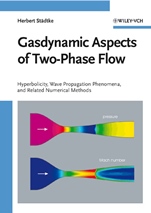
Gasdynamic Aspects of Two–Phase Flow: Hyperbolicity, Wave Propagation Phenomena and Related Numerical Methods
ISBN 9783527405787
Autor: Herbert Staedtke
Wydawca: Wiley
Dostępność: 3-6 tygodni
Cena: 962,85 zł
Przed złożeniem zamówienia prosimy o kontakt mailowy celem potwierdzenia ceny.
ISBN13: |
9783527405787 |
ISBN10: |
352740578X |
Autor: |
Herbert Staedtke |
Oprawa: |
Hardback |
Rok Wydania: |
2006-09-05 |
Ilość stron: |
288 |
Wymiary: |
246x174 |
Tematy: |
PH |
In this book, the author, a researcher of outstanding experience in this field, summarizes and combines the recent results and findings on advanced two–phase flow modeling and numerical methods otherwise dispersed in various journals. At the same time, he explains numerical and modeling techniques which were not previously covered by other books. The resulting systematic and comprehensive monograph is unrivalled in its kind, serving as a reference for both researchers and engineers working in engineering as well as in environmental science.
Spis treści:
Preface.
1 Introduction.
2 Single–Phase Gas Flow.
2.1 Euler equations forone–dimensional flow.
2.2 Quasi–one–dimensional flow in ducts of variable cross section.
2.3 Characteristic analysis of flow equations.
2.4 Shockwaves.
2.5 Flow through convergent–divergent nozzles.
2.6 Shocktube.
2.7 Multidimensional flow conditions.
References.
3 Two–Fluid Model of Two–Phase Flow.
3.1 Balance equations of two fluid model of two–phase flow.
3.2 Single pressure two–fluid model.
3.3 Remarks on interfacial transfer terms.
References.
4 Simplified Two–Phase Flow Models.
4.1 Homogeneous equilibrium model.
4.1.1 Two–component two–phase flow.
4.1.2 One–component two–phase flow.
4.2 Homogeneous nonequilibrium two–phase flow.
4.3 Wallis model.
References.
5 A Hyperbolic Model for Two–Phase Flow.
5.1 One–dimensional flow.
5.1.1 Interfacial momentum coupling terms.
5.1.2 Final form of conservation equations.
5.1.3 Characteristic analysis– eigen values.
5.1.4 Characteristic analysis – eigen vectors and splitting of coefficient matrix.
5.1.5 Homogeneous flow conditions as a limiting case.
5.1.6 Use of conservative variables.
5.1.7 Quasi–one–dimensional
flow through channels of variable cross section.
5.2 Two–dimensional two–phase flow conditions.
5.2.1 Basic flow equations for two–dimensional flow.
5.2.2 Eigen values and split matrices.
5.2.3 Conservative form of flow equations.
5.3 Final remarks to the hyperbolic two–phase flow model.
References.
6 Dispersion of Sound Waves.
6.1 Acoustic approximation of flow equations.
6.2 Dispersion analysis of gas–particle flows.
References.
7 Numerical Methods for Hyperbolic Two–Phase Flow System Equations.
7.1 Mathematical nature of two–phase flow equations.
7.2 Overview on hyperbolic numerical methods.
7.3 The Split Coefficient Matrix method.
7.4 Godunov methods and Approximate Riemann solver.
7.4.1 General Godunov approach.
7.4.2 The linearized Riemann solver.
7.4.3 The Roe solver.
7.5 Flux Vector Splitting method.
References.
8 Remarks on the Advanced Two–Phase Flow Module.
8.1 Basic modeling approach.
8.1.1 Balance equations of two–fluid model.
8.1.2 Flow topology and interfacial area.
8.1.3 Algebraicsourceterms.
8.1.4 State properties.
8.2 Numericalmethod.
8.2.1 Conservative form of flow equations.
8.2.2 Finite volume discretization.
8.2.3 Second–order accuracy.
8.2.4 Implicit time integration.
References.
9 Numerical Results and Applications.
9.1 Phase separation and voidwaves.
9.1.1 Analytical model.
9.1.2 Numerical results.
9.2 U–tube oscillations.
9.2.1 Analytical solution.
9.2.2 Numerical results.
9.3 Pressure wave propagation phenomena.
9.3.1 Single–phase gas flow.
9.3.2 Two–phase flow.
9.4 Shocktube.
9.4.1 Single–phase gas.
9.4.2 Two–phase flow.
9.5 Multidimensional wave propagation and explosion phenomena.
9.5.1 Single–phase gas flow.
9.5.2 Two–phase flow.
9.6 Flow through convergent̵
1;divergent nozzles.
9.6.1 The ASTA Rnozzle.
9.6.2 Deichnozzle tests.
9.6.3 Moby–Dick nozzle tests.
9.7 Blow down phenomena.
9.7.1 Edwards’pipe blow down.
9.7.2 Canonexperiment.
9.7.3 Two–vessel test case.
References.
10 Summary and Concluding Remarks.
Appendices.
A Basic Flow Equations for Two–Fluid Model of Two–Phase Flow.
A.1 Flow topology.
A.1.1 Phase distribution function.
A.1.2 Interfacial properties.
A.1.3 Transport equation for interfacial area.
A.2 Single–phase flow equations.
A.3 Two–phase balance equations.
A.3.1 Balance equation for mass.
A.3.2 Balance equation for momentum.
A.3.3 Balance equation for energy.
A.3.4 Summary of two–phase balance equations.
B Characteristic Analysis of Flow Equations: Vectors and Matrices.
B.1 Single–phase gas flow, one–dimensional conditions.
B.2 Single–phase gas flow, two–dimensional conditions.
B.3 Homogeneous non equilibrium two–phase flow.
B.4 Wallis model.
B.5 Hyperbolic two–phase flow model–one–dimensional conditions.
B.6 Hyperbolic two–phase flow model–two–dimensional conditions.
Index.
Nota biograficzna:
Dr. Herbert Städtke has been working in the field of two–phase flow systems for 37 years. Among his posts were positions at the AEG Research Institute, at the Gesellschaft fuer Anlagen– und Reaktorsicherheit (GRS, Society for System and Reactor Safety), and, since 1976, at the European Joint research Centre in Ispra/Italy. He has authored more than 50 scientific technical publications.
Okładka tylna:
In this book, the author, a researcher of outstanding experience in this field, summarizes and combines the recent results and findings on advanced two–phase flow modeling and numerical methods otherwise disper
sed in various journals. At the same time, he explains numerical and modeling techniques which were not previously covered by other books. The resulting systematic and comprehensive monograph is unrivalled in its kind, serving as a reference for both researchers and engineers working in engineering as well as in environmental science.
Koszyk
Książek w koszyku: 0 szt.
Wartość zakupów: 0,00 zł
Informacje


Kontakt
Gambit
Centrum Oprogramowania
i Szkoleń Sp. z o.o.
Al. Pokoju 29b/22-24
31-564 Kraków
Siedziba Księgarni
ul. Kordylewskiego 1
31-542 Kraków
+48 12 410 5991
+48 12 410 5987
+48 12 410 5989
Subskrypcje
Administratorem danych osobowych jest firma Gambit COiS Sp. z o.o. Na podany adres będzie wysyłany wyłącznie biuletyn informacyjny.
Autoryzacja płatności

Informacje na temat autoryzacji płatności poprzez PayU.

© Copyright 2012: GAMBIT COiS Sp. z o.o. Wszelkie prawa zastrzeżone.
Projekt i wykonanie: Alchemia Studio Reklamy