


Wydawcy
Katalog tematyczny
- Archeologia (109)
- Ekonomia, finanse, business (13704)
- Filozofia (1445)
- Historia (3040)
- Języki i językoznawstwo (2356)
- Lifestyle, hobby i rozrywka (475)
- Medycyna (9704)
- Nauki humanistyczne (4)
- Nauki o Ziemi i środowisku (2638)
- Nauki ścisłe (20412)
- Astronomia (294)
- Biologia (5119)
- Chemia (6540)
- Chemia analityczna (361)
- Chemia fizyczna (346)
- Chemia nieorganiczna (137)
- Chemia organiczna (535)
- Krystalografia (27)
- Minerologia (46)
- Fizyka (3309)
- Matematyka (4574)
- Nauki ścisłe, ogólnie (503)
- Nauki społeczne (8486)
- Nauki techniczne (13450)
- Prawo (1696)
- Publikacje informacyjne i interdyscyplinarne (1288)
- Religia i wierzenia (917)
- Technika komputerowa (4067)
- Zdrowie, relacje międzyludzkie i rozwój osobisty (657)





Informacje szczegółowe o książce
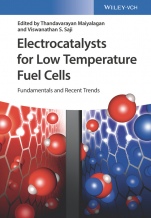
Electrocatalysts for Low Temperature Fuel Cells: Fundamentals and Recent Trends
ISBN 9783527341320
Autor: Thandavarayan Maiyalagan, Viswanathan S. Saji
Wydawca: Wiley
Dostępność: 3-6 tygodni
Cena: 935,55 zł
Przed złożeniem zamówienia prosimy o kontakt mailowy celem potwierdzenia ceny.
ISBN13: |
9783527341320 |
ISBN10: |
3527341323 |
Autor: |
Thandavarayan Maiyalagan, Viswanathan S. Saji |
Oprawa: |
Hardback |
Rok Wydania: |
2017-07-05 |
Ilość stron: |
616 |
Wymiary: |
247x176 |
Tematy: |
PN |
Meeting the need for a text on solutions to conditions which have so far been a drawback for this important and trend–setting technology, this monograph places special emphasis on novel, alternative catalysts of low temperature fuel cells. Comprehensive in its coverage, the text discusses not only the electrochemical, mechanistic, and material scientific background, but also provides extensive chapters on the design and fabrication of electrocatalysts.
A valuable resource aimed at multidisciplinary audiences in the fields of academia and industry.
1. Principle of low temperature fuel cells using an ionic membrane
Claude Lamy
1.1. Introduction
1.2. Thermodynamic data and theoretical energy efficiency under equilibrium (j = 0)
1.3. Electrocatalysis and the rate of electrochemical reactions
1.4. Influence of the properties of the PEMFC components on the polarization curves
1.5. Representative examples of low temperature fuel cells
1.6. Conclusions and outlook
References
2. Research advancements in low temperature fuel cells
N. Rajalakshmi, R. Imran Jafri, and K. S. Dhathathreyan
2.1. Introduction
2.2. Proton exchange membrane fuel cells
2.3. Anion exchange membrane alkaline fuel cells
2.4. Direct borohydride fuel cells
2.5. Regenerative fuel cells
2.6. Conclusions and outlook
References
3. Electrocatalytic reactions involved in low temperature fuel cells
Claude Lamy
3.1. Introduction
3.2. Preparation and characterization of Pt–based pluri–metallic electrocatalysts
3.3. Mechanisms of electrocatalytic reactions involved in low temperature fuel cells
3.4. Conclusions and outlook
References
4. Direct hydrocarbon low temperature fuel cell
Ayan Mukherjee and Suddhasatwa Basu
4.1. Introduction
4.2. Direct methanol fuel cell
4.3. Direct ethanol fuel cell (DEFC)
4.4. Direct ethylene glycol fuel cell (DEGFC)
4.5. Direct formic acid fuel cell
4.6. Direct glucose fuel cell
4.7. Commercialization status
4.8. Conclusions and outlook
References
5. The oscillatory electro–oxidation of small organic molecules
Hamilton Varela, M. V. F. Delmonde and Alana A. Zülke
5.1. Introduction
5.2. In situ and on line approaches
5.3. The effect of temperature
5.4. Modified surfaces
5.5. Conclusions and outlook
References
6. Degradation mechanism of membrane fuel cells with monoplatinum and multicomponent cathode catalysts
Mikhail R. Tarasevich, Vera A. Bogdanovskaya
6.1. Introduction
6.2. Synthesis and methods of studying catalytic systems under model conditions
6.3. Characteristics of commercial and synthesized catalysts
6.4. Methods of testing catalysts within FC MEAs
6.5. Mechanism of degradation phenomena in MEAs with commercial Pt/C catalysts
6.6. Characteristics of MEAs with 40Pt/CNT–T–based cathodes
6.7. Characteristics of MEAs with 50PtCoCr/C–based cathodes
6.8. Conclusions and outlook
References
7. Recent developments in electrocatalysts and hybrid electrocatalyst–support systems for polymer electrolyte fuel cells
Surbhi Sharma
7.1. Introduction
7.2. Current state of Pt and non–Pt electrocatalysts–support systems for PEFC
7.3. Novel Pt electrocatalysts
7.4. Pt–based electrocatalysts on novel carbon supports
7.5. Pt–based electrocatalysts on novel carbon–free supports
7.6. Pt free metal electrocatalysts
7.7. Influence of support: Electrocatalyst–support interactions and effect of surface functional groups
7.8. Hybrid catalyst–support systems
7.9. Conclusions and outlook
References
8. Role of catalyst supports: Graphene–based novel electrocatalysts
Chunmei Zhang and Wei Chen
8.1. Introduction
8.2. Graphene–based cathode catalysts for oxygen reduction reaction (ORR)
8.3. Graphene–based anode catalysts
8.4. Conclusions and outlook
References
9. Recent progress in non–noble metal electrocatalysts for oxygen reduction for alkaline fuel cells
Xin Deng, Qinggang He
9.1. Introduction
9.2. Non–noble metal electrocatalysts
9.3. Conclusions and outlook
References
10. Anode electrocatalysts for direct borohydride and ammonia borane fuel cells
Pierre–Yves Olu, Anicet Zadick, Nathalie Job and Marian Chatenet
10.1. Introduction
10.2. Direct borohydride and ammonia borane fuel cells
10.3. Mechanistic investigations of BOR and BH3OR at noble electrocatalysts
10.4. Towards ideal anode of DBFC and DABFC
10.5. Durability of DBFC and DABFC electrocatalysts
10.6. Conclusions and outlook
References
11. Recent advances in nanostructured electrocatalysts for low temperature direct alcohol fuel cells
S.Ghosh, T.Maiyalagan and R.N. Basu
11.1. Introduction
11.2. Fundamentals of electrooxidation of organic molecules for fuel cells
11.3. Investigation of electrocatalytic properties of nanomaterials
11.4. Anode electrocatalysts for direct methanol or ethanol fuel cells
11.5. Anode catalysts for direct polyol fuel cells (ethylene glycol, glycerol)
11.6. Conclusions and outlook
References
12. Electrocatalysis of facet controlled noble metal nanomaterials for low temperature fuel cells
Shouzhong Zou, Xiaojun Liu and Wenyue Li
12.1. Introduction
12.2. Synthesis of shape–controlled noble metal nanomaterials
12.3. Applications of shape–controlled noble metal nanomaterials as catalysts for low temperature fuel cells
12.4. Conclusions and outlook
References
13. Heteroatom–doped nanostructured carbon materials as ORR electrocatalysts for low temperature fuel cells
T. Maiyalagan, S. Maheswari and Viswanathan S. Saji
13.1. Introduction
13.2. Oxygen reduction reaction (ORR) and methanol tolerant ORR catalysts
13.3. Heteroatom–doped nanostructured carbon materials
13.4. Heteroatom–doped carbon–based nanocomposites
13.5. Conclusions and outlook
References
14. Transition metal oxide, oxynitride, and nitride electrocatalysts with and without supports for polymer electrolyte fuel cell cathodes
Mitsuharu Chisaka
14.1. Introduction
14.2. Transition metal oxide and oxynitride electrocatalysts
14.3. Transition metal nitride electrocatalysts
14.4. Carbon–support free electrocatalysts
14.5. Conclusions and outlook
References
15. Spectroscopy and microscopy for characterization of fuel cell catalysts
Chilan Ngo, Michael J. Dzara, Sarah Shulda and Svitlana Pylypenko
15.1. Introduction
15.2. Electron microscopy
15.3. Electron spectroscopy: Energy–dispersive spectroscopy (EDS) and electron energy loss spectroscopy (EELS)
15.4. X–ray spectroscopy
15.5. Gamma spectroscopy: Mossbauer
15.6. Vibrational spectroscopy: Fourier transform infrared spectroscopy (FTIR) and Raman spectroscopy
15.7. Complementary techniques
15.8. Conclusions and outlook
References
16. Rational catalyst design methodologies Principles and factors affecting the catalyst design
Sergey Stolbov and Marisol Alcántara Ortigoza
16.1. Introduction
16.2. Oxygen reduction reaction (ORR)
16.3. Recent progress in search for efficient ORR catalysts
16.4. Physics and chemistry behind ORR
16.5. Rational design of ORR catalysts
16.6. Rationally designed ORR catalysts addressing cost–effectiveness
16.7. Conclusions and outlook
References
17. Effect of gas diffusion layer structure on the performance of polymer electrolyte membrane fuel Cell
Branko N. Popov, Sehkyu Park and Jong–Won Lee
17.1. Introduction
17.2. Structure of gas diffusion layer
17.3. Carbon materials
17.4. Hydrophobic and hydrophilic treatments
17.5. Microporous layer thickness
17.6. Microstructure modification
17.7. Conclusions and outlook
References
18. Efficient design and fabrication of porous metallic electrocatalysts
Yaovi Holade, Anaïs Lehoux, Hynd Remita, Kouakou B. Kokoh and Te ko W. Napporn
18.1. Introduction
18.2. Advances in the design and fabrication of nanoporous metallic materials
18.3. Nanoporous metallic materials at work in electrocatalysis
18.4. Conclusions and outlook
References
19. Design and fabrication of dealloying driven nanoporous metallic electrocatalyst
Zhonghua Zhang and Ying Wang
19.1. Introduction
19.2. Design of precursors for dealloying–driven nanoporous metallic electrocatalysts
19.3. Microstructural modulation of dealloying–driven nanoporous metallic electrocatalysts
19.4. Catalytic properties of dealloying–driven nanoporous metallic electrocatalysts
19.5. Conclusions and outlook
References
20. Recent advances of platinum monolayer electrocatalysts for the oxygen reduction reaction
Kotaro Sasaki, Kurian A. Kuttiyiel, Jia X. Wang, Miomir B. Vukmirovic and Radoslav R. Adzic
20.1. Introduction
20.2. Pt ML on Pd core electrocatalysts (PtML/Pd/C)
20.3 Pt ML on PdAu core electrocatalyst (PtML/PdAu/C)
20.4. Further improving activity and stability of Pt ML electrocatalysts
20.5. Conclusions and outlook
References
Thandavarayan Maiyalagan is currently an Associate Professor of the Department of Chemistry at SRM University, Kattankulathur, India. He received his Ph.D in Physical Chemistry from the Indian Institute of Technology, Madras, and completed postdoctoral programs at Newcastle University (UK), Nanyang Technological University (Singapore) and at the University of Texas, Austin (USA). His main research interests concern new materials and their electrochemical properties for energy conversion and storage devices, electrocatalysts, fuel cells and biosensors. He has delivered various key lectures in many national and international forums. He has published over 80 articles on the innovative design of the materials for energy conversion and storage.
Viswanathan S. Saji received his Ph.D. (2003) degree from the University of Kerala, India and was a Research Associate at the Indian Institute of Technology, Bombay (2004–2005) and the Indian Institute of Science, Bangalore (2005–2007). Later, he moved to South Korea where he was a Postdoctoral Researcher at Yonsei University (2007–2008) and Sunchon National University (2009), Research Professor at Chosun University (2008–2009), Senior Research Scientist at Ulsan National Institute of Science and Technology (2009–2010) and Research Professor at Korea University (2010–2013). In 2014, he joined the University of Adelaide, where he was an Endeavour Research Fellow in the School of Chemical Engineering. Presently, he is working as an Executive Director to CIOSHI, Kerala, India.
Koszyk
Książek w koszyku: 0 szt.
Wartość zakupów: 0,00 zł
Informacje


Kontakt
Gambit
Centrum Oprogramowania
i Szkoleń Sp. z o.o.
Al. Pokoju 29b/22-24
31-564 Kraków
Siedziba Księgarni
ul. Kordylewskiego 1
31-542 Kraków
+48 12 410 5991
+48 12 410 5987
+48 12 410 5989
Subskrypcje
Administratorem danych osobowych jest firma Gambit COiS Sp. z o.o. Na podany adres będzie wysyłany wyłącznie biuletyn informacyjny.
Autoryzacja płatności

Informacje na temat autoryzacji płatności poprzez PayU.

© Copyright 2012: GAMBIT COiS Sp. z o.o. Wszelkie prawa zastrzeżone.
Projekt i wykonanie: Alchemia Studio Reklamy