


Wydawcy
Katalog tematyczny
- Archeologia (109)
- Ekonomia, finanse, business (13704)
- Filozofia (1445)
- Historia (3040)
- Języki i językoznawstwo (2356)
- Lifestyle, hobby i rozrywka (475)
- Medycyna (9704)
- Chirurgia (272)
- Inne gałęzie medycyny (1871)
- Medycyna kliniczna (4187)
- Choroby wewnętrzne (514)
- Dermatologia (51)
- Diagnostyka medyczna (3)
- Endokrynologia (144)
- Gastroenterologia (27)
- Geriatria (50)
- Ginekologia i położnictwo (134)
- Hematologia (46)
- Hepatologia (10)
- Kardiologia (71)
- Laryngologia (12)
- Nefrologia (10)
- Neurologia (500)
- Oftalmologia (50)
- Pediatria (33)
- Pulmunologia (32)
- Reumatologia (14)
- Terapia genowa (1)
- Układ mięśniowo-szkieletowy (1)
- Urologia (14)
- Medycyna niekonwencjonalna (14)
- Medycyna przedkliniczna (269)
- Medycyna, ogólnie (1740)
- Medyczne służby pomocnicze (745)
- Studia medyczne (16)
- Weterynaria (548)
- Nauki humanistyczne (4)
- Nauki o Ziemi i środowisku (2638)
- Nauki ścisłe (20412)
- Nauki społeczne (8486)
- Nauki techniczne (13450)
- Prawo (1696)
- Publikacje informacyjne i interdyscyplinarne (1288)
- Religia i wierzenia (917)
- Technika komputerowa (4067)
- Zdrowie, relacje międzyludzkie i rozwój osobisty (657)





Informacje szczegółowe o książce
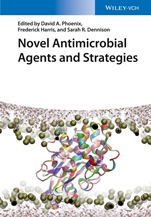
Novel Antimicrobial Agents and Strategies
ISBN 9783527336388
Autor: David A. Phoenix, Frederick Harris, Sarah R. Dennison
Wydawca: Wiley
Dostępność: 3-6 tygodni
Cena: 838,95 zł
Przed złożeniem zamówienia prosimy o kontakt mailowy celem potwierdzenia ceny.
ISBN13: |
9783527336388 |
ISBN10: |
3527336389 |
Autor: |
David A. Phoenix, Frederick Harris, Sarah R. Dennison |
Oprawa: |
Hardback |
Rok Wydania: |
2014-10-15 |
Ilość stron: |
440 |
Wymiary: |
250x172 |
Tematy: |
MJ |
By integrating knowledge from pharmacology, microbiology, molecular medicine, and engineering, researchers from Europe, the U.S. and Asia cover a broad spectrum of current and potential antimicrobial medications and treatments. The result is a comprehensive survey ranging from small–molecule antibiotics to antimicrobial peptides and their engineered mimetics, from enzymes to nucleic acid therapeutics, from metallic nanoparticles to photo– and sonosensitizers and to phage therapy. In each case, the therapeutic approaches are compared in terms of their mechanisms, likelihood to induce resistance, and their efficiency in a global healthcare context. Unrivaled knowledge for professionals in fundamental research, pharmaceutical development and clinical practice.
List of Contributors XI Preface XVII 1 The Problem of Microbial Drug Resistance 1 Iza Radecka, Claire Martin, and David Hill 1.1 Introduction 1 1.2 History of the Origins, Development, and Use of Conventional Antibiotics 1 1.3 Problems of Antibiotic Resistance 4 1.4 Multiple Drug–Resistant (MDR), Extensively Drug–Resistant (XDR), and Pan–Drug–Resistant (PDR) Organisms 5 1.5 MDR Mechanisms of Major Pathogens 5 1.6 Antimicrobial Stewardship Programs 11 1.7 Discussion 12 Acknowledgment 13 References 13 2 Conventional Antibiotics – Revitalized by New Agents 17 Anthony Coates and Yanmin Hu 2.1 Introduction 17 2.2 Conventional Antibiotics 18 2.3 The Principles of Combination AntibioticTherapy 20 2.4 Antibiotic Resistance Breakers: Revitalize Conventional Antibiotics 21 2.4.1 β–Lactamase Inhibitors 21 2.4.2 Aminoglycoside–Modifying Enzyme Inhibitors 23 2.4.3 Antibiotic Efflux Pumps Inhibitors 23 2.4.4 Synergy Associated with Bacterial Membrane Permeators 23 2.5 Discussion 25 Acknowledgments 26 References 26 3 Developing Novel Bacterial Targets: Carbonic Anhydrases as Antibacterial Drug Targets 31 Clemente Capasso and Claudiu T. Supuran 3.1 Introduction 31 3.2 Carbonic Anhydrases 31 3.3 CA Inhibitors 32 3.4 Classes of CAs Present in Bacteria 33 3.5 Pathogenic Bacterial CAs 35 3.6 α–CAs in Pathogenic Bacteria 35 3.7 β–CAs in Pathogenic Bacteria 37 3.8 γ–CAs from Pathogenic Bacteria 39 3.9 Conclusions 40 References 41 4 Magainins – A Model for Development of Eukaryotic Antimicrobial Peptides (AMPs) 47 Sarah R. Dennison, Frederick Harris, and David A. Phoenix 4.1 Introduction 47 4.2 Magainins and Their Antimicrobial Action 49 4.3 Magainins as Antibiotics 51 4.4 Other Antimicrobial Uses of Magainins 55 4.5 Future Prospects for Magainins 57 References 58 5 Antimicrobial Peptides from Prokaryotes 71 Maryam Hassan, Morten Kjos, Ingolf F. Nes, Dzung B. Diep, and Farzaneh Lotfipour 5.1 Introduction 71 5.2 Bacteriocins 73 5.2.1 Microcins – Peptide Bacteriocins from Gram–Negative Bacteria 73 5.2.2 Lanthibiotics – Post–translationally Modified Peptides from Gram–Positive Bacteria 76 5.2.3 Non–modified Peptides from Gram–Positive Bacteria 77 5.3 Applications of Prokaryotic AMPs 79 5.3.1 Food Biopreservation 79 5.3.2 Bacteriocinogenic Probiotics 80 5.3.3 Clinical Application 81 5.3.4 Applications in Dental Care 82 5.4 Development and Discovery of Novel AMP 82 References 84 6 Peptidomimetics as Antimicrobial Agents 91 Peng Teng, HaifanWu, and Jianfeng Cai 6.1 Introduction 91 6.2 Antimicrobial Peptidomimetics 93 6.2.1 Peptoids 93 6.2.2 β–Peptides 94 6.2.3 Arylamides 96 6.2.4 β–Peptoid–Peptide Hybrid Oligomers 97 6.2.5 Oligourea and γ4–Peptide–Based Oligomers 98 6.2.6 AApeptides 98 6.2.6.1 α–AApeptides 99 6.2.6.2 γ–AApeptides 101 6.3 Discussion 102 Acknowledgments 103 References 103 7 Synthetic Biology and Therapies for Infectious Diseases 109 Hiroki Ando, Robert Citorik, Sara Cleto, Sebastien Lemire, Mark Mimee, and Timothy Lu 7.1 Current Challenges in the Treatment of Infectious Diseases 109 7.2 Introduction to Synthetic Biology 112 7.3 Vaccinology 113 7.3.1 Genetic Engineering and Vaccine Development 114 7.3.2 Rational Antigen DesignThrough Reverse Vaccinology 119 7.4 Bacteriophages: A Re–emerging Solution? 122 7.4.1 A Brief History of Bacteriophages 122 7.4.2 Addressing the Problem of the Restricted Host Range of Phages 124 7.4.3 Phage Genome Engineering for EnhancedTherapeutics 129 7.4.4 Phages as Delivery Agents for Antibacterial Cargos 132 7.5 Isolated Phage Parts as Antimicrobials 133 7.5.1 Engineered Phage Lysins 133 7.5.2 Pyocins: Deadly Phage Tails 135 7.5.3 Untapped Reservoirs of Antibacterial Activity 136 7.6 Predatory Bacteria and Probiotic Bacterial Therapy 136 7.7 Natural Products Discovery and Engineering 139 7.7.1 In Silico and In Vitro Genome Mining for Natural Products 140 7.7.2 Strain Engineering for Natural Products 144 7.7.2.1 Production of the Antimalarial Artemisinin 145 7.7.2.2 Daptomycin (Cubicin) 147 7.7.2.3 Echinomycin 147 7.7.2.4 Clavulanic Acid 148 7.7.2.5 Production of the Antiparasitic Avermectin and Its Analogs Doramectin and Ivermectin 149 7.7.2.6 Production of Doxorubicin/Daunorubicin 149 7.7.2.7 Development of Hosts for the Expression of Nonribosomal Peptides and Polyketides 150 7.7.3 Generation of Novel Molecules by Rational Reprogramming 152 7.7.4 Engineering NRPS and PKS Domains 154 7.7.5 Activation of Cryptic Genes/Clusters 155 7.7.6 Mutasynthesis as a Source of Novel Analogs 157 7.8 Summary 157 Acknowledgments 157 References 158 8 Nano–Antimicrobials Based on Metals 181 Maria Chiara Sportelli, Rosaria Anna Picca, and Nicola Cioffi 8.1 Introduction 181 8.2 Silver Nano–antimicrobials 182 8.2.1 Synthesis of Silver Nanostructures 182 8.2.1.1 Physical Approaches 183 8.2.1.2 Laser Ablation in Liquids 183 8.2.1.3 Chemical Approaches 183 8.2.1.4 Biological and Biotechnological Approaches 184 8.2.1.5 Electrochemical Approaches 184 8.2.2 Characterization of Silver Nanostructures 185 8.2.3 Applications of Silver Nanostructures 187 8.2.3.1 Silver–Based Nano–antimicrobials 187 8.3 Copper Nano–antimicrobials 190 8.3.1 Preparation and Applications of Antimicrobial Cu Nanostructures 190 8.3.1.1 Physical Methods 190 8.3.1.2 Wet–Chemical Methods 192 8.3.1.3 Electrochemical Syntheses 195 8.3.1.4 Laser Ablation in Liquids 196 8.3.1.5 Biological Syntheses 197 8.4 Zinc Oxide Nano–antimicrobials 197 8.4.1 Synthesis of Zinc Oxide Nanostructures 197 8.4.1.1 Physical Approaches 198 8.4.1.2 Chemical Approaches 198 8.4.1.3 Electrochemical Approaches 200 8.5 Conclusions 201 References 201 9 Natural Products as Antimicrobial Agents – an Update 219 Muhammad Saleem 9.1 Introduction 219 9.2 Antimicrobial Natural Products from Plants 220 9.2.1 Antimicrobial Alkaloids from Plants 220 9.2.2 Antimicrobial Alkaloids from Microbial Sources 223 9.2.3 Antimicrobial Alkaloids from Marine Sources 225 9.3 Antimicrobial Natural Products Bearing an Acetylene Function 226 9.4 Antimicrobial Carbohydrates 228 9.5 Antimicrobial Natural Chromenes 228 9.6 Antimicrobial Natural Coumarins 229 9.6.1 Antimicrobial Coumarins from Plants 229 9.6.1.1 Antimicrobial Coumarins from Bacteria 232 9.7 Antimicrobial Flavonoids 232 9.7.1 Antimicrobial Flavonoids from Plants 233 9.8 Antimicrobial Iridoids 237 9.8.1 Antimicrobial Iridoids from Plants 237 9.9 Antimicrobial Lignans 238 9.9.1 Antimicrobial Lignans from Plants 238 9.10 Antimicrobial Phenolics Other Than Flavonoids and Lignans 240 9.10.1 Antimicrobial Phenolics from Plants 240 9.10.2 Antimicrobial Phenolics from Microbial Sources 244 9.10.3 Antimicrobial Phenolics from Marine Source 246 9.11 Antimicrobial Polypeptides 247 9.12 Antimicrobial Polyketides 249 9.12.1 Antimicrobial Polyketides as Macrolides 250 9.12.2 Antimicrobial Polyketides as Quinones and Xanthones 252 9.12.2.1 Antimicrobial Quinones and Xanthones from Plants 252 9.12.2.2 Antimicrobial Quinones from Bacteria 256 9.12.2.3 Antimicrobial Quinones and Xanthones from Fungi 257 9.12.3 Antimicrobial Fatty Acids and Other polyketides 261 9.13 Antimicrobial Steroids 263 9.13.1 Antimicrobial Steroids from Plants 264 9.13.2 Steroids from Fungi 266 9.14 Antimicrobial Terpenoids 267 9.14.1 Antimicrobial Terpenoids from Plants 267 9.14.2 Antimicrobial Terpenoids from Microbial Sources 273 9.14.3 Antimicrobial Terpenoids from Marine Sources 274 9.15 Miscellaneous Antimicrobial Compounds 275 9.15.1 Miscellaneous Antimicrobial Natural Products from Plants 275 9.15.2 Miscellaneous Antimicrobials from Bacteria 278 9.15.3 Miscellaneous Antimicrobials from Fungi 280 9.16 Platensimycin Family as Antibacterial Natural Products 282 References 284 10 Photodynamic Antimicrobial Chemotherapy 295 David A. Phoenix, Sarah R. Dennison, and Frederick Harris 10.1 Introduction 295 10.2 The Administration and Photoactivation of PS 296 10.3 Applications of PACT Based on MB 301 10.4 The Applications of PACT Based on ALA 303 10.4.1 Food Decontamination Using PACT Based on ALA 303 10.4.2 Dermatology Using PACT Based on ALA 305 10.5 Future Prospects 308 References 310 11 The Antimicrobial Effects of Ultrasound 331 Frederick Harris, Sarah R. Dennison, and David A. Phoenix 11.1 Introduction 331 11.2 The Antimicrobial Activity of Ultrasound Alone 332 11.3 The Antimicrobial Activity of Assisted Ultrasound 335 11.3.1 Synergistic Effects 336 11.3.2 Sonosensitizers 338 11.4 Future Prospects 341 References 343 12 Antimicrobial Therapy Based on Antisense Agents 357 Glenda M. Beaman, Sarah R. Dennison, and David A. Phoenix 12.1 Introduction 357 12.2 Antisense Oligonucleotides 358 12.3 First–Generation ASOs 360 12.4 Second–Generation ASOs 361 12.5 Third–Generation ASOs 362 12.6 Antisense Antibacterials 364 12.7 Broad–Spectrum Antisense Antibacterials 365 12.8 Methicillin–Resistant Staphylococcus aureus (MRSA) 371 12.9 RNA Interference (RNAi) 371 12.10 Progress Using siRNA 374 12.10.1 Mycobacterium Tuberculosis 374 12.10.2 MRSA 375 12.11 Discussion 376 References 377 13 New Delivery Systems – Liposomes for Pulmonary Delivery of Antibacterial Drugs 387 AbdelbaryM.A. Elhissi, Sarah R. Dennison,Waqar Ahmed, KevinM.G. Taylor and David A. Phoenix 13.1 Introduction 387 13.2 Pulmonary Drug Delivery 389 13.3 Liposomes as Drug Carriers in Pulmonary Delivery 389 13.3.1 Liposomes for Pulmonary Delivery of Antibacterial Drugs 390 13.3.1.1 Delivery of Antibacterial Liposomes Using pMDIs 391 13.3.1.2 Delivery of Antibacterial Liposomes Using DPIs 392 13.3.1.3 Delivery of Antibacterial Liposomes Using Nebulizers 394 13.4 Present and Future Trends of Liposome Research in Pulmonary Drug Delivery 398 13.5 Conclusions 401 References 401 Index 407
Professor David Andrew Phoenix studied Biochemistry at degree and doctoral level at Liverpool University which in 2009 awarded him a Doctor of Science for his impact on the field. In 2000 he was appointed Professor of Biochemistry, at the University of Central Lancashire (UCLan) and has held visiting chairs in Canada and Russia. He has published over 150 papers as well as a number of edited collections and monographs. He is a Fellow of the Royal Society of Chemistry, The Society of Biology, The Institute of Mathematics and Its Applications and the Royal Society of Medicine. Since 2008 he has been the Deputy Vice Chancellor of UCLan and also chairs a research institute in Shenzhen focused on nanotechnology and biomedical engineering. He was made an Officer of the Most Excellent Order of the British Empire in 2010 for services to Science and Higher Education and recognized as an Academician by the Academy of Social Sciences in 2012. Dr. Frederick Harris studied at UCLan, graduating with a Bachelor of Science in Biochemistry and Microbiology in 1993 before gaining his Doctorate for work on the penicillin–binding proteins of Escherichia coli in 1998. Subsequently, he has undertaken research at Utrecht University and the Leibniz–Centre for Medicine and Biosciences, Germany. In 2000, Frederick started as a Research Fellow at UCLan and now has more than 75 publications to his name, which primarily focus on antimicrobial and anticancer peptides. Dr. Sarah Rachel Dennison graduated from the University of Wales, Bangor with a Bachelor of Science in Environmental Biology in 1999. Subsequently, she undertook postgraduate research in Biochemistry / Biophysics, which led to a doctorate in 2004. Currently, Sarah is a Research Associate in the School of Pharmacy and Biomedical Sciences at UCLan where she is investigating the role of amphiphilicity in the function of antimicrobial peptides using a number of biophysical techniques.
Koszyk
Książek w koszyku: 0 szt.
Wartość zakupów: 0,00 zł
Informacje


Kontakt
Gambit
Centrum Oprogramowania
i Szkoleń Sp. z o.o.
Al. Pokoju 29b/22-24
31-564 Kraków
Siedziba Księgarni
ul. Kordylewskiego 1
31-542 Kraków
+48 12 410 5991
+48 12 410 5987
+48 12 410 5989
Subskrypcje
Administratorem danych osobowych jest firma Gambit COiS Sp. z o.o. Na podany adres będzie wysyłany wyłącznie biuletyn informacyjny.
Autoryzacja płatności

Informacje na temat autoryzacji płatności poprzez PayU.

© Copyright 2012: GAMBIT COiS Sp. z o.o. Wszelkie prawa zastrzeżone.
Projekt i wykonanie: Alchemia Studio Reklamy