


Wydawcy
Katalog tematyczny
- Archeologia (109)
- Ekonomia, finanse, business (13704)
- Filozofia (1445)
- Historia (3040)
- Języki i językoznawstwo (2356)
- Lifestyle, hobby i rozrywka (475)
- Medycyna (9704)
- Nauki humanistyczne (4)
- Nauki o Ziemi i środowisku (2638)
- Nauki ścisłe (20412)
- Astronomia (294)
- Biologia (5119)
- Chemia (6540)
- Chemia analityczna (361)
- Chemia fizyczna (346)
- Chemia nieorganiczna (137)
- Chemia organiczna (535)
- Krystalografia (27)
- Minerologia (46)
- Fizyka (3309)
- Matematyka (4574)
- Nauki ścisłe, ogólnie (503)
- Nauki społeczne (8486)
- Nauki techniczne (13450)
- Prawo (1696)
- Publikacje informacyjne i interdyscyplinarne (1288)
- Religia i wierzenia (917)
- Technika komputerowa (4067)
- Zdrowie, relacje międzyludzkie i rozwój osobisty (657)





Informacje szczegółowe o książce
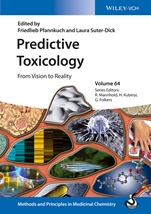
Predictive Toxicology: From Vision to Reality
ISBN 9783527336081
Autor: Friedlieb Pfannkuch, Laura Suter–Dick, Raimund Mannhold, Hugo Kubinyi, Gerd Folkers
Wydawca: Wiley
Dostępność: 3-6 tygodni
Cena: 729,75 zł
Przed złożeniem zamówienia prosimy o kontakt mailowy celem potwierdzenia ceny.
ISBN13: |
9783527336081 |
ISBN10: |
3527336087 |
Autor: |
Friedlieb Pfannkuch, Laura Suter–Dick, Raimund Mannhold, Hugo Kubinyi, Gerd Folkers |
Oprawa: |
Hardback |
Rok Wydania: |
2014-11-17 |
Ilość stron: |
432 |
Wymiary: |
246x174 |
Tematy: |
PN |
Tailored to the needs of scientists developing drugs, chemicals, cosmetics and other products this one–stop reference for medicinal chemists covers all the latest developments in the field of predictive toxicology and its applications in safety assessment.
With a keen emphasis on novel approaches, the topics have been tackled by selected expert scientists, who are familiar with the theoretical scientific background as well as with the practical application of current methods. Emerging technologies in toxicity assessment are introduced and evaluated in terms of their predictive power, with separate sections on computer predictions and simulation methods, novel in vitro systems including those employing stem cells, toxicogenomics and novel biomarkers. In each case, the most promising methods are discussed and compared to classical in vitro and in vivo toxicology assays. Finally, an outlook section discusses such forward–looking topics as immunotoxicology assessment and novel regulatory requirements.
With its wealth of methodological knowledge and its critical evaluation of modern approaches, this is a valuable guide for toxicologists working in pharmaceutical development, as well as in safety assessment and the regulation of drugs and chemicals.
List of Contributors XV
Preface XXI
A Personal Foreword XXIII
1 Introduction to Predictive Toxicology Tools and Methods1
Laura Suter–Dick and Friedlieb Pfannkuch
1.1 Computational Tools and Bioinformatics 1
1.1.1 In Silico Prediction Tools 1
1.1.2 Bioinformatics 2
1.2 Omics Technologies 2
1.2.1 Toxicogenomics (Transcriptomics) 2
1.2.2 Proteomics 3
1.2.3 Metabolomics 3
1.3 Data Interpretation and Knowledge Management 4
1.4 Biomarker Development 4
1.5 Advanced In Vitro Systems and Stem Cell Research 4
1.5.1 Advanced In Vitro Testing 4
1.5.2 Stem Cell Research 5
1.6 Immunogenicity 6
1.7 Integration and Validation 7
1.7.1 Use of Omics for Toxicology Testing 7
1.7.2 Integration of New Technologies into RiskAssessment 7
1.7.3 Use of Human–Derived Cellular Systems 8
1.7.4 General Acceptance Translation intoGuidelines 8
1.8 Research Initiative/Collaborations 9
1.9 Concluding Remarks 9
References 9
2 In Silico Toxicology Current Approaches and FuturePerspectives to Predict Toxic Effects with Computational Tools11
Thomas Steger–Hartmann
2.1 Introduction 11
2.2 Prediction of Hazard 11
2.2.1 Definition of Hazard and Its Use 11
2.2.2 Prediction of Mutagenicity 12
2.2.3 Prediction of Phospholipidosis 13
2.2.4 Prediction of Carcinogenicity 14
2.2.5 Prediction of Skin Sensitization 14
2.2.6 Prediction of Skin and Eye Irritation 16
2.2.7 Approaches to Systemic Toxicity Prediction 17
2.3 Prediction of Risk 21
2.3.1 Risk Definition and Some Basic Considerations 21
2.3.2 Data Availability 23
2.3.3 Database Structure and Data Curation 24
2.3.4 Approaches to Model and Predict Risk 26
2.4 Thoughts on Validation 27
2.5 Conclusions and Outlook 28
References 28
3 In Silico Approaches: Data Management Bioinformatics 33
Arnd Brandenburg, Hans Gmuender, and Timo Wittenberger
3.1 Introduction 33
3.2 Experimental Setup and Statistical Power 34
3.3 Properties of Different Omics Data 35
3.3.1 Next–Generation Sequencing Data 35
3.3.2 DNA Methylation Data 36
3.3.3 miRNA Data 36
3.3.4 CNV and SNP Data 36
3.3.5 ChIP–seq Data 37
3.3.6 Gene Expression Microarray Data (Affymetrix) 37
3.3.7 Mass Spectrometry Data 38
3.3.8 Missing Values and Zero Values 40
3.3.9 Data Normalization 40
3.4 Statistical Methods 41
3.4.1 Data Overviews 41
3.4.2 Null Hypothesis/Type I and Type II Errors 42
3.4.3 Multiple Testing Methods 42
3.4.4 Statistical Tests 43
3.4.5 Linear Models and Linear Mixed Models 43
3.5 Prediction and Classification 44
3.5.1 Overview 44
3.5.2 Generating a Reference Compendium of Compounds 45
3.5.3 Cross–Validation 46
3.5.4 Selection Bias 47
3.6 Combining Different Omics Data and BiologicalInterpretations 47
3.7 Data Management 48
References 51
4 Role of Modeling and Simulation in Toxicology Prediction53
Antje–Christine Walz, Hans Peter Grimm, Christophe Meille,Antonello Caruso, Neil Parrott, and Thierry Lavé
4.1 Introduction 53
4.2 The Need to Bring PK and PD in Predictive Models Together54
4.2.1 Physiologically Based Pharmacokinetic Modeling 54
4.2.2 Mathematical (PBPK, PK/PD) Modeling 55
4.2.3 Predictive Tools 55
4.3 Methodological Aspects and Concepts 56
4.3.1 Cascading Drug Effects 56
4.3.2 Linking Exposure and Effect 57
4.3.3 Receptor Occupancy/Enzyme Inhibition 57
4.3.4 Transduction into In Vivo Response 57
4.3.5 Disease Modeling 59
4.4 Application During Lead Optimization 60
4.4.1 Example 1: PK/PD Modeling for Identifying the TherapeuticWindow between an Efficacy and a Safety Response 60
4.5 Application During Clinical Candidate Selection 62
4.5.1 Example 2: Translational PK/PD Modeling to Support Go/NoGo Decisions 63
4.6 Entry–into–Human Preparation and Translational PK/PDModeling 65
4.6.1 Selection of Safe and Pharmacologically Active Dose forAnticancer Drugs 65
4.6.2 PK/PD for Toxicology Study Design and Evaluation 67
4.7 Justification of Starting Dose, Calculation of SafetyMargins, and Support of Phase I Clinical Trial Design 69
4.8 Outlook and Conclusions 70
References 71
5 Genomic Applications for Assessing Toxicities of Liver andKidney Injury 73
Philip Hewitt and Esther Johann
5.1 Introduction 73
5.1.1 Toxicogenomics in Drug Development 73
5.2 Toxicogenomic Approaches 75
5.2.1 High–Throughput Expression Profiles and DNA Microarrays75
5.2.2 Data Analysis 76
5.3 Specific Applications of Toxicogenomics 77
5.3.1 Mechanistic Toxicogenomics and Risk Assessment 77
5.3.2 Toxicogenomic Profiling of Hepatotoxicity 78
5.3.3 Functional and Structural Properties of the Liver 78
5.3.4 Liver Morphology 79
5.3.5 Cell Types 80
5.3.6 Functional Gradients 80
5.4 Toxicogenomic Applications for the Better Understanding ofHepatotoxicity 80
5.4.1 Mechanistic Toxicology 80
5.4.2 Class Identification 82
5.4.3 Predictive Toxicology 83
5.4.4 In Vitro Classifiers of Hepatotoxicity 84
5.4.5 Biomarker Identification 84
5.5 Toxicogenomic Profiling of Nephrotoxicity 86
5.5.1 Toxicogenomic Approaches in Nephrotoxicity 86
5.5.2 Finding Genes that Matter in AKI 87
5.5.3 Searching for New Biomarkers of Kidney Injury 88
5.6 Limitations of Toxicogenomics 90
5.6.1 Idiosyncrasies 90
5.6.2 Epigenetics 91
5.7 Conclusions 91
References 92
6 Use of Toxicogenomics for Mechanistic Characterization ofHepatocarcinogens in Shorter Term Studies 97
Heidrun Ellinger–Ziegelbauer
6.1 Introduction 97
6.1.1 Rodent Carcinogenicity Testing 97
6.1.2 Classes of Carcinogens 99
6.2 Toxicogenomics 99
6.2.1 Mechanistic Toxicogenomic Analysis after Short–TermTreatment with Rodent Hepatocarcinogens 99
6.2.2 Approaches for Prediction of Potential HepatocarcinogensBased on Gene Expression Profiling 104
6.2.3 Recent Developments: Transcriptional Benchmark DoseModeling Based on Functional Analyses 119
6.2.4 Recent Opportunities: Publicly Available Data 120
6.3 Conclusions and Outlook 123
References 123
7 Discovery and Application of Novel Biomarkers 129
Timothy W. Gant, Emma L. Marczylo, and Martin O. Leonard
7.1 Introduction 129
7.1.1 New Technologies Give Rise to Novel Opportunities forBiomarker Discovery 130
7.2 Novel RNA Biomarkers 131
7.2.1 The Complex RNA Biomarker in Cancer 131
7.2.2 The Complex RNA Biomarker in Toxicology 133
7.2.3 Connectivity Mapping with the Complex RNA Biomarker forHazard Identification 134
7.2.4 miRNA Biomarkers 135
7.3 DNA as a Biomarker 138
7.3.1 DNA Polymorphisms as Future Biomarkers of Disease andXenobiotic Susceptibility 138
7.3.2 DNA and Protein Adduct Biomarkers 140
7.3.3 Epigenetic Biomarkers 140
7.4 Novel Biomarkers: Beyond Nucleotide–Based Discovery 143
7.5 Summary and Outlook 145
References 146
8 Predictive Toxicology: Genetics, Genomics, Epigenetics, andNext–Generation Sequencing in Toxicology 151
Tobias Heckel and Laura Suter–Dick
8.1 Introduction 151
8.2 Technological Advances 152
8.3 Applications in Toxicology 154
8.3.1 Genome Sequencing and Sequence Level Comparisons 154
8.3.2 Genotype and Metabolism 157
8.3.3 Mechanistic Toxicology and Toxicogenomics 160
8.3.4 Epigenetic Changes and miRNAs 162
8.4 Summary and Outlook 164
References 165
9 Biomarkers as Tools for Predictive Safety Assessment: NovelMarkers of Drug–Induced Kidney Injury 171
Angela Mally
9.1 Need and Search for Novel Biomarkers of Kidney Injury171
9.2 Urinary Biomarkers of Drug–Induced Kidney Injury 172
9.2.1 Structure and Function of Novel Urinary Biomarkers 172
9.2.2 Experimental and Clinical Support for the Use of NovelUrinary Biomarkers for the Detection and Prediction of Acute KidneyInjury 177
9.3 Genomic Biomarkers 179
9.3.1 Individual Genes 179
9.3.2 Biomarker Panels and Gene Signatures 180
9.3.3 MicroRNAs 181
9.4 Qualification and Use of Novel Kidney Injury Biomarkers inPreclinical Safety Assessment 182
9.4.1 Biomarker Qualification and Regulatory Acceptance 182
9.4.2 Application of Novel Renal Safety Markers to PreclinicalDecision Making 183
9.4.3 Technological Aspects 184
9.5 Summary and Perspectives 185
References 186
10 The Use of Renal Cell Culture for NephrotoxicityInvestigations 195
Anja Wilmes and Paul Jennings
10.1 Introduction 195
10.2 In Vitro Renal Models 196
10.2.1 Characterization 197
10.2.2 Immortalization of Primary Cells 199
10.2.3 Available Podocyte and Proximal Tubule Cell Lines 201
10.3 Stem Cells 202
10.4 Optimal Cell Culture Conditions 206
10.5 In Vitro Nephrotoxicity Assessment 208
10.6 Outlook 209
References 210
11 The Zebrafish Model in Toxicology 217
Natalie Mesens
11.1 The Need for a Physiologically Relevant Organ Model in DrugToxicity Testing 217
11.2 Extensive Knowledge about Genetics, Development, andPhysiology of D. rerio 219
11.3 Studies of Specific Organ Toxicities in Zebrafish Embryosand Larvae 220
11.3.1 Cardiotoxicity 220
11.3.2 Neurotoxicity 221
11.3.3 Hepatotoxicity 222
11.3.4 Teratogenicity 226
11.3.5 Future Directions: ADME Studies and Future ExplorativeResearch 231
References 234
12 Predictive Method Development: Challenges for Cosmeticsand Genotoxicity as a Case Study 241
Gladys Ouédraogo, Fabrice Nesslany, Sophie Simar, SmailTalahari, Doris Lagache, Eric Vercauteren, Lauren Nakab, AstridMayoux, Brigitte Faquet, and Nicole Flamand
12.1 Introduction 241
12.2 The Toolbox of Predictive Methods 243
12.2.1 In Silico Tools 243
12.2.2 Biochemical (In Chemico) Assays 244
12.2.3 In Vitro 2D Assays 245
12.2.4 Organotypic Models 246
12.3 Genotoxicity as a Case Study 246
12.3.1 Materials and Methods 248
12.3.2 Chemicals 250
12.3.3 Treatment Schedules 250
12.3.4 Results 257
12.4 The Way Forward: Combining In Silico and In Vitro Tools268
Abbreviations 269
References 270
13 Using Pluripotent Stem Cells and Their Progeny as an InVitro Model to Assess (Developmental) Neurotoxicity 279
Lisa Hoelting, Marcel Leist, and Luc Stoppini
13.1 Introduction 279
13.2 Neurodevelopment In Vivo 281
13.3 Main Principle of In Vitro Test Systems to Model DNT283
13.4 Requirements of an In Vitro Test System for DNT/NT 284
13.5 Modeling of Disease and Toxicant–Induced Damage 291
13.6 Using Stem Cells to Assess (Developmental) Neurotoxicity296
13.6.1 Proliferation and Cell Death 296
13.6.2 Differentiation 297
13.6.3 Migration 298
13.6.4 Neuritogenesis 299
13.6.5 Synaptogenesis and Neuronal Excitability 300
13.6.6 Myelination 302
13.6.7 Neuroinflammation 302
13.7 Limitations 303
References 304
14 Stem Cell–Based Methods for Identifying DevelopmentalToxicity Potential 321
Jessica A. Palmer, Robert E. Burrier, Laura A. Egnash, andElizabeth L.R. Donley
14.1 Introduction 321
14.2 Developmental Toxicity Screening: Past and Present 321
14.2.1 Definition and Scope of the Problem 321
14.2.2 Historical Strategies and the Need for New Human–BasedModels 323
14.3 Pluripotent Stem Cells 324
14.3.1 Definition 324
14.3.2 Ethical Considerations 325
14.4 Metabolomics 326
14.4.1 Definition 326
14.4.2 Methods 326
14.4.3 Untargeted versus Targeted Metabolomic Approaches 328
14.4.4 Metabolomics in Toxicology 329
14.5 Stem Cell–Based In Vitro Screens for Developmental ToxicityTesting 331
14.5.1 Mouse Embryonic Stem Cell Test 331
14.5.2 Human Embryonic Stem Cell–Based Developmental ToxicityTests 332
14.5.3 Combining Human Embryonic Stem Cells and Metabolomics: APowerful Tool for Developmental Toxicity Testing 333
14.5.4 Drawbacks of In Vitro Models 337
14.6 Summary 338
References 339
15 Immunogenicity of Protein Therapeutics: Risk Assessmentand Risk Mitigation 347
Harald Kropshofer
15.1 Introduction 347
15.2 The Central Role of CD4+ T Cells 349
15.3 Generation of T–Cell Epitopes 350
15.3.1 HLA Restriction 350
15.3.2 T–Cell Epitopes Controlling Immunogenicity 352
15.4 Tolerance to Therapeutic Drugs 352
15.5 Tool Set for Immunogenicity Risk Assessment 353
15.5.1 Epitope Determination 353
15.5.2 HLA Binding Assays 354
15.5.3 T–Cell Activation Assays 355
15.5.4 Mouse Models 357
15.5.5 Case Studies 358
15.6 Immunogenicity Risk Mitigation 359
15.6.1 Deimmunization 360
15.6.2 Tolerization 360
15.6.3 Clinical Control of Immunogenicity Risk Factors 361
15.7 The Integrated Strategy of Risk Minimization 361
15.8 Summary 363
References 364
16 Regulatory Aspects 369
Beatriz Silva Lima
16.1 The History of Medicines Regulations in Brief 369
16.1.1 United States of America 369
16.1.2 Europe 370
16.1.3 The International Conference on Harmonisation 371
16.2 Impact on Drug Success of the Current ICH NonclinicalTesting Paradigm 373
16.3 Actions Taken for Increasing the Drug Development Success374
16.4 Innovative Drugs: Impact on Nonclinical DevelopmentStrategies 376
16.4.1 Biopharmaceuticals 376
16.4.2 Advanced Therapy Medicinal Products 377
16.4.3 Nanopharmaceuticals 379
16.4.4 Biosimilar Medicinal Products 380
16.4.5 Innovative Small Chemical Entities 380
16.5 Envisaging a Paradigm Change 381
16.5.1 The Present 381
16.5.2 The Basis for a Paradigm Change 382
16.5.3 Vision of a Renewed Paradigm 385
16.6 Regulatory Actions Needed to Shift the Animal–BasedParadigm 386
References 388
Index 391
Friedlieb Pfannkuch graduated as a physician from the Free University of Berlin, Germany and is Professor at the University of Basel, Switzerland. He has more than 27 years of experience in non–clinical safety assessment for all phases of drug development. During his career he was head of experimental toxicology at Ciba–Geigy in Basel, head of the non–clinical safety section at Yamanouchi Europe in the Netherlands, responsible for non–clinical nutrition safety at Roche Vitamins, and from 2003 until his retirement in 2011 he was a senior scientist in the global non–clinical drug safety department of F. Hoffmann–La Roche in Basel. He has contributed to international pharmaceutical consortia, such as toxicity testing of alternatives to CFCs propellants – IPACT, the ILSI task force on Food Safety in Europe and to working groups of the International Conference on Harmonization – ICH. IN the period from 2004–2009 he as the responsible manager of the European Commission′s Research Framework Program 6 Project InnoMed: "Predictive Toxicology – PredTox".
Laura Suter–Dick graduated as a biologist from the University of Buenos Aires (Argentina) and subsequently received her PhD from the Free University of Berlin (Germany). She has nearly 20 years of experience within the pharmaceutical industry, mainly in the field of toxicology. During her career in the pharmaceutical industry she worked as a scientist in the reproductive toxicology at Sandoz in Basel. She specialized in molecular toxicology (toxicogenomics) and in vitro assays at F. Hoffmann– La Roche Ltd., where she led the mechanistic toxicology. She has recently been appointed Professor for Molecular Toxicology at the Life Sciences School of the University of Applied Sciences and Arts Northwestern Switzerland. She acts as an external expert in several scientific panels and is also a Board Member of ESTIV (European Society of Toxicology in vitro).
This book is a sensible investment and recommended as a "must read" for toxicologists and pharmacologists to get a thorough understanding of the major challenges currently faced in realizing the objective of protecting human health using predictive toxicology. (BTS Newsletter, 1 March 2015)
Koszyk
Książek w koszyku: 0 szt.
Wartość zakupów: 0,00 zł
Informacje


Kontakt
Gambit
Centrum Oprogramowania
i Szkoleń Sp. z o.o.
Al. Pokoju 29b/22-24
31-564 Kraków
Siedziba Księgarni
ul. Kordylewskiego 1
31-542 Kraków
+48 12 410 5991
+48 12 410 5987
+48 12 410 5989
Subskrypcje
Administratorem danych osobowych jest firma Gambit COiS Sp. z o.o. Na podany adres będzie wysyłany wyłącznie biuletyn informacyjny.
Autoryzacja płatności

Informacje na temat autoryzacji płatności poprzez PayU.

© Copyright 2012: GAMBIT COiS Sp. z o.o. Wszelkie prawa zastrzeżone.
Projekt i wykonanie: Alchemia Studio Reklamy