


Wydawcy
Katalog tematyczny
- Archeologia (109)
- Ekonomia, finanse, business (13704)
- Filozofia (1445)
- Historia (3040)
- Języki i językoznawstwo (2356)
- Lifestyle, hobby i rozrywka (475)
- Medycyna (9704)
- Nauki humanistyczne (4)
- Nauki o Ziemi i środowisku (2638)
- Nauki ścisłe (20412)
- Astronomia (294)
- Biologia (5119)
- Chemia (6540)
- Chemia analityczna (361)
- Chemia fizyczna (346)
- Chemia nieorganiczna (137)
- Chemia organiczna (535)
- Krystalografia (27)
- Minerologia (46)
- Fizyka (3309)
- Matematyka (4574)
- Nauki ścisłe, ogólnie (503)
- Nauki społeczne (8486)
- Nauki techniczne (13450)
- Prawo (1696)
- Publikacje informacyjne i interdyscyplinarne (1288)
- Religia i wierzenia (917)
- Technika komputerowa (4067)
- Zdrowie, relacje międzyludzkie i rozwój osobisty (657)





Informacje szczegółowe o książce
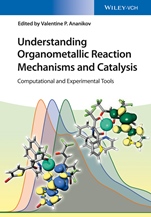
Understanding Organometallic Reaction Mechanisms and Catalysis: Computational and Experimental Tools
ISBN 9783527335626
Autor: Valentin P. Ananikov
Wydawca: Wiley
Dostępność: 3-6 tygodni
Cena: 773,85 zł
Przed złożeniem zamówienia prosimy o kontakt mailowy celem potwierdzenia ceny.
ISBN13: |
9783527335626 |
ISBN10: |
3527335625 |
Autor: |
Valentin P. Ananikov |
Oprawa: |
Hardback |
Rok Wydania: |
2014-10-15 |
Ilość stron: |
400 |
Wymiary: |
253x176 |
Tematy: |
PN |
Exploring and highlighting the new horizons in the studies of reaction mechanisms that open joint application of experimental studies and theoretical calculations is the goal of this book. The latest insights and developments in the mechanistic studies of organometallic reactions and catalytic processes are presented and reviewed. The book adopts a unique approach, exemplifying how to use experiments, spectroscopic measurements, and computational methods to reveal reaction pathways and molecular structures of catalysts, rather than concentrating solely on one discipline. The result is a deeper understanding of the underlying reaction mechanisms and correlation between molecular structure and reactivity. The contributions represent a wealth of first–hand information from renowned experts working in these disciplines, covering such topics as activation of small molecules, C–C and C–Heteroatom bonds formation, cross–coupling reactions, carbon dioxide conversion, homogeneous and heterogeneous transition metal catalysis, and metal–graphene systems. With the knowledge gained, the reader will be able to improve existing reaction protocols and rationally design more efficient catalysts or selective reactions. An indispensable source of information for synthetic, analytical, and theoretical chemists in academia and industry.
1) Mechanisms of Metal–mediated C=N Coupling Processes: A Synergistic Relationship Between Gas–phase Experiments and Computational Chemistry 2) Fundamental Aspects of the Metal Catalyzed C–H Bond Functionalization by Diazocarbenes: Guiding Principles for Design of Catalyst with Non–Redox Active Metal (such as Ca) and Non–Innocent Ligand 3) Using Metal Vinylidene Complexes to Probe the Partnership between Theory and Experiment 4) Ligand, Additive and Solvent Effects in Palladium Catalysis – Mechanistic Studies en Route to Catalyst Design 5) Computational Studies on Sigmatropic Rearrangements via Pi Bond Activation by Palladium and Gold Catalysts 6) Theoretical Insights into Transition Metal Catalyzed Reactions of Carbon Dioxide 7) Catalytically Enhanced NMR of Heterogeneously Catalyzed Hydrogenations 8) Combined Use of Both Experimental and Theoretical Methods in the Exploration of Reaction Mechanisms in Catalysis by Transition Metals 9) Is There Something New Under the Sun? Myths and Facts in the Analysis of Catalytic Cycles 10) Computational Tools for Structure, Spectroscopy and Thermochemistry 11) Computational Modeling of Graphene Systems Containing Transition Metal Atoms and Clusters
Valentine Ananikov received his Ph.D. degree in 1999, Habilitation in 2003, and was appointed Professor and Laboratory Head of the ND Zelinsky Institute of Organic Chemistry, Russian Academy of Sciences in 2005. In 2008 he was elected as a Member of Russian Academy of Sciences. In 2012 he became Professor of Chemistry, Department of Moscow State University. In 2013 he has received a Megagrant of Saint Petersburg State University and was appointed as Head of Laboratory of Cluster Catalysis. Valentine Ananikov was a recipient of the Russian State Prize for Outstanding Achievements in Science and Technology in 2004, a Science Support Foundation award in 2005, a Russian Academy of Sciences Medal in 2000. He was named a Liebig Lecturer by German Chemical Society in 2010, and was awarded the Balandin Prize for outstanding achievements in the field of catalysis in 2010. His scientific interests are focused on development of new concepts in transition metal and nanoparticle catalysis, sustainable organic synthesis and new methodology for mechanistic studies of complex chemical transformations. His research has been supported by grants of Russian Science Foundation, Russian Foundation of Basic Research and Grants of President of Russia. Valentine Ananikov is a member of the International Advisory Boards of Advanced Synthesis & Catalysis, Organometallics, Chemistry An Asian Journal and OpenChemistry.
Koszyk
Książek w koszyku: 0 szt.
Wartość zakupów: 0,00 zł
Informacje


Kontakt
Gambit
Centrum Oprogramowania
i Szkoleń Sp. z o.o.
Al. Pokoju 29b/22-24
31-564 Kraków
Siedziba Księgarni
ul. Kordylewskiego 1
31-542 Kraków
+48 12 410 5991
+48 12 410 5987
+48 12 410 5989
Subskrypcje
Administratorem danych osobowych jest firma Gambit COiS Sp. z o.o. Na podany adres będzie wysyłany wyłącznie biuletyn informacyjny.
Autoryzacja płatności

Informacje na temat autoryzacji płatności poprzez PayU.

© Copyright 2012: GAMBIT COiS Sp. z o.o. Wszelkie prawa zastrzeżone.
Projekt i wykonanie: Alchemia Studio Reklamy