


Wydawcy
Katalog tematyczny
- Archeologia (109)
- Ekonomia, finanse, business (13704)
- Filozofia (1445)
- Historia (3040)
- Języki i językoznawstwo (2356)
- Lifestyle, hobby i rozrywka (475)
- Medycyna (9704)
- Nauki humanistyczne (4)
- Nauki o Ziemi i środowisku (2638)
- Nauki ścisłe (20412)
- Astronomia (294)
- Biologia (5119)
- Chemia (6540)
- Chemia analityczna (361)
- Chemia fizyczna (346)
- Chemia nieorganiczna (137)
- Chemia organiczna (535)
- Krystalografia (27)
- Minerologia (46)
- Fizyka (3309)
- Matematyka (4574)
- Nauki ścisłe, ogólnie (503)
- Nauki społeczne (8486)
- Nauki techniczne (13450)
- Prawo (1696)
- Publikacje informacyjne i interdyscyplinarne (1288)
- Religia i wierzenia (917)
- Technika komputerowa (4067)
- Zdrowie, relacje międzyludzkie i rozwój osobisty (657)





Informacje szczegółowe o książce
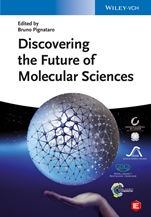
Discovering the Future of Molecular Sciences
ISBN 9783527335442
Autor: Bruno Pignataro
Wydawca: Wiley
Dostępność: 3-6 tygodni
Cena: 729,75 zł
Przed złożeniem zamówienia prosimy o kontakt mailowy celem potwierdzenia ceny.
ISBN13: |
9783527335442 |
ISBN10: |
3527335447 |
Autor: |
Bruno Pignataro |
Oprawa: |
Hardback |
Rok Wydania: |
2014-06-04 |
Ilość stron: |
440 |
Wymiary: |
249x178 |
Tematy: |
PN |
The European Young Chemist Award has now been awarded four times (2006, 2008, 2010 and 2012). The authors of the previous books based on the competition have become some of the leading scientists in Europe. These books truly provide a glimpse into the future research landscape of European chemistry. Fifteen top contributions have been selected for this single volume covering areas of chemistry and materials science. The broad range of themes is presented in an approachable and readable manner equally appropriate for non–specialists on the topic. The overview of intriguing topics includes chemical synthesis and advanced methodologies as well as materials, nanoscience and nanotechnologies.
Preface XIII List of Contributors XXI Part I Advanced Methodologies 1 1 Supramolecular Receptors for the Recognition of Bioanalytes 3 D. Amilan Jose, Amrita Ghosh, and Alexander Schiller 1.1 Introduction 3 1.2 Bioanalytes 4 1.3 Metal Complexes as Receptors for Biological Phosphates 6 1.3.1 Fluorescent Zn(II) Based Metal Complexes and Their Applications in Live Cell Imaging 7 1.3.2 Chromogenic Zn(II)–Based Metal Receptors and Their Applications in Biological Cell Staining 9 1.4 Functionalized Vesicles for the Recognition of Bioanalytes 14 1.4.1 Polydiacetylene Based Chromatic Vesicles 15 1.5 Boronic Acid Receptors for Diol–Containing Bioanalytes 23 1.6 Conclusion and Outlook 25 Acknowledgment 26 References 26 2 Methods of DNA Recognition 31 Olalla Vázquez 2.1 Introduction 31 2.2 Historical Outline: The Central Dogma 32 2.3 Intermolecular Interaction between the Transcription Factors and the DNA 33 2.3.1 The Structure of DNA and Its Role in the Recognition 34 2.3.2 DNA Binding Domains of the TF 36 2.3.3 General Aspects of the Intermolecular Interactions between the TFs and the DNA 40 2.4 Miniature Versions of Transcription Factors 42 2.4.1 Synthetic Modification of bZIP Transcription Factors 43 2.4.2 Residue Grafting 44 2.4.3 Conjugation in Order to Develop DNA Binding Peptides 45 2.5 Intermolecular Interaction Between Small Molecules and the DNA 46 2.5.1 General Concepts 46 2.5.2 Metallo–DNA Binders: From Cisplatin to Rh Metallo–Insertors 50 2.5.3 Polypyrroles and Bis(benzamidine) Minor Groove Binders and Their Use as Specific dsDNA Sensors 53 2.6 Outlook 56 Acknowledgments 56 References 56 3 Structural Analysis of Complex Molecular Systems by High–Resolution and Tandem Mass Spectrometry 63 Yury O. Tsybin 3.1 Dissecting Molecular Complexity with Mass Spectrometry 63 3.2 Advances in Fourier Transform Mass Spectrometry 67 3.3 Advances in Mass Analyzers for FT–ICR MS 70 3.4 Advances in Mass Analyzers for Orbitrap FTMS 72 3.5 Applications of High–Resolution Mass Spectrometry 73 3.6 Advances in Tandem Mass Spectrometry 78 3.7 Outlook: Quo vadis FTMS? 81 3.8 Summary and Future Issues 86 Acknowledgments 88 References 88 4 Coherent Electronic Energy Transfer in Biological and Artificial Multichromophoric Systems 91 Elisabetta Collini 4.1 Introduction to Electronic Energy Transfer in Complex Systems 91 4.2 The Meaning of Electronic Coherence in Energy Transfer 94 4.3 Energy Migration in Terms of Occupation Probability: a Unified Approach 96 4.4 Experimental Detection of Quantum Coherence 100 4.5 Electronic Coherence Measured by Two–Dimensional Photon Echo 104 4.6 Future Perspectives and Conclusive Remarks 110 Acknowledgments 111 References 111 5 Ultrafast Studies of Carrier Dynamics in Quantum Dots for Next Generation Photovoltaics 115 Danielle Buckley 5.1 Introduction 115 5.2 Theoretical Limits 116 5.3 Bulk Semiconductors 117 5.4 Semiconductor Quantum Dots 118 5.4.1 Lead Chalcogenides 120 5.5 Carrier Dynamics 121 5.5.1 Carrier Multiplication 121 5.5.2 Relaxation 121 5.6 Ultrafast Techniques 124 5.6.1 Pump–Probe 124 5.6.2 Photoluminescence 126 5.6.3 Relaxation Times 126 5.7 Quantum Efficiency 126 5.7.1 Quantum Yield Arguments 128 5.7.2 Experimental Considerations 129 5.8 Ligand Exchange and Film Studies 130 5.9 Conclusions 133 Acknowledgments 133 References 133 6 Micro Flow Chemistry: New Possibilities for Synthetic Chemists 137 Timothy Nöel 6.1 Introduction 137 6.2 Characteristics of Micro Flow – Basic Engineering Principles 138 6.2.1 Mass Transfer – the Importance of Efficient Mixing 138 6.2.2 Heat Transfer – the Importance of Efficient Heat Management 140 6.2.3 Multiphase Flow 142 6.3 Unusual Reaction Conditions Enabled by Microreactor Technology 144 6.3.1 High–Temperature and High–Pressure Processing 144 6.3.2 Use of Hazardous Intermediates – Avoiding Trouble 145 6.3.3 Photochemistry 147 6.4 The Use of Immobilized Reagents, Scavengers, and Catalysts 149 6.5 Multistep Synthesis in Flow 152 6.6 Avoiding Microreactor Clogging 154 6.7 Reaction Screening and Optimization Protocols in Microreactors 157 6.8 Scale–Up Issues – from Laboratory Scale to Production Scale 157 6.9 Outlook 160 References 161 7 Understanding Trends in Reaction Barriers 165 Israel Fernández López 7.1 Introduction 165 7.2 Activation Strain Model and Energy Decomposition Analysis 166 7.2.1 Activation Strain Model 166 7.2.2 Energy Decomposition Analysis 167 7.3 Pericyclic Reactions 168 7.3.1 Double Group Transfer Reactions 168 7.3.2 Alder–ene Reactions 173 7.3.3 1,3–Dipolar Cycloaddition Reactions 174 7.3.4 Diels–Alder Reactions 178 7.4 Nucleophilic Substitutions and Additions 179 7.4.1 SN2 Reactions 179 7.4.2 Nucleophilic Additions to Arynes 180 7.5 Unimolecular Processes 181 7.6 Concluding Remarks 183 Acknowledgments 184 References 184 Part II Materials, Nanoscience, and Nanotechnologies 189 8 Molecular Metal Oxides: Toward a Directed and Functional Future 191 Haralampos N. Miras 8.1 Introduction 191 8.2 New Technologies and Analytical Techniques 192 8.3 New Synthetic Approaches 196 8.3.1 The Building Block Approach 197 8.3.2 Generation of Novel Building Block Libraries 198 8.3.3 POM–Based Networks 201 8.4 Continuous Flow Systems and Networked Reactions 203 8.5 3D Printing Technology 205 8.6 Emergent Properties and Novel Phenomena 206 8.6.1 Porous Keplerate Nanocapsules – Chemical Adaptability 207 8.6.2 Transformation of POM Structures at Interfaces – Molecular Tubes and Inorganic Cells 208 8.6.3 Controlled POM–Based Oscillations 210 8.7 Conclusions and Perspectives 212 References 212 9 Molecular Metal Oxides for Energy Conversion and Energy Storage 217 Andrey Seliverstov, Johannes Forster, Johannes Tucher, Katharina Kastner, and Carsten Streb 9.1 Introduction to Molecular Metal Oxide Chemistry 217 9.1.1 Polyoxometalates – Molecular Metal Oxide Clusters 217 9.1.2 Principles of Polyoxometalate Redox Chemistry 219 9.1.3 Principles of Polyoxometalate Photochemistry 219 9.1.4 POMs for Energy Applications 221 9.2 POM Photocatalysis 221 9.2.1 The Roots of POM–Photocatalysis Using UV–light 221 9.2.2 Sunlight–Driven POM Photocatalysts 222 9.2.3 Future Development Perspectives for POM Photocatalysts 225 9.3 Energy Conversion 225 9.3.1 Water Splitting 225 9.3.2 Water Oxidation by Molecular Catalysts 226 9.3.3 Photoreductive H2–Generation 229 9.3.4 Photoreductive CO2–Activation 229 9.4 Promising Developments for POMs in Energy Conversion and Storage 231 9.4.1 Ionic Liquids for Catalysis and Energy Storage 231 9.4.2 POM–Based Photovoltaics 234 9.4.3 POM–Based Molecular Cluster Batteries 234 9.5 Summary 235 References 235 10 The Next Generation of Silylene Ligands for Better Catalysts 243 Shigeyoshi Inoue 10.1 General Introduction 243 10.1.1 Silylenes 243 10.1.2 Bissilylenes 244 10.1.3 Silylene Transition Metal Complexes 245 10.2 Synthesis and Catalytic Applications of Silylene Transition Metal Complexes 246 10.2.1 Bis(silylene)titanium Complexes 246 10.2.2 Bis(silylene)nickel Complex 248 10.2.3 Pincer–Type Bis(silylene) Complexes (Pd, Ir, Rh) 254 10.2.4 Bis(silylenyl)–Substituted Ferrocene Cobalt Complex 260 10.2.5 Silylene Iron Complexes 263 10.3 Conclusion and Outlook 267 References 268 11 Halide Exchange Reactions Mediated by Transition Metals 275 Alicia Casitas Montero 11.1 Introduction 275 11.2 Nickel–Based Methodologies for Halide Exchanges 278 11.3 Recent Advances in Palladium–Catalyzed Aryl Halide Exchange Reactions 280 11.4 The Versatility of Copper–Catalyzed Aryl Halide Exchange Reactions 284 11.5 Conclusions and Perspectives 290 References 292 12 Nanoparticle Assemblies from Molecular Mediator 295 Marie–Alexandra Neouze 12.1 Introduction 295 12.2 Assembly or Self–assembly 296 12.3 Nanoparticles and Their Protection against Aggregation or Agglomeration 297 12.3.1 Finite–Size Objects 297 12.3.2 Protection against Aggregation 298 12.4 Nanoparticle Assemblies Synthesis Methods 298 12.4.1 Interligand Bonding 299 12.4.2 Template Assisted Synthesis 306 12.4.3 Deposition of 2D Nanoparticle Assemblies: Monolayers, Multilayers, or Films 307 12.4.4 Pressure–Driven Assembly 314 12.5 Applications of Nanoparticle Assemblies 314 12.5.1 Plasmonics 314 12.5.2 Interacting Super–Spins/Magnetic Materials 319 12.5.3 Metamaterials 321 12.5.4 Catalysis/Electrocatalysis 322 12.5.5 Water Treatment/Photodegradation 322 12.6 Conclusion 323 References 324 13 Porous Molecular Solids 329 Shan Jiang, Abbie Trewin, and Andrew I. Cooper 13.1 Introduction 329 13.2 Porous Organic Molecular Crystals 330 13.2.1 Porous Organic Molecules 330 13.2.2 Porous Organic Cages 331 13.2.3 Simulation of Porous Organic Molecular Crystals 336 13.2.4 Applications for Porous Molecular Crystals 338 13.3 Porous Amorphous Molecular Materials 338 13.3.1 Synthesis of Porous Amorphous Molecular Materials 339 13.3.2 Simulation of Porous Amorphous Molecular Materials 342 13.4 Summary 344 References 344 14 Electrochemical Motors 349 Gabriel Loget and Alexander Kuhn 14.1 Inspiration from Biomotors 349 14.2 Chemical Motors 350 14.3 Externally Powered Motion 353 14.4 Asymmetry for a Controlled Motion 355 14.5 Bipolar Electrochemistry 356 14.6 Asymmetric Motors Synthetized by Bipolar Electrochemistry 358 14.7 Direct Use of Bipolar Electrochemistry for Motion Generation 363 14.8 Conclusion and Perspectives 372 References 373 15 Azobenzene in Molecular and Supramolecular Devices and Machines 379 Massimo Baroncini and Giacomo Bergamini 15.1 Introduction 379 15.2 Dendrimers 380 15.2.1 Azobenzene at the Periphery 380 15.2.2 Azobenzene at the Core 384 15.3 Molecular Devices and Machines 387 15.3.1 Switching Rotaxane Character with Light 388 15.3.2 Light–Controlled Unidirectional Transit of a Molecular Axle through a Macrocycle 391 15.4 Conclusion 395 References 395 Index 399
Bruno Pignataro is Professor of Physical Chemistry at the University of Palermo. He received his degree in chemistry in 1995 from the University of Catania and his PhD in materials science five years later. He has chaired the European Young Chemist Award in 2006, 2008, 2010 and 2012. He has authored more than 100 scientific publications and leads a group working in the fields of nanoscience, nanotechnology, electronics and biotechnology.
Koszyk
Książek w koszyku: 0 szt.
Wartość zakupów: 0,00 zł
Informacje


Kontakt
Gambit
Centrum Oprogramowania
i Szkoleń Sp. z o.o.
Al. Pokoju 29b/22-24
31-564 Kraków
Siedziba Księgarni
ul. Kordylewskiego 1
31-542 Kraków
+48 12 410 5991
+48 12 410 5987
+48 12 410 5989
Subskrypcje
Administratorem danych osobowych jest firma Gambit COiS Sp. z o.o. Na podany adres będzie wysyłany wyłącznie biuletyn informacyjny.
Autoryzacja płatności

Informacje na temat autoryzacji płatności poprzez PayU.

© Copyright 2012: GAMBIT COiS Sp. z o.o. Wszelkie prawa zastrzeżone.
Projekt i wykonanie: Alchemia Studio Reklamy